

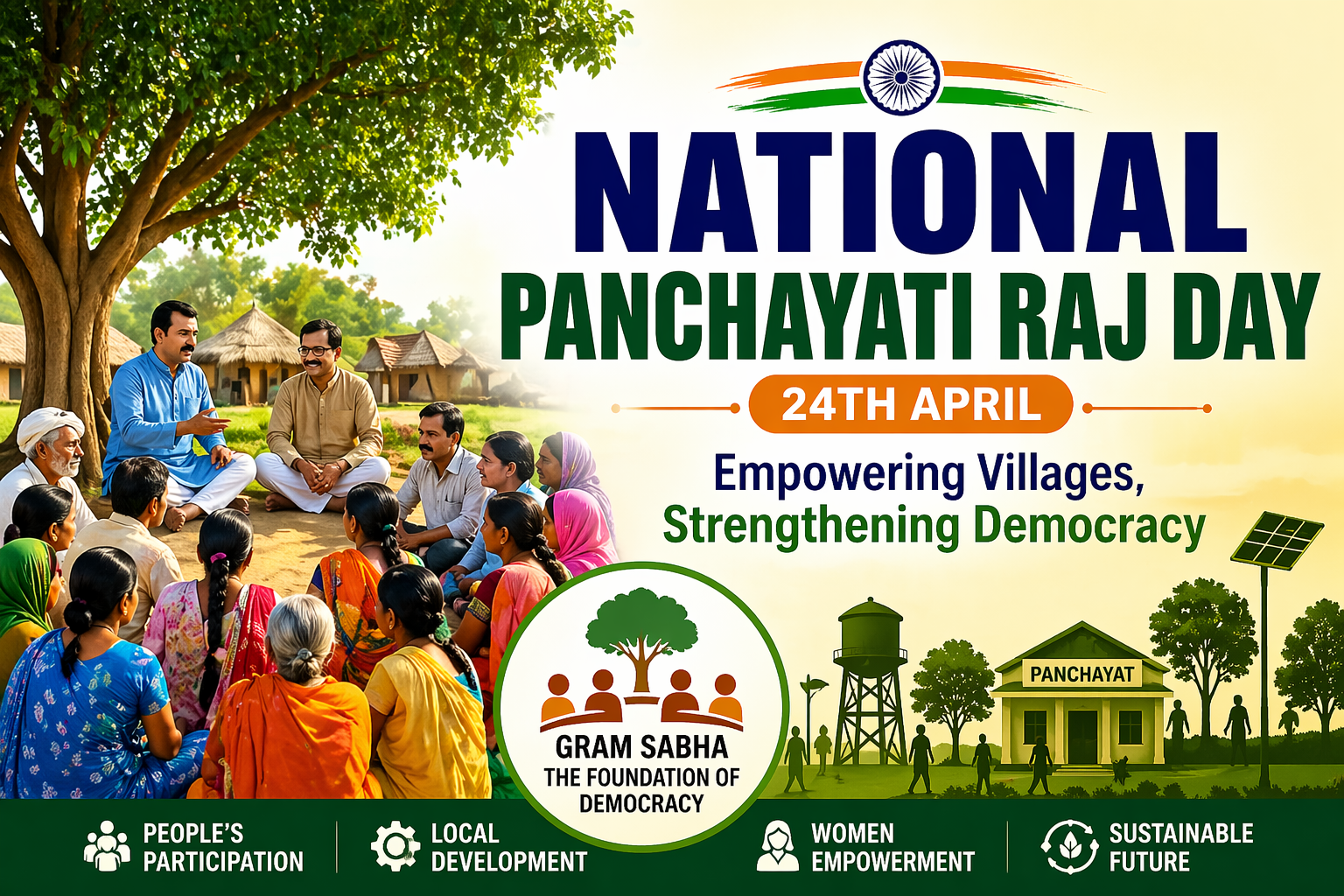
- Every year on April 24, India celebrates National Panchayati Raj Day, a landmark occasion that highlights the importance of grassroots democracy.
- The day commemorates the historic enactment of the 73rd Constitutional Amendment Act, 1992, which came into force on April 24, 1993, thereby conferring constitutional status on Panchayati Raj Institutions (PRIs).
- These local self-government bodies empower rural citizens by enabling them to participate directly in governance and decision-making.
- As India continues to push for inclusive and sustainable development in 2026, Panchayati Raj Institutions remain at the heart of rural transformation.
Significance of National Panchayati Raj Day
-
Strengthening Grassroots Democracy
Panchayati Raj ensures that governance reaches the village level, allowing people to actively participate in decision-making. It embodies the principle of “power to the people.”
-
Rural Development & Governance
PRIs play a crucial role in implementing schemes related to:
- Health
- Education
- Sanitation
- Infrastructure
- Rural employment
They are key drivers of flagship programs like MGNREGA, Swachh Bharat Mission, and Jal Jeevan Mission.
-
Women Empowerment
The system mandates at least 33% reservation for women (often higher in many states), enabling millions of women to enter politics and governance at the grassroots level.
-
Decentralization of Power
It reduces administrative burden on central and state governments by transferring authority, responsibility, and funds to local bodies.
- Achieving Sustainable Development Goals (SDGs)
Panchayats are instrumental in achieving SDGs by ensuring localized planning and implementation of development initiatives.
Key Facts for Exams:
- Focus Keyword: National Panchayati Raj Day (April 24)
- Celebrated on: April 24 every year
- First observed in: 2010
- Marks implementation of: 73rd Constitutional Amendment Act, 1992
- Came into effect: April 24, 1993
- Ministry: Ministry of Panchayati Raj
- Structure: 3-tier system
- Gram Panchayat (village level)
- Panchayat Samiti (block level)
- Zila Parishad (district level)
- Constitutional Articles: Part IX (Articles 243–243O)
- Reservation:
- Minimum 33% for women
- Reserved seats for SC/ST communities
- Gram Sabha: Foundation of Panchayati Raj system
- Finance Commission: Recommends funds for PRIs
- State Election Commission: Conducts Panchayat elections
Interesting Facts / Did You Know
- India has over 2.6 lakh Gram Panchayats, making it the largest grassroots democracy system in the world.
- The concept of Panchayati Raj was strongly advocated by Mahatma Gandhi, who envisioned self-reliant villages (Gram Swaraj).
- Some states like Bihar, Rajasthan, and Kerala provide 50% reservation for women in Panchayats.
- Panchayats now use digital platforms like e-Gram Swaraj Portal for transparency and governance.
- The Devolution Index measures how effectively states transfer powers to Panchayats.
- Panchayati Raj Institutions are increasingly involved in climate action, water conservation, and local planning.
Conclusion:
- National Panchayati Raj Day is not just a symbolic celebration—it is a reminder of India’s commitment to inclusive, participatory governance.
- As India moves toward becoming a developed nation, empowering villages will remain central to its growth story.
- Ultimately, a strong Panchayat system means a stronger democracy—one that truly reflects the voice of every citizen.