

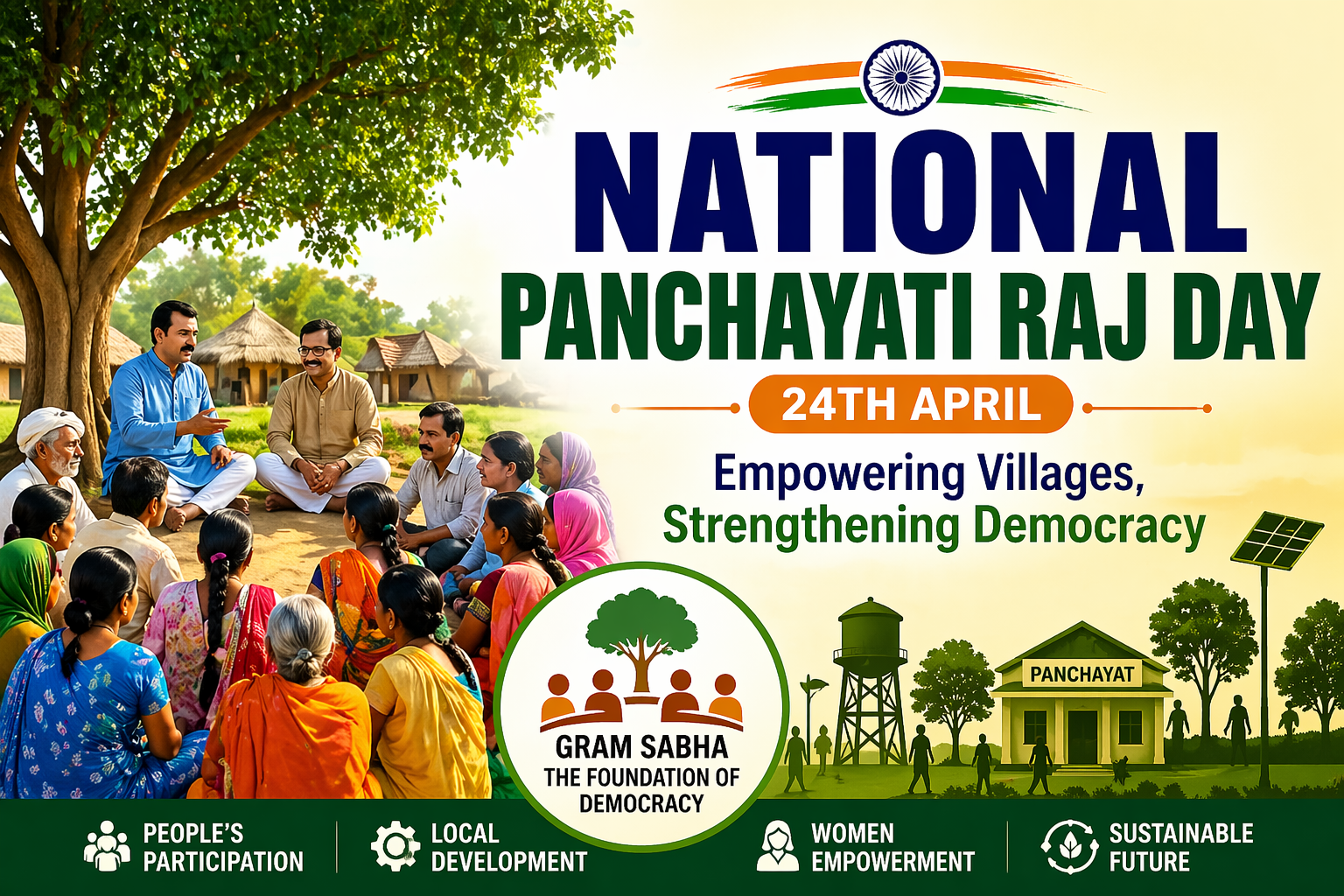
- Every year on April 24, India celebrates National Panchayati Raj Day, a landmark occasion that highlights the importance of grassroots democracy.
- The day commemorates the historic enactment of the 73rd Constitutional Amendment Act, 1992, which came into force on April 24, 1993, thereby conferring constitutional status on Panchayati Raj Institutions (PRIs).
- These local self-government bodies empower rural citizens by enabling them to participate directly in governance and decision-making.
- As India continues to push for inclusive and sustainable development in 2026, Panchayati Raj Institutions remain at the heart of rural transformation.
Significance of National Panchayati Raj Day
Strengthening Grassroots Democracy
Panchayati Raj ensures that governance reaches the village level, allowing people to actively participate in decision-making. It embodies the principle of “power to the people.”
Rural Development & Governance
PRIs play a crucial role in implementing schemes related to:
- Health
- Education
- Sanitation
- Infrastructure
- Rural employment
They are key drivers of flagship programs like MGNREGA, Swachh Bharat Mission, and Jal Jeevan Mission.
Women Empowerment
The system mandates at least 33% reservation for women (often higher in many states), enabling millions of women to enter politics and governance at the grassroots level.
Decentralization of Power
It reduces administrative burden on central and state governments by transferring authority, responsibility, and funds to local bodies.
- Achieving Sustainable Development Goals (SDGs)
Panchayats are instrumental in achieving SDGs by ensuring localized planning and implementation of development initiatives.
Key Facts for Exams:
- Focus Keyword: National Panchayati Raj Day (April 24)
- Celebrated on: April 24 every year
- First observed in: 2010
- Marks implementation of: 73rd Constitutional Amendment Act, 1992
- Came into effect: April 24, 1993
- Ministry: Ministry of Panchayati Raj
- Structure: 3-tier system
- Gram Panchayat (village level)
- Panchayat Samiti (block level)
- Zila Parishad (district level)
- Constitutional Articles: Part IX (Articles 243–243O)
- Reservation:
- Minimum 33% for women
- Reserved seats for SC/ST communities
- Gram Sabha: Foundation of Panchayati Raj system
- Finance Commission: Recommends funds for PRIs
- State Election Commission: Conducts Panchayat elections
Interesting Facts / Did You Know
- India has over 2.6 lakh Gram Panchayats, making it the largest grassroots democracy system in the world.
- The concept of Panchayati Raj was strongly advocated by Mahatma Gandhi, who envisioned self-reliant villages (Gram Swaraj).
- Some states like Bihar, Rajasthan, and Kerala provide 50% reservation for women in Panchayats.
- Panchayats now use digital platforms like e-Gram Swaraj Portal for transparency and governance.
- The Devolution Index measures how effectively states transfer powers to Panchayats.
- Panchayati Raj Institutions are increasingly involved in climate action, water conservation, and local planning.
Conclusion:
- National Panchayati Raj Day is not just a symbolic celebration—it is a reminder of India’s commitment to inclusive, participatory governance.
- As India moves toward becoming a developed nation, empowering villages will remain central to its growth story.
- Ultimately, a strong Panchayat system means a stronger democracy—one that truly reflects the voice of every citizen.