

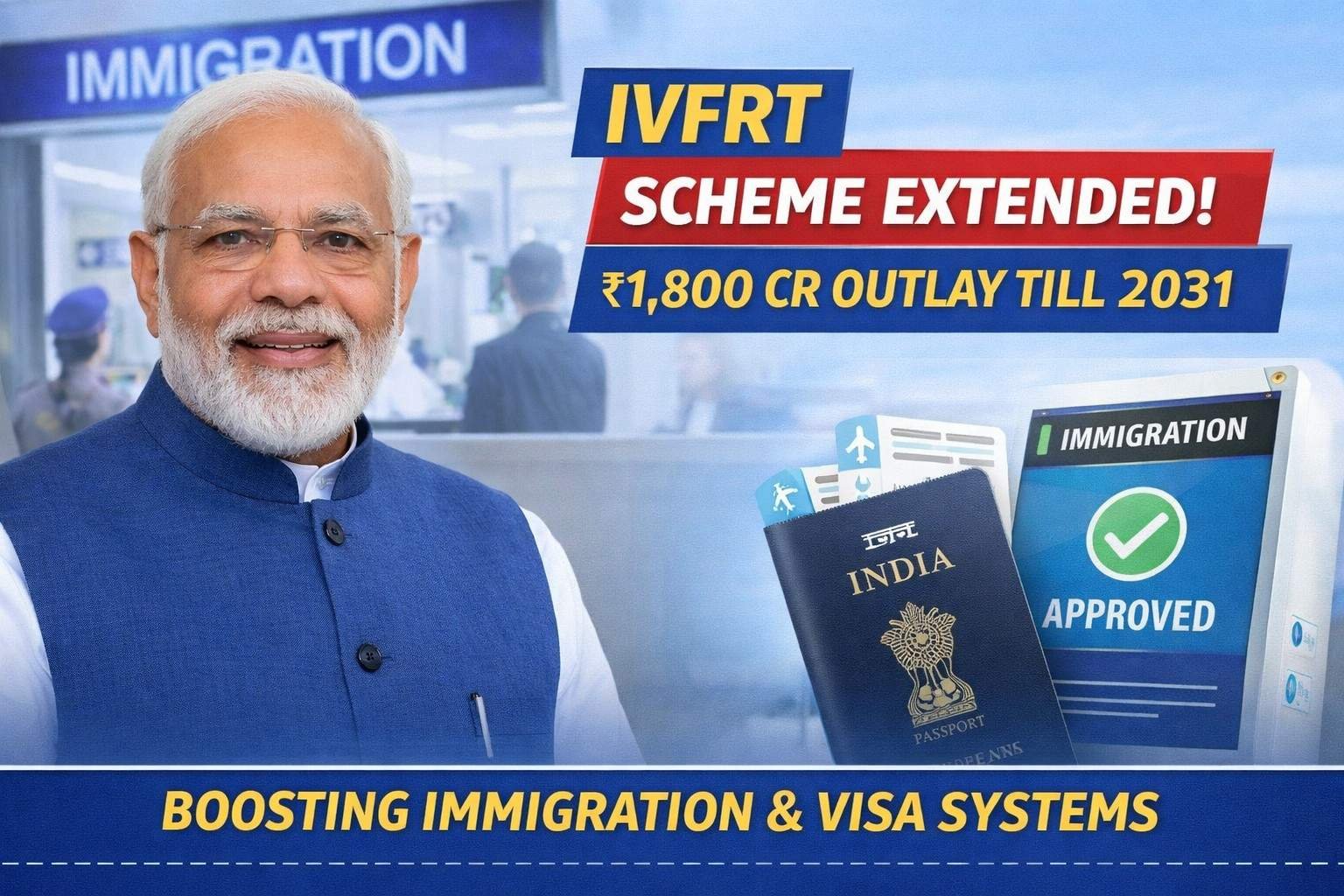
In a major move to strengthen India’s immigration and visa ecosystem, the Union Cabinet chaired by Prime Minister Narendra Modi has approved the continuation of the Immigration, Visa, Foreigners Registration & Tracking (IVFRT) Scheme for another five years.
The scheme will now run from April 1, 2026 to March 31, 2031, with a total budget outlay of ₹1,800 crore.
What is the IVFRT Scheme?
The IVFRT platform is a comprehensive digital system designed to integrate and streamline immigration, visa issuance, and foreigner registration processes in India.
Its main objective is to:
- Facilitate smooth travel for genuine visitors
- Strengthen national security and monitoring systems
- Provide efficient and technology-driven services
Focus Areas of the New Phase
The next phase of the scheme will focus on three major areas:
1. Emerging Technologies
The government plans to adopt advanced technologies such as:
- Mobile-based services
- Self-service kiosks
- Automated systems for faster processing
2. Infrastructure Transformation
The scheme will upgrade infrastructure across:
- Immigration checkpoints
- Foreigners Regional Registration Offices (FRROs)
- Data centres
This will help build a resilient and scalable system nationwide.
3. Service Optimization
Efforts will be made to:
- Develop unified digital platforms
- Improve application systems
- Strengthen network and service delivery
Key Achievements So Far
The IVFRT system has already brought significant improvements:
- 100% contactless and faceless visa processing
- Around 91% of e-visa applications processed within 72 hours
- Passenger clearance time reduced to 2.5–3 minutes (earlier 5–6 minutes)
Additionally, the Fast Track Immigration – Trusted Traveller Programme (FTI-TTP) has further reduced clearance time to just 30 seconds at major airports.
Wide Coverage Across India
Currently, the IVFRT system covers:
- 117 Immigration Check Posts
- 15 FRROs
- 854 registration offices across the country
This wide network ensures seamless coordination and monitoring of foreign nationals.
Economic and Strategic Impact
The continuation of the IVFRT scheme is expected to:
- Boost tourism, business, and trade
- Improve ease of doing business
- Enhance aviation and hospitality sectors
- Strengthen border management and security
It also aligns with the government’s broader vision of creating a modern, secure, and globally competitive immigration system.
Conclusion
The extension of the IVFRT Scheme marks a significant step towards modernising India’s immigration framework. By combining advanced technology with strong security measures, the initiative aims to provide a seamless experience for travellers while safeguarding national interests.
With increasing global mobility, such reforms will play a crucial role in supporting India’s economic growth and international engagement.