

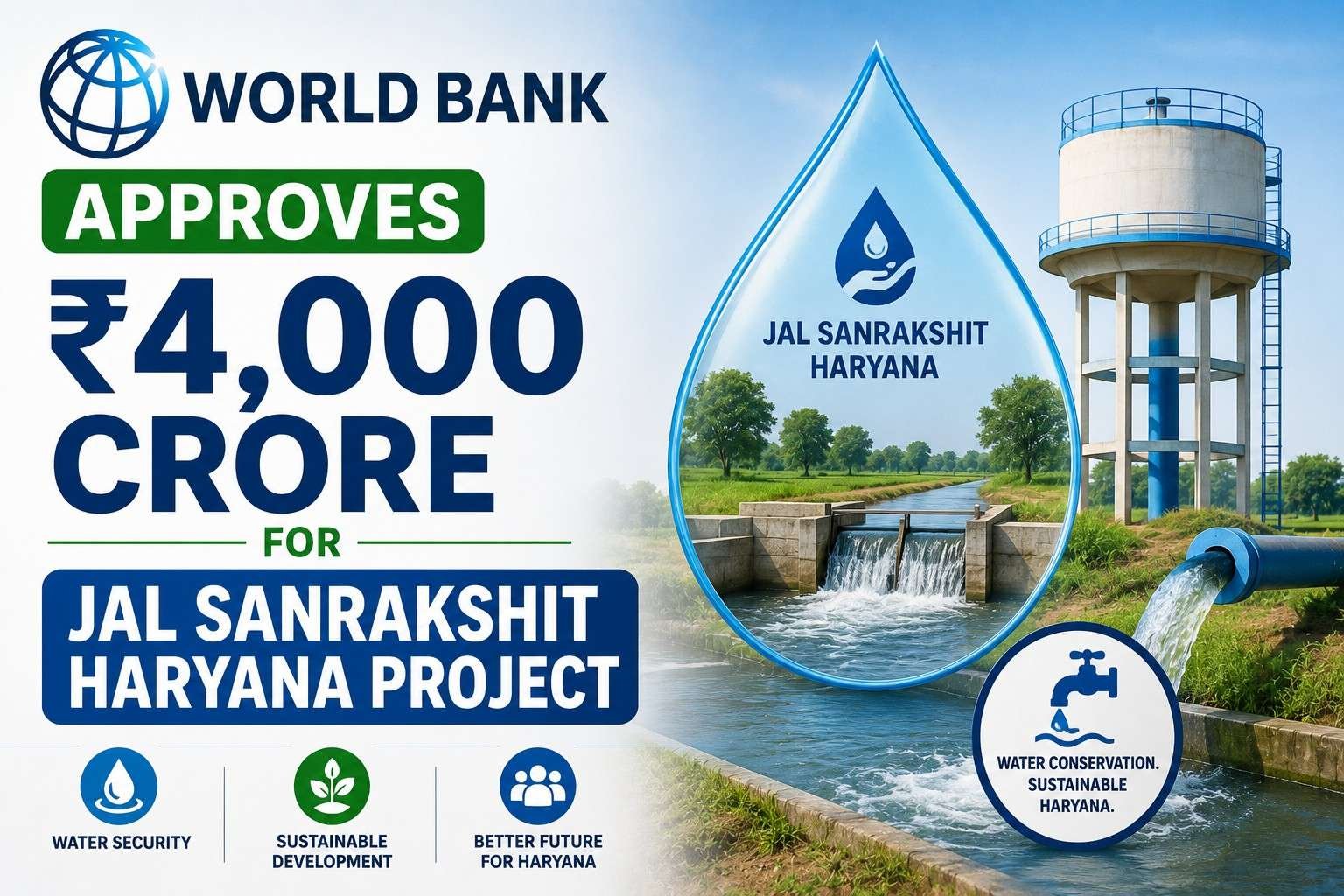
In a major boost to water conservation and sustainable agriculture, the World Bank has approved a loan of ₹4,000 crore for the implementation of the ambitious Jal Sanrakshit Haryana Project.
The total project cost is estimated at ₹5,714 crore and aims to make Haryana self-reliant in the water sector by improving irrigation efficiency, groundwater management, and water conservation practices.
Major Water Conservation Initiative
The Jal Sanrakshit Haryana Project is one of the state’s largest water resource management initiatives. The six-year programme seeks to address growing concerns over declining groundwater levels and inefficient water use.
The project will be implemented across 15 clusters covering nearly 48.94 lakh acres of agricultural land.
Objectives of the Project
The primary objectives include:
- Strengthening water conservation.
- Improving irrigation efficiency.
- Promoting sustainable groundwater use.
- Enhancing water recharge.
- Encouraging climate-resilient agriculture.
- Supporting crop diversification.
The project particularly focuses on regions facing groundwater depletion.
Addressing Groundwater Depletion
Haryana has witnessed a rapid decline in groundwater levels due to excessive extraction for agriculture.
The project aims to:
- Promote sustainable extraction.
- Increase groundwater recharge.
- Improve water-use efficiency.
- Reduce dependence on water-intensive crops.
These measures are expected to ensure long-term water security.
Rehabilitation of Canals
The project includes the rehabilitation of 678 canals across Haryana.
The canal modernization programme will receive support from:
- World Bank
- State Government
- NABARD
Improved canal infrastructure is expected to reduce water losses and enhance irrigation coverage.
Promotion of Direct Seeded Rice (DSR)
One of the important components of the project is the promotion of Direct Seeded Rice (DSR).
DSR technology helps:
- Save water.
- Reduce labour costs.
- Lower methane emissions.
- Improve productivity.
The method uses significantly less water compared to traditional paddy cultivation.
Crop Diversification
The project also encourages farmers to shift from water-intensive crops to alternative crops requiring less water.
Crop diversification can:
- Reduce pressure on groundwater.
- Improve farm income.
- Promote sustainable agriculture.
- Enhance climate resilience.
Reclamation of Waterlogged Areas
Several regions in Haryana face problems of waterlogging and soil degradation.
The project will undertake:
- Land reclamation.
- Drainage improvement.
- Soil management.
- Restoration of agricultural productivity.
Benefits to Farmers
The project is expected to provide multiple benefits:
- Improved irrigation access.
- Better water availability.
- Increased agricultural productivity.
- Reduced input costs.
- Sustainable farming practices.
- Higher farm incomes.
Importance for Haryana
Agriculture is the backbone of Haryana’s economy. Rising groundwater depletion has emerged as a major challenge.
The Jal Sanrakshit Haryana Project seeks to balance agricultural growth with environmental sustainability and long-term water security.
Conclusion
The ₹4,000 crore World Bank support for the Jal Sanrakshit Haryana Project marks a major step toward sustainable water management in Haryana. By improving irrigation systems, conserving groundwater, and promoting climate-smart agriculture, the project can play a crucial role in securing the state’s future water needs.