

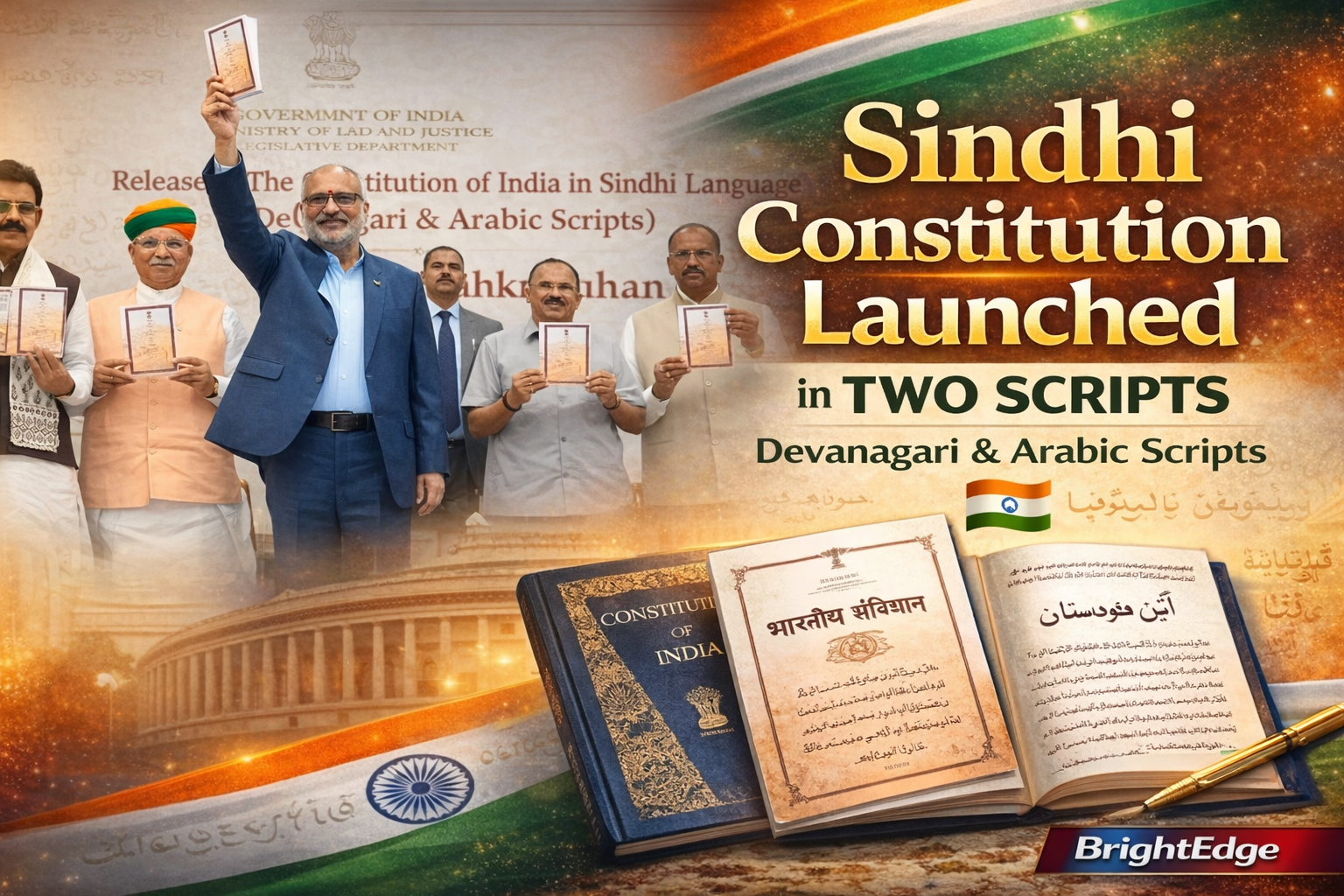
India has taken a major step toward linguistic inclusivity as C. P. Radhakrishnan launched the Sindhi version of the Constitution in two scripts, Devanagari and Arabic. This initiative aims to make constitutional knowledge accessible to a wider Sindhi-speaking population.
Key Highlights:
- Constitution now available in Sindhi language
- Published in two scripts:
- Devanagari
- Arabic (Perso-Arabic)
- Focus on linguistic inclusivity & accessibility
- Helps promote constitutional awareness
Why is This Important?
- Promotes linguistic diversity in India
- Enhances accessibility of legal knowledge
- Strengthens constitutional awareness
- Supports cultural preservation of Sindhi language
Why Two Scripts?
The Sindhi language is unique because:
- It is written in multiple scripts
- Different communities prefer different writing systems
About Sindhi Language:
- Recognized under the 8th Schedule of the Indian Constitution
- Added in 1967 (21st Constitutional Amendment)
- Spoken across India and globally