

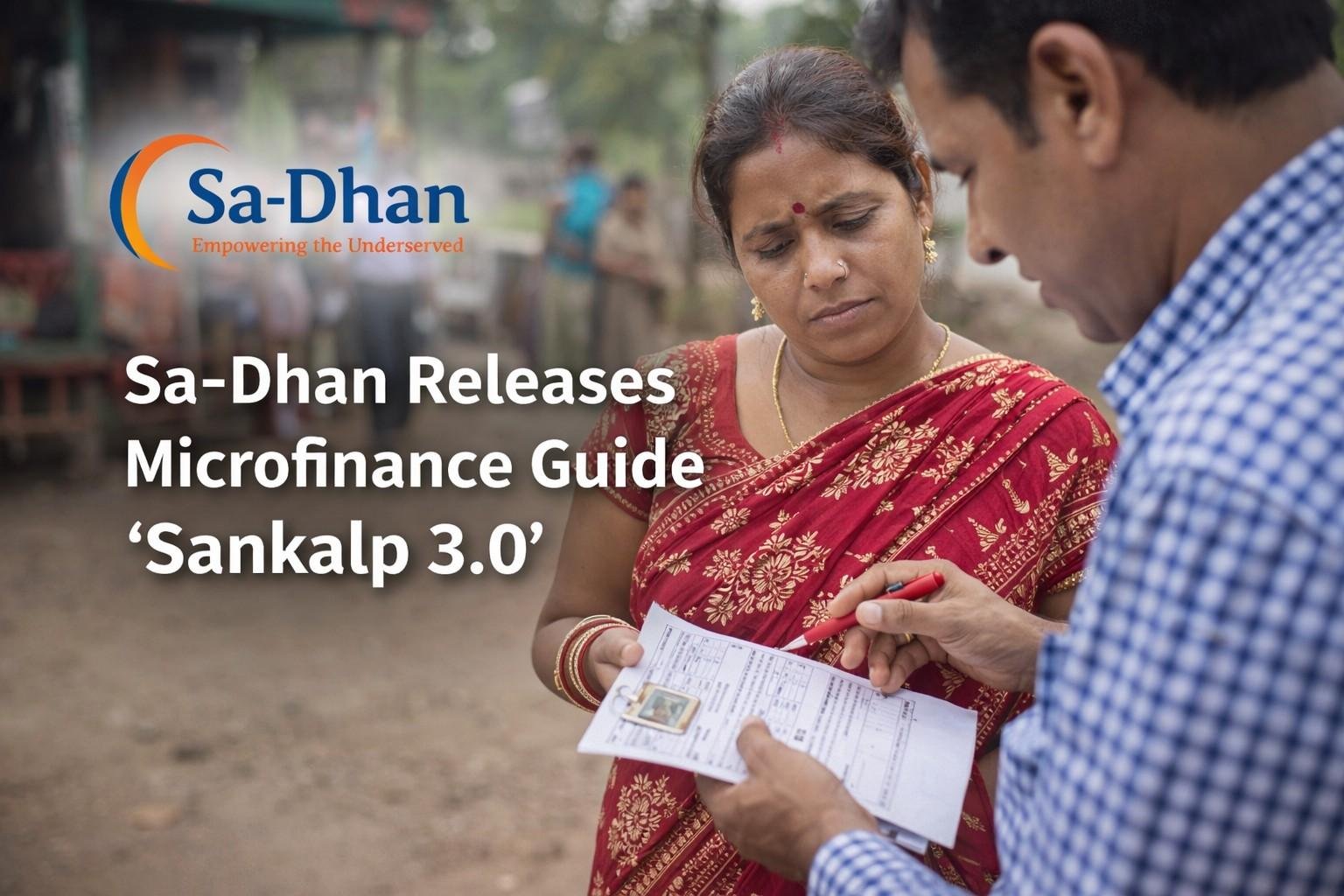
Sa-Dhan, an RBI-recognised self-regulatory organisation (SRO) for the microfinance sector, has released the third edition of its sectoral guardrails titled “Sankalp 3.0”.
The initiative aims to strengthen governance standards and improve the implementation of regulatory practices across the microfinance industry.
Focus Areas of Sankalp 3.0
Sankalp 3.0 places greater emphasis on:
- Data-driven decision-making
- Early identification of risks
- Stronger governance frameworks
- Customer-centric practices
These measures are designed to make the sector more stable, transparent, and efficient.
Background and Need
The updated guardrails come at a time when the microfinance sector has shown improvement in:
- Collection efficiency
- Asset quality
Despite this progress, existing guardrails will continue for some time to ensure a stronger and more sustainable recovery of the sector.
Statements from Industry Leaders
Jiji Mammen, Executive Director and CEO of Sa-Dhan, stated that Sankalp 3.0 focuses on:
- Early risk detection
- Strong governance
- Enhanced customer protection
He added that the goal is to ensure responsible growth while continuing to promote financial inclusion.
Launch Event Details
Sankalp 3.0 was unveiled at a conclave in Mumbai by Paul Thomas.
The event was attended by:
- Board members of Sa-Dhan
- Representatives from the Reserve Bank of India
- Stakeholders including NBFC-MFIs, banks, and small finance banks
RBI’s Perspective
Satish Marathe, a member of the RBI’s central board, suggested that the RBI should consider forming a steering committee for microfinance. This would help in regular discussions and resolving sector-related issues effectively.
Industry Outlook
K Paul Thomas, Chairman of Sa-Dhan and MD & CEO of ESAF Small Finance Bank, highlighted that:
- The microfinance sector has shown strong resilience
- It must continue to adapt to changing conditions
- Sankalp 3.0 will help build trust, transparency, and sustainability
He emphasized that the framework combines regulation, data, and industry experience to support long-term growth.
Conclusion
Sankalp 3.0 represents a significant step towards strengthening the microfinance sector by promoting responsible growth, better governance, and improved customer protection, ultimately supporting the goal of financial inclusion.