

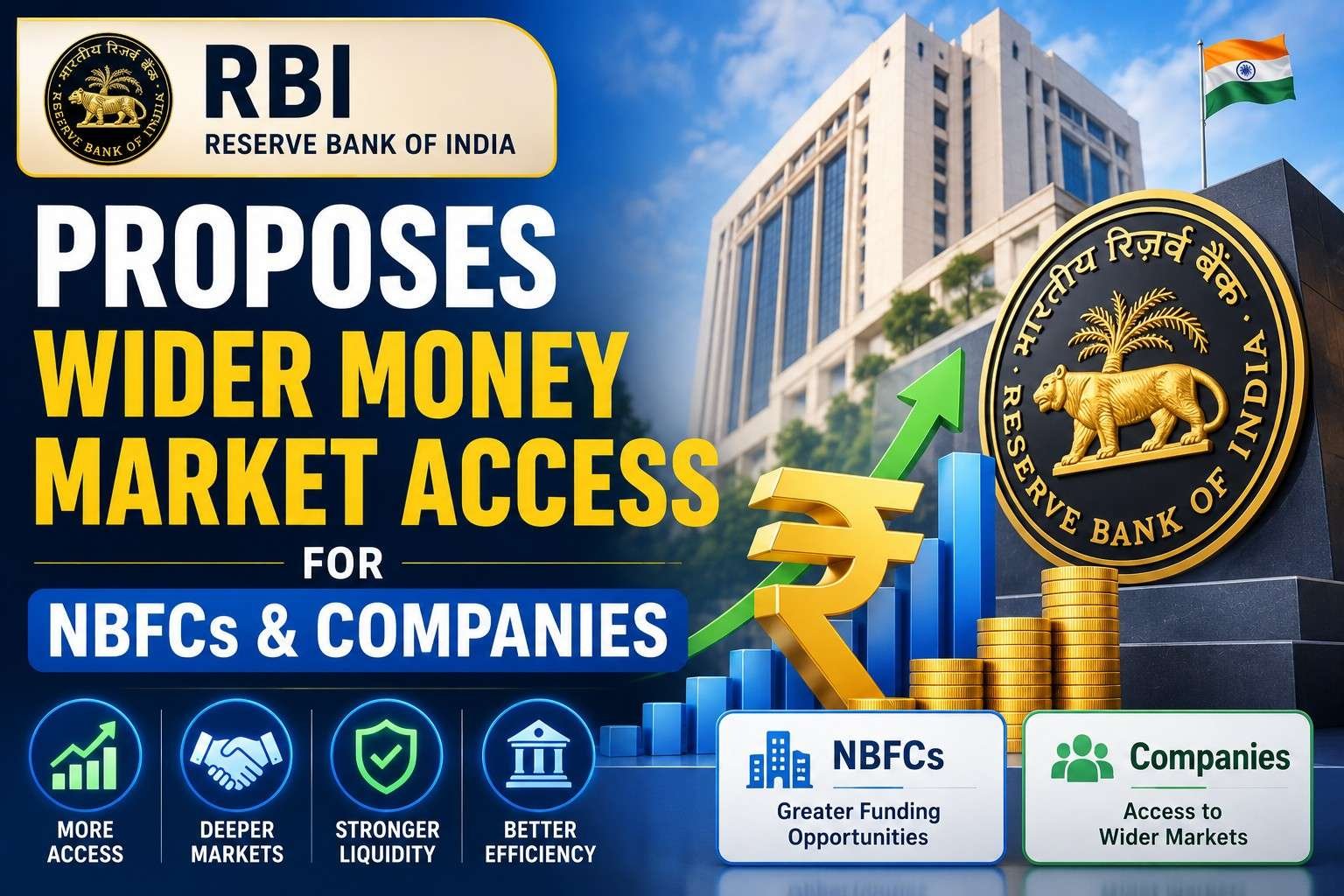
- The Reserve Bank of India (RBI) has proposed significant reforms to India’s money markets by allowing non-banking financial companies (NBFCs), housing finance companies, and other financial institutions to participate in the term money market.
- The move is aimed at improving liquidity, deepening financial markets, and broadening access to short-term funding.
What Has RBI Proposed?
- Under the draft guidelines issued by the RBI, eligible NBFCs and financial institutions will be allowed to participate in the term money market both as borrowers and lenders.
- Currently, only Banks and Standalone primary dealers are permitted to participate in the term money market.
- The new proposals seek to widen participation and improve market efficiency.
What is the Term Money Market?
- The term money market is a segment of the money market where funds are borrowed and lent for periods longer than one day.
- It helps institutions manage short-term liquidity, cash requirements, funding mismatches and treasury operations.
- Transactions generally occur for periods ranging from a few days to one year.
NBFCs to Benefit
- The draft proposals allow large NBFCs, Housing finance companies and certain financial institutions to participate both as borrowers and lenders.
- This will provide them with additional funding sources and better liquidity management.
Smaller NBFCs Excluded
- The RBI has proposed excluding smaller NBFCs from participation.
- Only larger and better-regulated entities meeting prudential norms will be eligible.
- This is intended to reduce financial risks while expanding market participation.
Companies Can Act as Lenders
- The draft rules also permit non-financial companies to participate in the term money market as lenders.
- However, they will not be allowed to borrow.
- This could increase the supply of short-term funds in the market.
Why Is RBI Making This Change?
The central bank aims to:
- Deepen money markets.
- Improve liquidity distribution.
- Increase market participation.
- Strengthen monetary policy transmission.
- Reduce funding concentration.
Broader participation can make markets more efficient and resilient.
Focus on Call Money Market
- The RBI has also been encouraging greater activity in the unsecured overnight call money market.
- The call money market serves as an important operational target for monetary policy.
- Currently, India’s money markets are dominated by banks, primary dealers and secured transactions.
- Daily turnover in these markets exceeds $70 billion.
Prudential Limits for NBFCs
- The RBI has proposed prudential limits for NBFC participation.
- Shadow lenders can participate up to 200% of their net owned funds (NOF) as of the previous financial year.
- These limits aim to balance liquidity access with financial stability.
Conclusion
The RBI’s proposal to broaden participation in India’s money markets marks an important step toward developing deeper and more diversified financial markets. If implemented, the reforms could improve liquidity management, strengthen monetary transmission, and support credit expansion across the economy.