

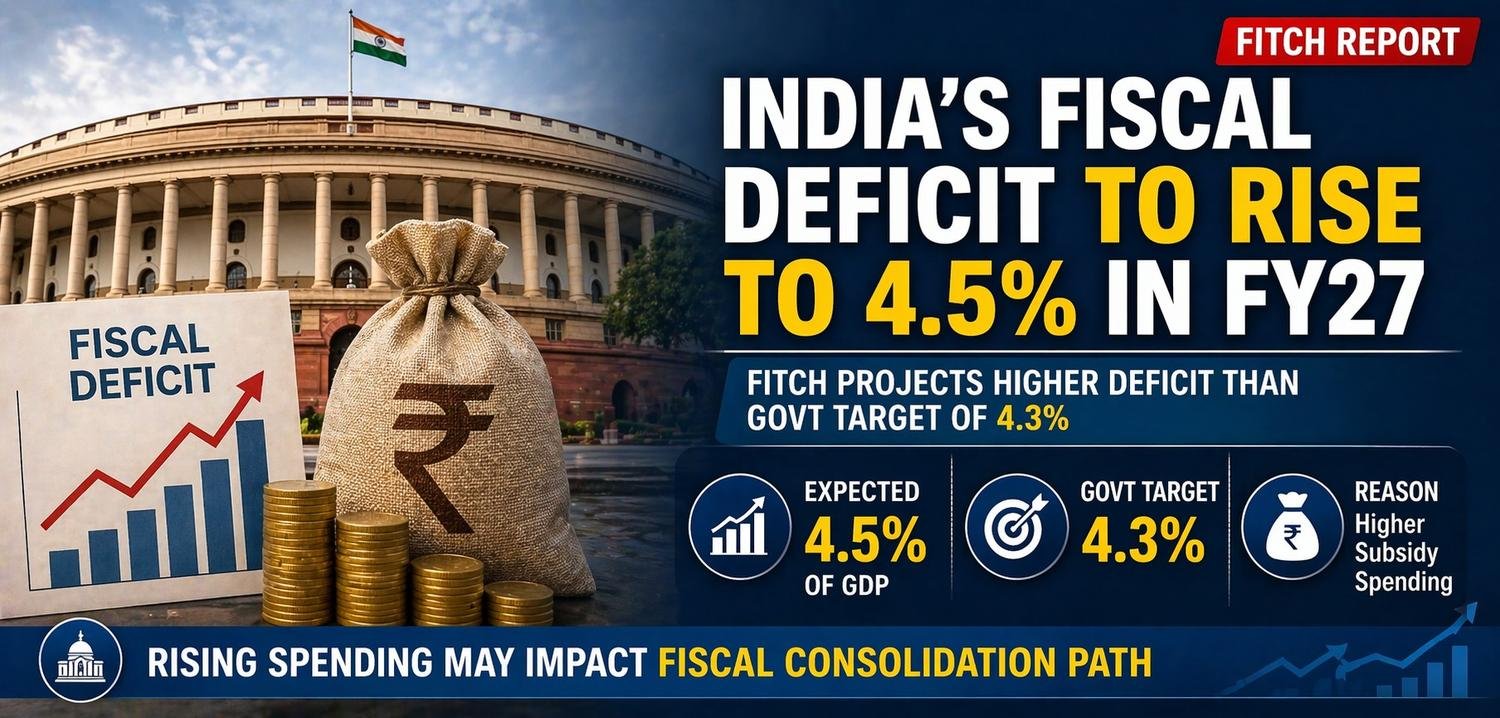
India’s fiscal deficit is expected to rise to 4.5% of GDP in FY 2026–27, slightly higher than the government’s target of 4.3%, according to a report by Fitch Group. The increase is mainly due to higher spending on subsidies and government support measures amid global uncertainties.
Reasons Behind the Expected Rise
One of the main reasons is the increase in subsidy expenditure, especially on energy and fertilisers. In recent years, the government had reduced subsidy spending to around 1.5% of GDP, but this trend may reverse in FY27.
Another important factor is the creation of a ₹1 trillion Economic Stabilisation Fund, which is likely to be used to provide:
- Additional subsidies
- Temporary tax relief
- Support to industries facing rising costs
Impact of Global Developments
The ongoing US–Iran conflict is expected to affect global supply chains, particularly:
- Energy supplies
- Fertiliser inputs
To manage these challenges, the government may take steps such as:
- Waiving customs duties on key petrochemical products
- Restricting exports of critical inputs like sulphur and helium
These measures aim to protect domestic industries but could create trade-related challenges internationally.
Sectoral Impact
The government is expected to prioritise the agriculture sector, which employs about 43% of India’s workforce. At the same time, industries like:
- Pharmaceuticals
- Textiles
- Paints
- Toys
may benefit from tax relief and policy support.
Moody’s Warning: Inflation and Unemployment
Alongside Fitch’s projections, Moody’s Analytics has highlighted additional concerns.
- Unemployment may rise to 7% in 2026
- Inflation is expected to increase to 4.5% in 2026
Recent data shows that inflation has already started rising in early 2026 after remaining low in 2025.
Exports and AI-Driven Growth
India’s exports have supported economic growth, especially due to:
- Early shipments before tariff hikes
- Strong demand for AI-related electronics
However, this momentum may slow down due to:
- Rising prices
- Supply shortages
- Cooling global demand
Conclusion
India’s fiscal deficit is likely to increase in FY27 due to higher government spending and global economic pressures. While these measures are aimed at stabilising the economy, they may put pressure on public finances. At the same time, rising inflation and unemployment risks highlight the need for balanced economic policies going forward.