

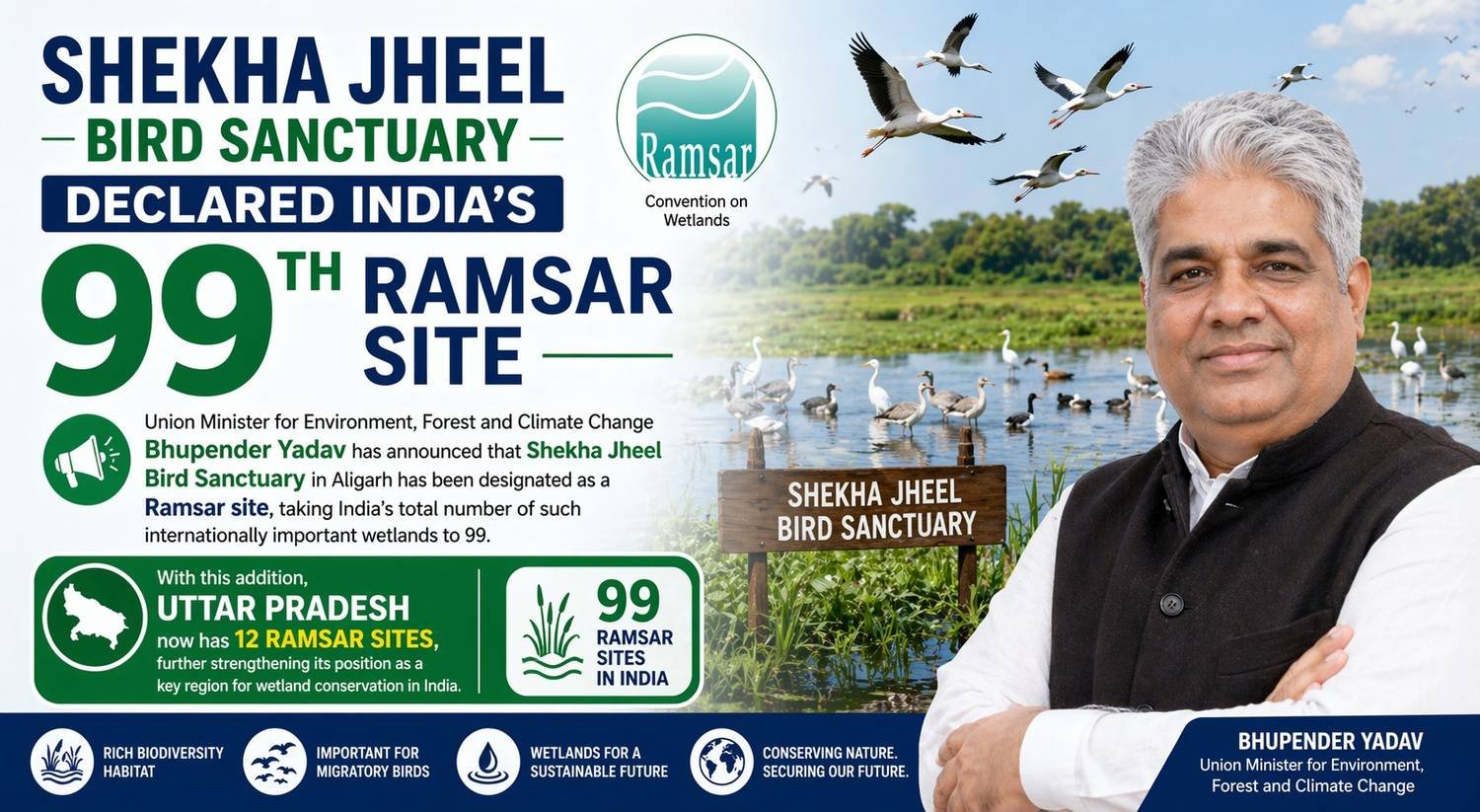
Union Minister for Environment, Forest and Climate Change Bhupender Yadav has announced that Shekha Jheel Bird Sanctuary in Aligarh has been designated as a Ramsar site, taking India’s total number of such internationally important wetlands to 99.
With this addition, Uttar Pradesh now has 12 Ramsar sites, further strengthening its position as a key region for wetland conservation in India.
What is a Ramsar Site?
A Ramsar site is a wetland designated as being of international importance under the Ramsar Convention. These sites are recognised for their ecological significance, especially in supporting biodiversity and maintaining environmental balance.
Ecological Importance of Shekha Jheel
Shekha Jheel Bird Sanctuary plays a crucial role in supporting birdlife and biodiversity:
- Acts as an important stopover on the Central Asian Flyway
- Provides habitat for several migratory bird species during winter
- Supports species like:
- Bar-headed Goose
- Painted Stork
- Various species of ducks
The wetland contributes to water security, climate resilience, and ecological balance.
Significance of the Announcement
The designation carries multiple benefits:
- Boosts biodiversity conservation
- Enhances eco-tourism and local livelihoods
- Strengthens India’s global commitment to wetland protection
- Moves India closer to achieving 100 Ramsar sites milestone
Government’s Conservation Efforts
Referring to initiatives under the leadership of Narendra Modi, the minister highlighted India’s continued focus on:
- Ecosystem restoration
- Protection of natural habitats
- Promotion of sustainable environmental practices
Conclusion
The inclusion of Shekha Jheel Bird Sanctuary as India’s 99th Ramsar site marks an important step in strengthening the country’s environmental conservation efforts. It highlights the growing importance of wetlands in ensuring biodiversity protection, climate stability, and sustainable development.