

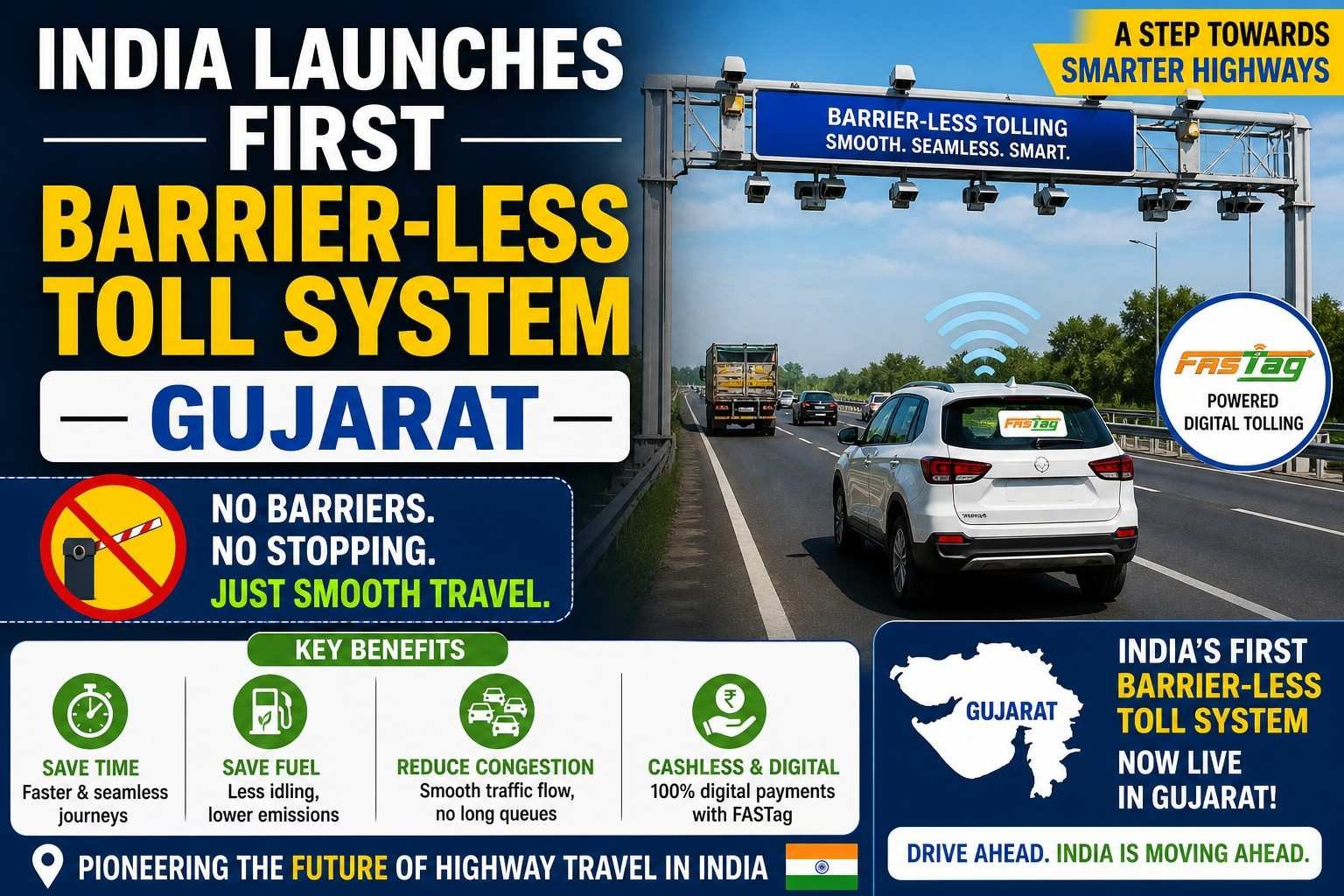
In a major step toward modernising India’s road infrastructure, Union Minister Nitin Gadkari has launched the country’s first barrier-less tolling system on the Surat–Bharuch stretch of NH-48 in Gujarat.
The system, introduced at the Chorayasi Toll Plaza, marks India’s transition to Multi-Lane Free Flow (MLFF) tolling, eliminating the need for vehicles to stop at toll booths.
What is Barrier-Less Tolling (MLFF)?
How It Works:
- Automatic Number Plate Recognition (ANPR) cameras scan vehicle plates
- FASTag (RFID-based system) deducts toll automatically
- AI analytics ensure accurate identification and billing
This combination enables fully automated, contactless toll collection.
Key Benefits of the New System
- Reduced Travel Time: Vehicles no longer need to slow down or queue at toll plazas.
- Decongested Highways: Smooth traffic flow reduces bottlenecks, especially during peak hours.
- Improved Fuel Efficiency: Less idling means lower fuel consumption.
- Reduced Emissions: Fewer stops lead to lower carbon emissions.
- Minimal Human Intervention: Automation improves transparency and reduces manual errors.
Boost to Economy and Logistics
According to Gadkari, the initiative will:
- Enhance ease of living for citizens
- Promote ease of doing business
- Enable faster movement of goods and logistics
This is especially important for India’s supply chain efficiency and economic growth.
Technology Behind the System
The MLFF tolling system integrates:
- ANPR (Automatic Number Plate Recognition)
- FASTag (RFID-based Electronic Toll Collection)
- AI-powered analytics
Together, these technologies create a seamless and intelligent tolling ecosystem aligned with global standards.
Conclusion:
The launch of India’s first barrier-less tolling system marks a transformational shift in highway travel. By combining advanced technologies like ANPR and FASTag, the government is moving toward a faster, cleaner, and more efficient road network.