

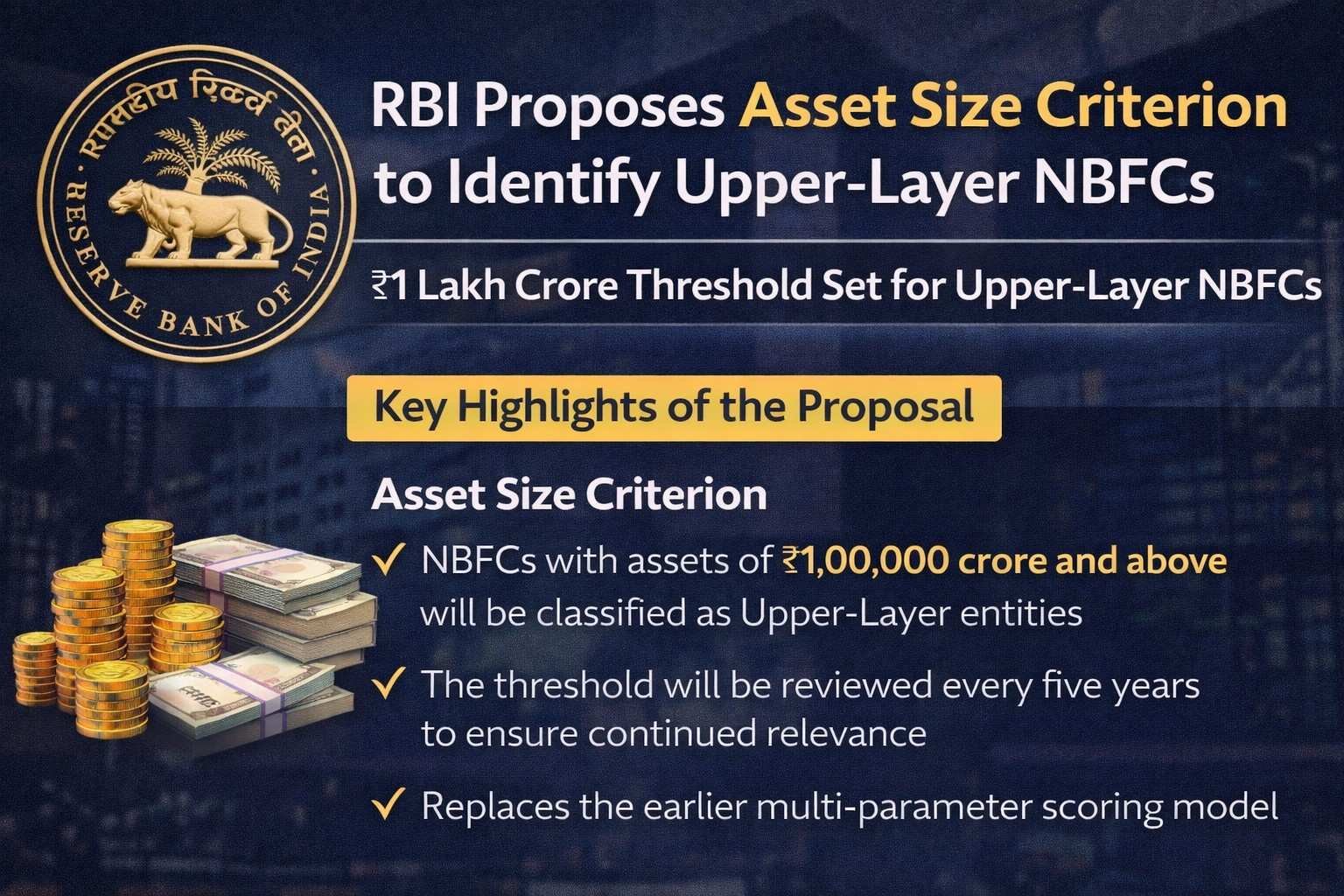
The Reserve Bank of India has proposed a new methodology to identify Upper-Layer Non-Banking Financial Companies (NBFC-ULs) by introducing an absolute asset size threshold of ₹1 lakh crore.
This marks a significant shift from the existing scoring-based system, making the classification process simpler, more transparent, and objective.
Key Highlights of the Proposal
Asset Size Criterion
- NBFCs with assets of ₹1,00,000 crore and above will be classified as Upper-Layer entities
- The threshold will be reviewed every five years to ensure continued relevance
- Replaces the earlier multi-parameter scoring model
Regulatory Changes for Government-Owned NBFCs
- RBI has proposed removal of exemptions for government-owned NBFCs
- Such entities can now also be classified as NBFC-ULs
- Reflects a move toward ownership-neutral regulation
State Government Guarantees
- NBFC-ULs will be allowed to use state government guarantees for credit risk transfer
- No fixed quantitative cap, but subject to regulatory conditions
Impact on Tata Sons
The proposal has major implications for Tata Sons:
- Financial assets: ₹1.89 lakh crore
- Total assets: ₹9.5 lakh crore
- Equity: ₹3.2 lakh crore
Key Developments:
- Tata Sons plans to repay over ₹20,000 crore
- Aim: Deregister as an NBFC-UL
- Otherwise, it may face mandatory listing requirements
There is also a possibility of classification relief if it qualifies as a Core Investment Company (CIC).
Why This Change Matters
Enhanced Regulatory Oversight
- NBFC-ULs are subject to stricter supervision
- Includes annual reviews and tighter compliance norms
Push for Market Discipline
- Large NBFCs may be required to list publicly
- Improves transparency and governance standards
Internal and Stakeholder Perspectives
- Within Tata Sons, views are divided:
- Some prefer to remain unlisted
- Others see listing as inevitable
- The SP Group (18.37% stakeholder) has been advocating for listing
Conclusion
The RBI’s proposed asset-based framework represents a major regulatory shift aimed at simplifying NBFC classification and strengthening oversight of large financial entities. While it enhances transparency and consistency, it also increases compliance pressure on large institutions like Tata Sons, potentially reshaping their corporate strategies.