

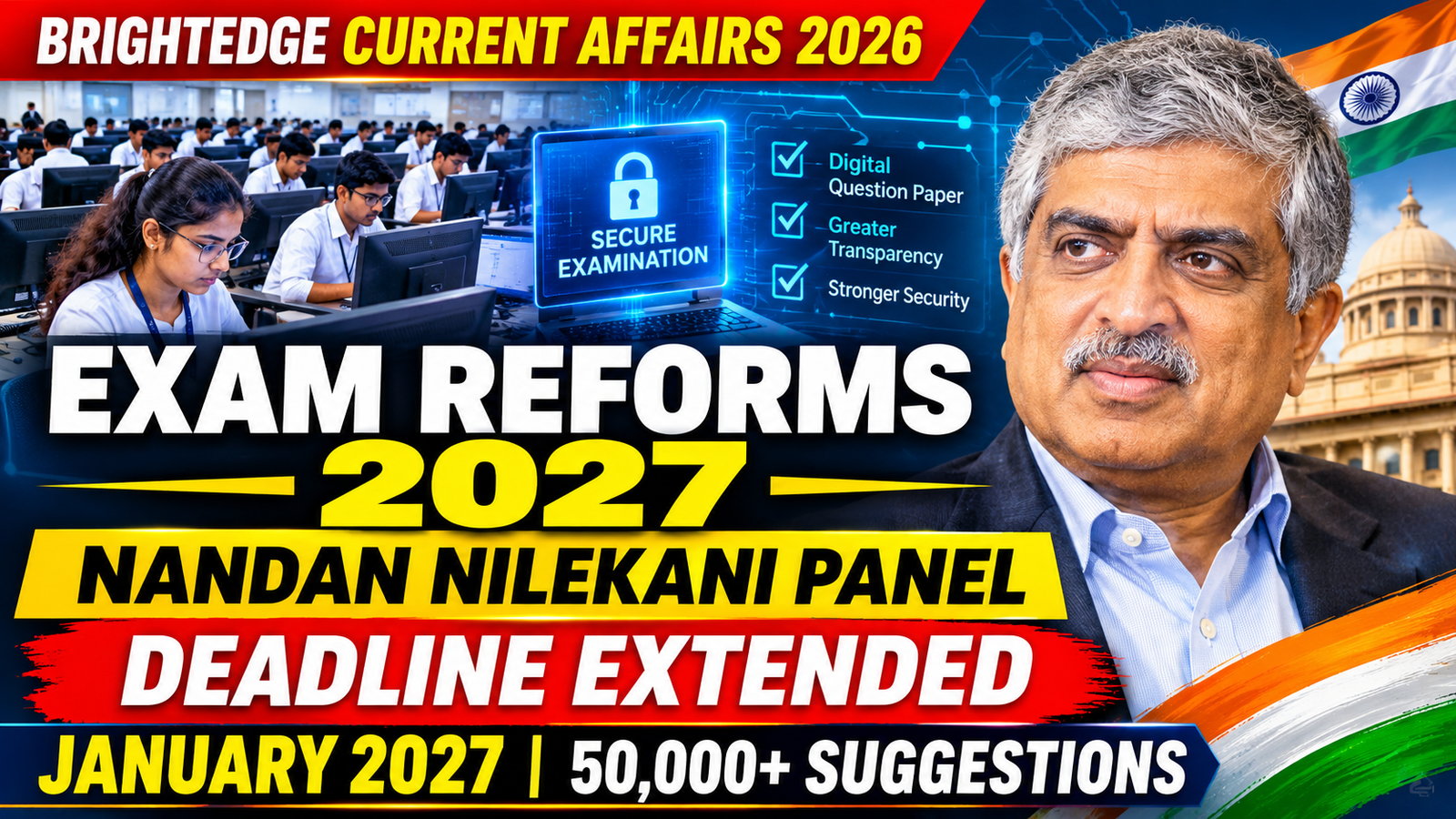
The Central Government has extended the tenure of the high-powered examination reform task force headed by Infosys co-founder Nandan Nilekani until January 2027. The committee has been given additional time to complete consultations with stakeholders and submit recommendations aimed at making India’s public examination system more secure, transparent and resistant to paper leaks.
The six-member task force has reportedly received more than 50,000 suggestions from students, parents, teachers, educational institutions, subject experts, industry organisations and examination-conducting agencies.
The development comes amid continuing concerns over examination irregularities and the need to restore students’ confidence in major national-level competitive examinations, including NEET.
Why Has the Government Extended the Task Force’s Tenure?
- The task force was initially expected to submit its recommendations by October 2026. However, stakeholder consultations were still underway, prompting the government to extend its deadline until January 2027.
- The government has also submitted an affidavit before the Supreme Court outlining the progress made by the committee.
- The additional time will allow the panel to examine suggestions from different stakeholders and develop comprehensive recommendations for strengthening examination security and administration.
Background: Formation of the Nandan Nilekani-Led Task Force
- Prime Minister Narendra Modi announced the formation of the High-Powered Task Force on Examination Reforms on July 26, 2026.
- The announcement followed widespread student protests and controversy surrounding examination irregularities, including the NEET-UG paper leak issue.
- The committee was established to identify weaknesses in India’s examination system and recommend comprehensive reforms to prevent question paper leaks, improve transparency and strengthen the credibility of national-level examinations.
- The task force is also examining the role of technology in improving examination security and administration.
Six-Member High-Powered Task Force: Key Members
The committee brings together experts from technology, space research, intelligence, education and administration.
Its members include:
- Nandan Nilekani (Chairman): Co-founder of Infosys and technology entrepreneur.
- S. Somanath: Former Chairman of the Indian Space Research Organisation (ISRO).
- Tapan Deka: Former Director of the Intelligence Bureau.
- V. Kamakoti: Director of IIT Madras.
- Anita Karwal: Former Secretary of the Department of School Education and Literacy.
- Amrit Lal Meena: Logistics and administrative expert.
The combination of expertise is intended to help the government develop a technologically advanced, secure and reliable examination framework.
Major Examination Reforms Under Consideration
The task force is examining several measures to strengthen India’s examination infrastructure and prevent question paper leaks.
1. Secure Digital Question Paper Vault
- One of the important proposals involves creating a secure digital question bank containing a large collection of questions prepared and verified by subject experts.
- The questions would be stored in a protected digital vault and selected randomly according to a predetermined examination blueprint.
2. Digital Delivery of Question Papers
- Another proposal involves transmitting encrypted question papers digitally to examination centres shortly before the examination begins.
- This could reduce the risks associated with printing, transporting and storing physical question papers.
3. Separation of Examination Responsibilities
- The committee is also examining whether different organisations should handle different stages of the examination process.
- Separating question paper preparation, examination centre management and test administration could reduce operational vulnerabilities and improve accountability.
4. Greater Use of Computer-Based Testing
- Technology-driven examinations are another important area of consideration.
- Computer-Based Testing (CBT) can reduce dependence on conventional paper-based examination processes and support better monitoring, question randomisation and examination management.
- These are proposals and areas under examination; the final recommendations will be determined by the task force.
NEET to Move to Computer-Based Testing From 2027
- In a significant development for medical entrance examination aspirants, the Central Government has announced that the National Eligibility-cum-Entrance Test (NEET) will move to a Computer-Based Test (CBT) format from 2027.
- The transition is expected to modernise the examination process and reduce certain vulnerabilities associated with conventional pen-and-paper examinations.
- However, the availability of adequate computer infrastructure, examination centres, internet connectivity and technical support will remain important considerations.
Connection With the Radhakrishnan Committee
- The current examination reform initiative builds upon earlier efforts to improve the security and administration of India’s competitive examinations.
- Following the 2024 NEET paper leak controversy, the government constituted a committee headed by former ISRO Chairman K. Radhakrishnan.
- The committee submitted its recommendations in October 2024.
- Subsequently, the government established a High-Powered Steering Committee, also headed by K. Radhakrishnan, to monitor the implementation of those recommendations.
- The Nandan Nilekani-led task force has also consulted K. Radhakrishnan as part of its examination reform exercise.
What Does This Mean for Students and Competitive Exam Aspirants?
The proposed reforms could bring significant changes to India’s competitive examination ecosystem.
Students preparing for examinations such as NEET, JEE, SSC, banking and railway recruitment examinations may benefit from improvements in examination security, transparency and administration.
The key expected benefits include:
- Reduced possibilities of question paper leaks.
- Greater transparency in examination procedures.
- Improved digital examination infrastructure.
- Better monitoring and accountability.
- More secure question paper preparation and delivery.
- Improved confidence among students and parents.
However, the actual impact will depend on the final recommendations and their implementation by the concerned authorities.
Click here to read: Cabinet Approves PM Viksit Gram Swaraj Yojana Worth ₹7,395 Crore
Click here to read: Government Notifies National Social Security Board for Gig & Platfrom Workers