

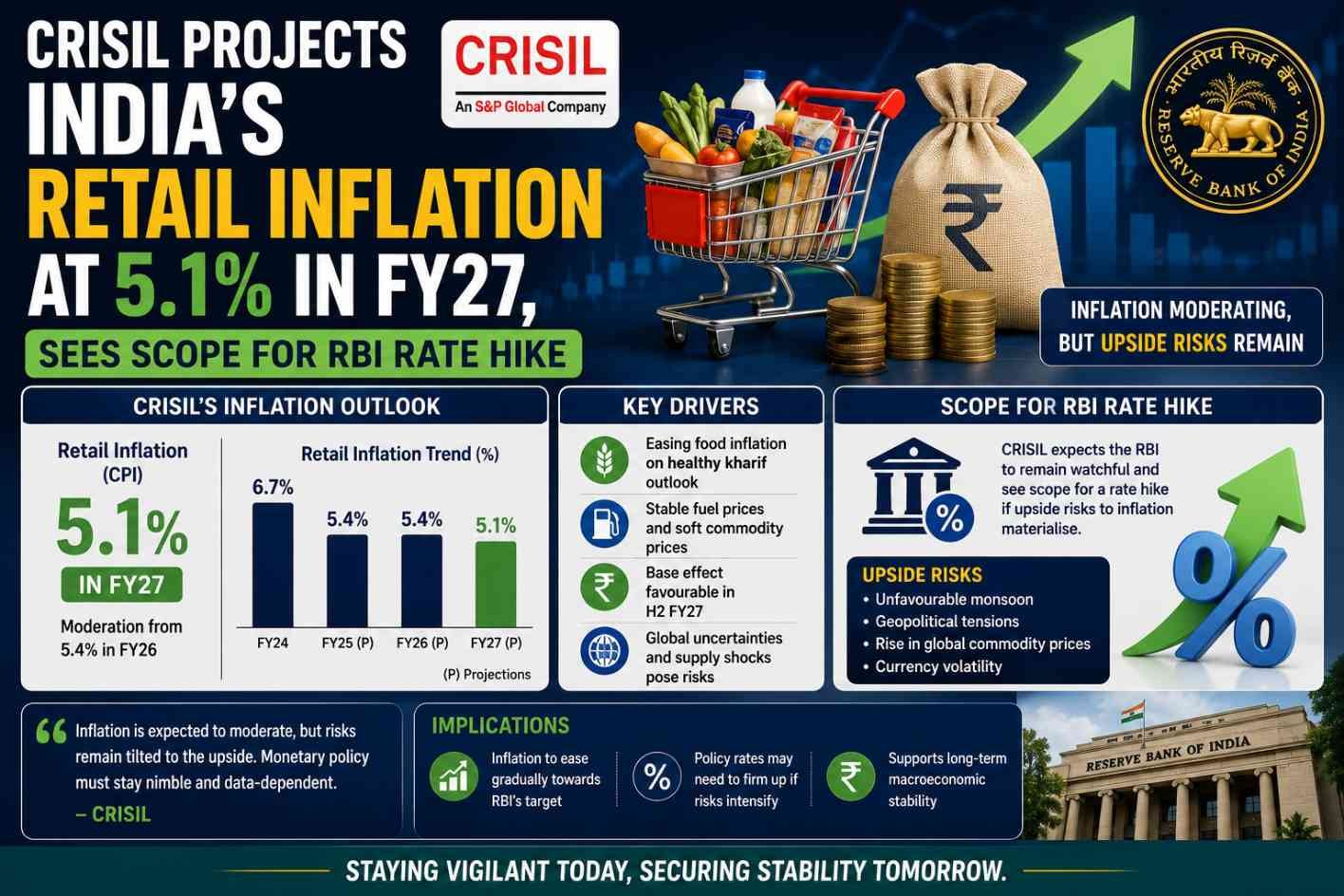
- India’s retail inflation is expected to remain elevated through FY27, with Crisil Ratings forecasting an average Consumer Price Index (CPI) inflation of 5.1%. The report attributes the rise to higher fuel prices, persistent food inflation, elevated crude oil prices, a weaker rupee, and weather-related risks linked to El Niño.
- The report also indicates that if inflationary pressures continue during the second half of FY27, the Reserve Bank of India (RBI) may consider a 25-basis-point (0.25%) increase in the repo rate to keep inflation under control.
Key Highlights
- Crisil projects 5.1% CPI inflation in FY27.
- RBI may raise interest rates by 25 basis points if inflation remains high.
- Retail inflation increased to 4.4% in June 2026, up from 3.9% in May.
- Fuel inflation surged after higher petrol and diesel prices.
- El Niño-related rainfall concerns may increase food inflation.
- Weak rupee and expensive crude oil could keep imported inflation elevated.
Crisil’s Inflation Forecast for FY27
According to Crisil, India’s inflation trajectory is expected to remain above the RBI’s medium-term target due to multiple domestic and global factors.
FY27 Inflation Projection
- Projected CPI Inflation: 5.1%
- Previous Fiscal Average: 2.0%
The sharp increase reflects stronger price pressures across food, fuel, and other essential consumer goods.
Why Is Inflation Rising?
Crisil identifies several factors contributing to higher inflation.
1. Rising Fuel Prices
One of the biggest drivers is the increase in fuel costs.
The report notes that June was the first full month reflecting the impact of the cumulative ₹7.5 per litre increase in petrol and diesel prices announced in mid-May.
As a result:
- Fuel inflation rose to 4.5%, compared with 1.9% in May.
- Inflation in personal transport fuels increased to 7.6% from 3.1%.
- LPG and piped natural gas inflation doubled to 4.6% following higher domestic cooking gas prices.
Higher fuel prices increase transportation and logistics costs, which eventually raise prices across many sectors.
2. Food Inflation Remains Elevated
Food prices continue to put upward pressure on retail inflation.
Food inflation increased to 5.3% in June, up from 4.8% in May.
Products witnessing higher inflation include:
- Meat
- Milk
- Fish
- Fruits
- Edible oils
- Ready-to-eat food products
- Onions
Meanwhile:
- Tomato inflation eased.
- Potato prices remained relatively subdued, although deflation narrowed.
3. Weak Rupee Increases Imported Inflation
The depreciation of the Indian rupee is making imported goods more expensive.
A weaker rupee raises the cost of:
- Crude oil imports
- Industrial raw materials
- Fertilisers
- Electronic components
- Machinery
These higher import costs eventually pass through to consumers.
4. Elevated Crude Oil Prices
Crisil expects Brent crude oil prices to average between $82 and $87 per barrel during FY27.
Although lower than recent peaks, these prices remain high enough to sustain pressure on transportation, manufacturing, and logistics costs.
5. El Niño Could Impact Food Production
The report warns that below-normal rainfall associated with El Niño conditions could reduce agricultural output.
Lower crop production may lead to:
- Higher food prices
- Supply shortages
- Increased vegetable inflation
- Pressure on cereal and pulse prices
However, timely government intervention through buffer stocks and supply management could help contain sharp spikes.
June 2026 Inflation Snapshot
India’s retail inflation moved above the RBI’s 4% target for the first time since January 2025.
June CPI Inflation
- June: 4.4%
- May: 3.9%
The increase reflected simultaneous pressure from both food and non-food components.
Core Inflation Remains Stable
Core inflation, which excludes food and fuel, remained relatively stable at 3.9%.
This indicates that businesses are gradually passing higher:
- Energy costs
- Transportation expenses
- Manufacturing input costs
on to consumers rather than raising prices abruptly.
Could RBI Raise Interest Rates?
Crisil believes the RBI may need to tighten monetary policy if inflation continues to remain above its comfort level.
Possible Action
- 25 basis point repo rate hike during the second half of FY27.
A rate increase would aim to:
- Control inflation.
- Anchor inflation expectations.
- Stabilise the rupee.
- Moderate excessive demand.
However, the RBI’s decision will depend on future inflation data, global commodity prices, and domestic economic growth.
What This Means for Consumers
If inflation remains elevated:
Consumers may experience:
- Higher fuel expenses.
- Increased food prices.
- Costlier transportation.
- More expensive household goods.
- Potentially higher borrowing costs if interest rates rise.
Businesses may also face higher operating costs, which could gradually be passed on to consumers.
Conclusion
- Crisil’s projection of 5.1% retail inflation for FY27 highlights the growing challenges posed by rising fuel costs, food inflation, elevated crude oil prices, and a weaker rupee.
- While the RBI has so far maintained a balanced policy approach, persistent inflationary pressures could prompt a 25-basis-point rate hike later in the fiscal year.
- The coming months will be crucial, with global oil prices, monsoon performance, and food supply conditions playing a significant role in shaping India’s inflation outlook.