

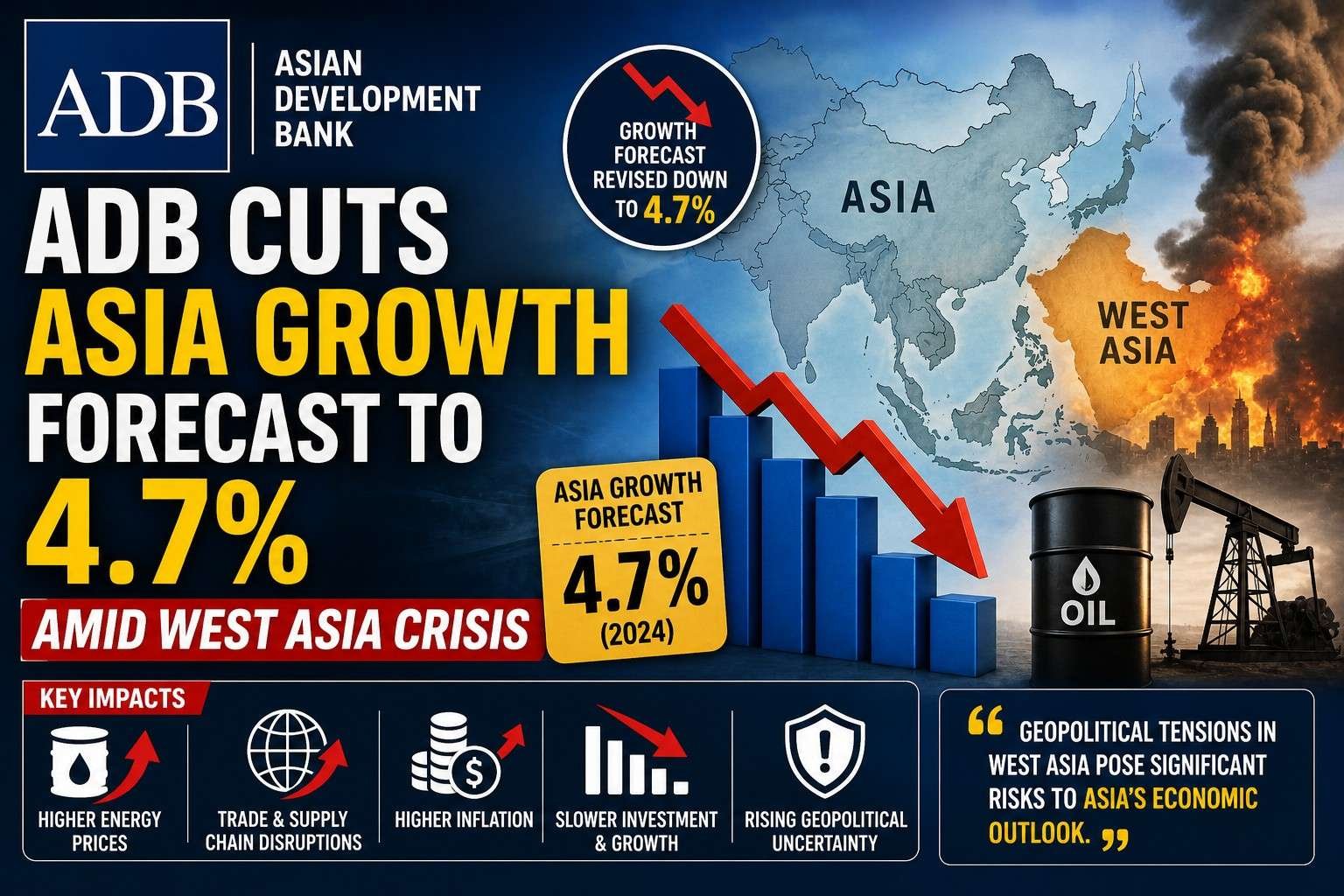
The Asian Development Bank (ADB) has revised its economic outlook for Asia and the Pacific, lowering the region’s growth forecast for 2026 to 4.7%, down from the earlier estimate of 5.1%. This downgrade comes in response to prolonged disruptions in West Asia, which have triggered a surge in global energy prices and tightened financial conditions across economies. Alongside slower growth, inflation is now expected to rise sharply, indicating growing macroeconomic stress in the region.
Why Has Growth Been Downgraded?
The primary reason behind this revision is the ongoing geopolitical instability in West Asia, which has significantly impacted:
- Energy supply chains
- Oil and gas prices
- Global trade routes
ADB President Masato Kanda highlighted that these are not short-term shocks but systemic and long-lasting disruptions affecting global economic stability.
Rising crude oil prices—projected at $96 per barrel in 2026—have increased input costs for industries, reduced consumption capacity, and weakened growth prospects, especially in import-dependent economies.
Rising Inflation: A Major Concern
ADB has also sharply increased its inflation forecast to 5.2% in 2026, compared to the earlier estimate of 3.6%.
Key reasons for rising inflation:
- Higher fuel and transportation costs
- Increased production expenses
- Supply chain disruptions
Inflation is expected to ease slightly to 4.1% by 2027, but risks remain elevated due to global uncertainties.
Impact on Asian Economies
The slowdown and inflationary pressure will be more severe for countries that are:
- Highly dependent on fuel imports
- Relying on tourism and remittances
- Dependent on external financing
Such economies face a double challenge:
- Slower economic growth
- Rising cost of living
Worst-Case Scenario (ADB Warning)
ADB has also presented a downside scenario:
- Growth could fall to 4.2% in 2026 and 4% in 2027
- Inflation may spike to 7.4%
This scenario assumes further escalation of conflict in West Asia, leading to even higher oil prices and deeper economic disruption.
About ADB
The Asian Development Bank is a regional development bank established in 1966 to promote economic and social development in Asia and the Pacific.
Key Facts:
- Headquarters: Manila, Philippines
- Members: 68 countries (including India)
- Type: Multilateral Development Bank
- President: Masato Kanda
Functions:
- Provides loans, grants, and technical assistance
- Supports infrastructure, poverty reduction, and sustainable development
- Publishes key reports like:
- Asian Development Outlook (ADO)
For exams: ADB is similar to institutions like the World Bank but focuses specifically on the Asia-Pacific region.
Conclusion
The ADB’s revised outlook highlights the fragility of Asia’s economic recovery in the face of global geopolitical tensions. The combination of slower growth and rising inflation poses a serious challenge for policymakers. Going forward, balanced policy measures, energy efficiency, and economic resilience will be crucial to navigating this uncertain environment.