

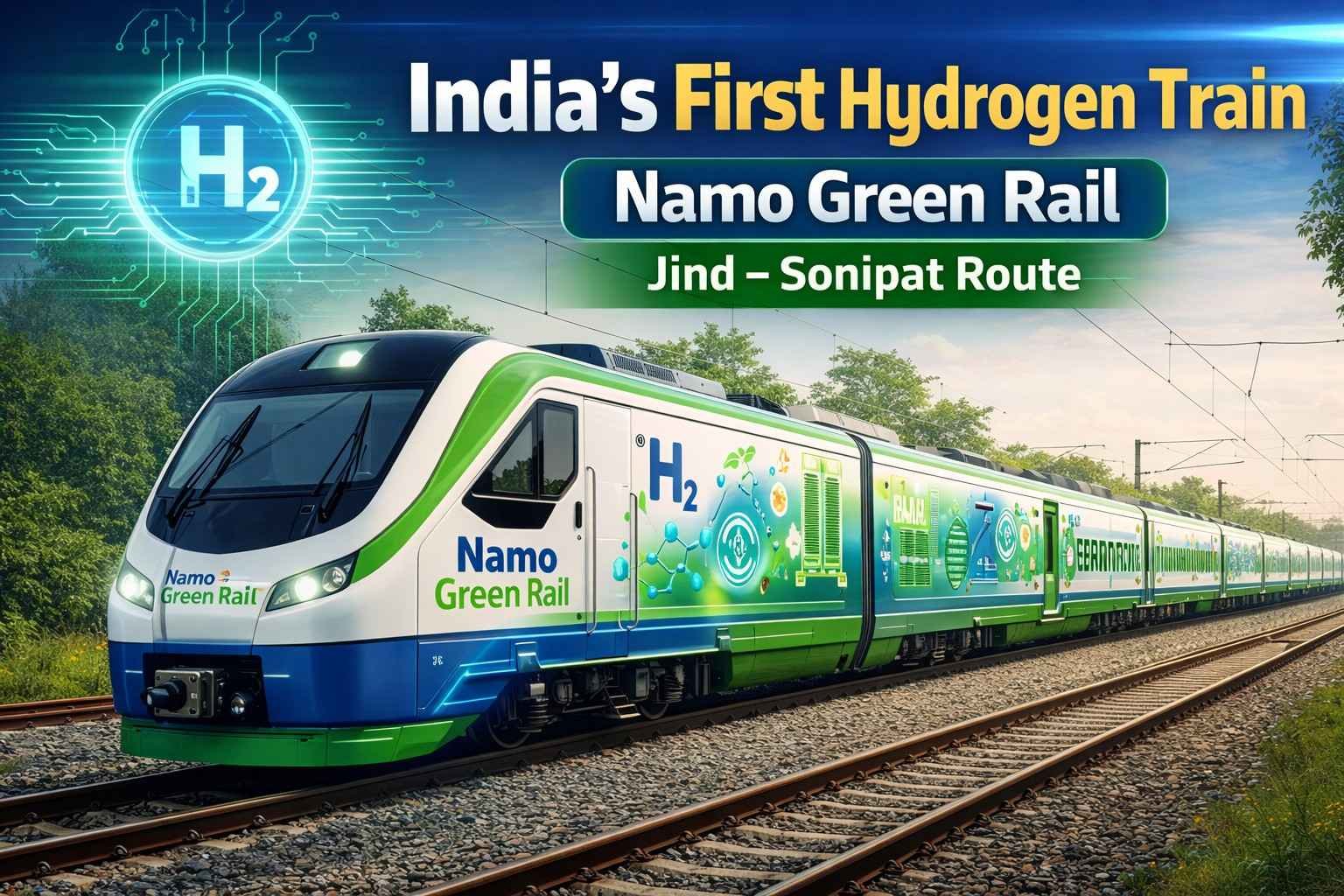
India is set to make a significant leap in sustainable transportation with the launch of its first hydrogen-powered train named ‘Namo Green Rail’. The eco-friendly train will operate between Jind and Sonipat in Haryana, marking a major milestone in the modernization of Indian Railways.
- The initiative aims to reduce carbon emissions and promote clean energy in railway operations while positioning India among the countries adopting advanced green transportation technologies.
Key Highlights:
- India’s first hydrogen-powered train ‘Namo Green Rail’ to run in Haryana.
- Route: Jind–Sonipat section of Northern Railway.
- Hydrogen fuel technology produces zero carbon emissions.
- Part of India’s push toward green and sustainable transport.
What is the ‘Namo Green Rail’ Project?
- The hydrogen train project is part of Indian Railways’ plan to introduce environmentally friendly transportation systems. Instead of using diesel or conventional fuel, the train will run on hydrogen fuel cells, which generate electricity through a chemical reaction between hydrogen and oxygen.
- The only byproduct of this process is water vapor, making hydrogen trains one of the cleanest forms of rail transport.
Why Hydrogen Trains Are Important
Hydrogen-powered trains offer several advantages over traditional diesel-powered trains:
- Zero carbon emissions, helping reduce pollution
- Lower operating costs in the long term
- Reduced dependence on fossil fuels
- Environmentally sustainable transportation
As countries around the world focus on climate change and clean energy solutions, hydrogen technology is gaining importance in the transport sector.
Route and Operational Details:
- The first hydrogen train will run on the Jind–Sonipat route in Haryana, which is part of the Northern Railway network.
- This route was selected because it includes sections where introducing new technology can be tested effectively before expanding hydrogen-powered trains to other parts of the railway network.
- Indian Railways plans to gradually introduce hydrogen trains on additional routes in the future.
India’s Green Railway Mission
The hydrogen train project aligns with the Indian government’s broader goals of promoting clean energy and sustainable infrastructure.
Indian Railways has already taken several initiatives to reduce its environmental impact, including:
- Electrification of railway tracks
- Installation of solar power plants
- Energy-efficient locomotives
- Adoption of alternative fuels
The introduction of hydrogen-powered trains represents another step toward making the railway network more environmentally friendly.
Global Context:
- Several countries, including Germany and Japan, have already introduced hydrogen-powered trains. By launching ‘Namo Green Rail’, India joins a growing list of nations exploring hydrogen as a future energy source for transportation.
- Experts believe hydrogen trains could play an important role in reducing emissions in rail systems worldwide.
Future Prospects
- If the pilot project proves successful, Indian Railways may introduce hydrogen-powered trains on more routes across the country.
- This could significantly reduce diesel consumption and help India move closer to its climate and sustainability goals.
- The ‘Namo Green Rail’ project therefore represents not just a technological innovation but also a crucial step toward building a greener and more sustainable transport system.