

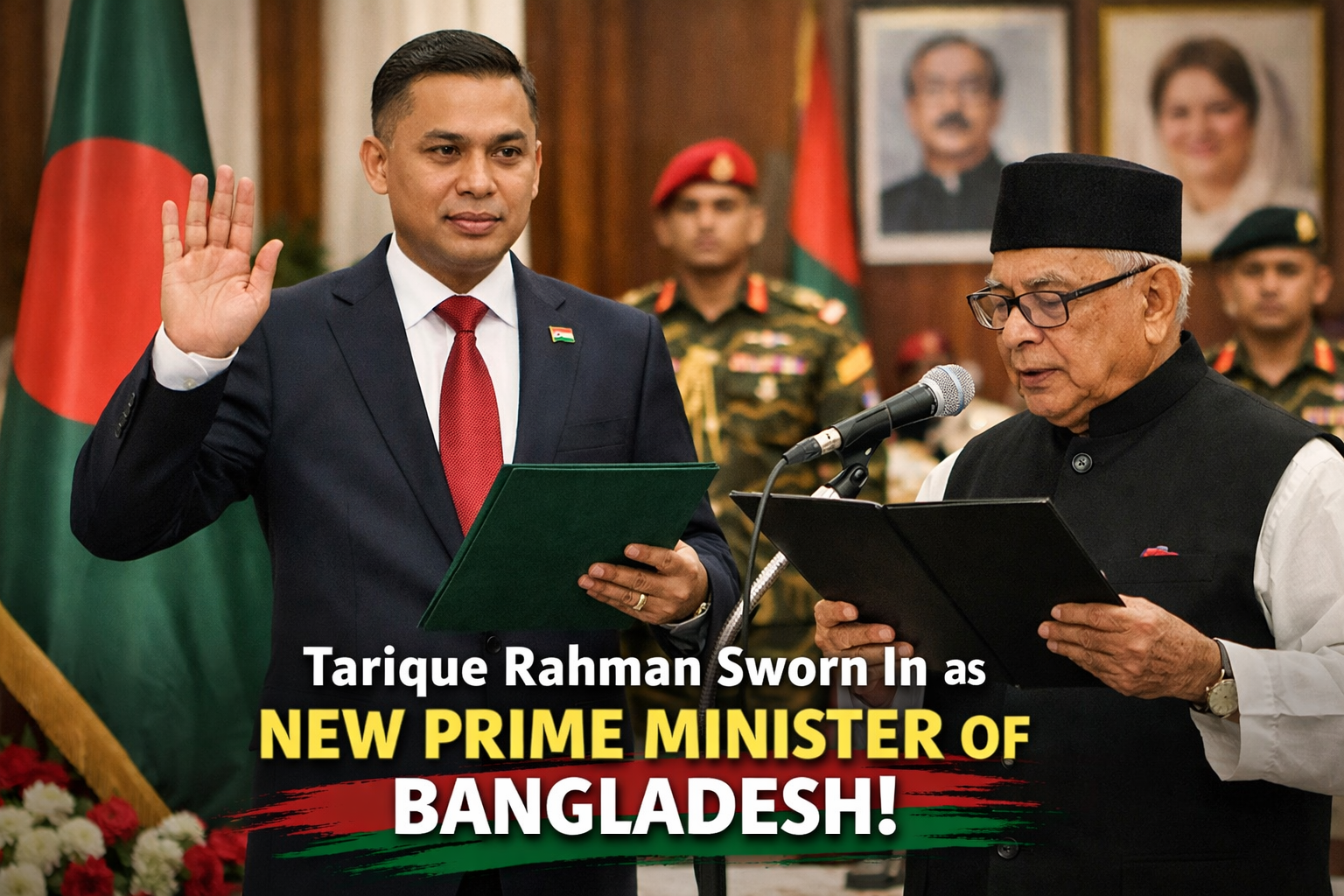
Tarique Rahman was sworn in as the 11th Prime Minister of Bangladesh following the formation of a new government after the general elections. He becomes the first Prime Minister to assume office since the July Revolution.

His swearing-in ceremony marked the end of the 18-month interim government led by Muhammad Yunus, who had been serving as Chief Adviser from August 2024 until his resignation on February 16, 2026.
The oath-taking ceremony was held at Bangabhaban, the Presidential Palace in Dhaka, and was administered by President Mohammed Shahabuddin. Along with Tarique Rahman, 25 cabinet ministers and 24 state ministers were also sworn in.
In the 13th parliamentary elections held in 2026, the Bangladesh Nationalist Party (BNP) and its allies secured a decisive victory, winning 212 out of 299 seats, with a voter turnout of 59.44%.
Jamaat-e-Islami and its allies won 77 seats, while the National Citizen Party (NCP) secured 6 seats. Independent candidates won 7 seats.
The formation of the new government marks a significant political transition in Bangladesh, ending the interim administrative phase and restoring a full-fledged elected government.