

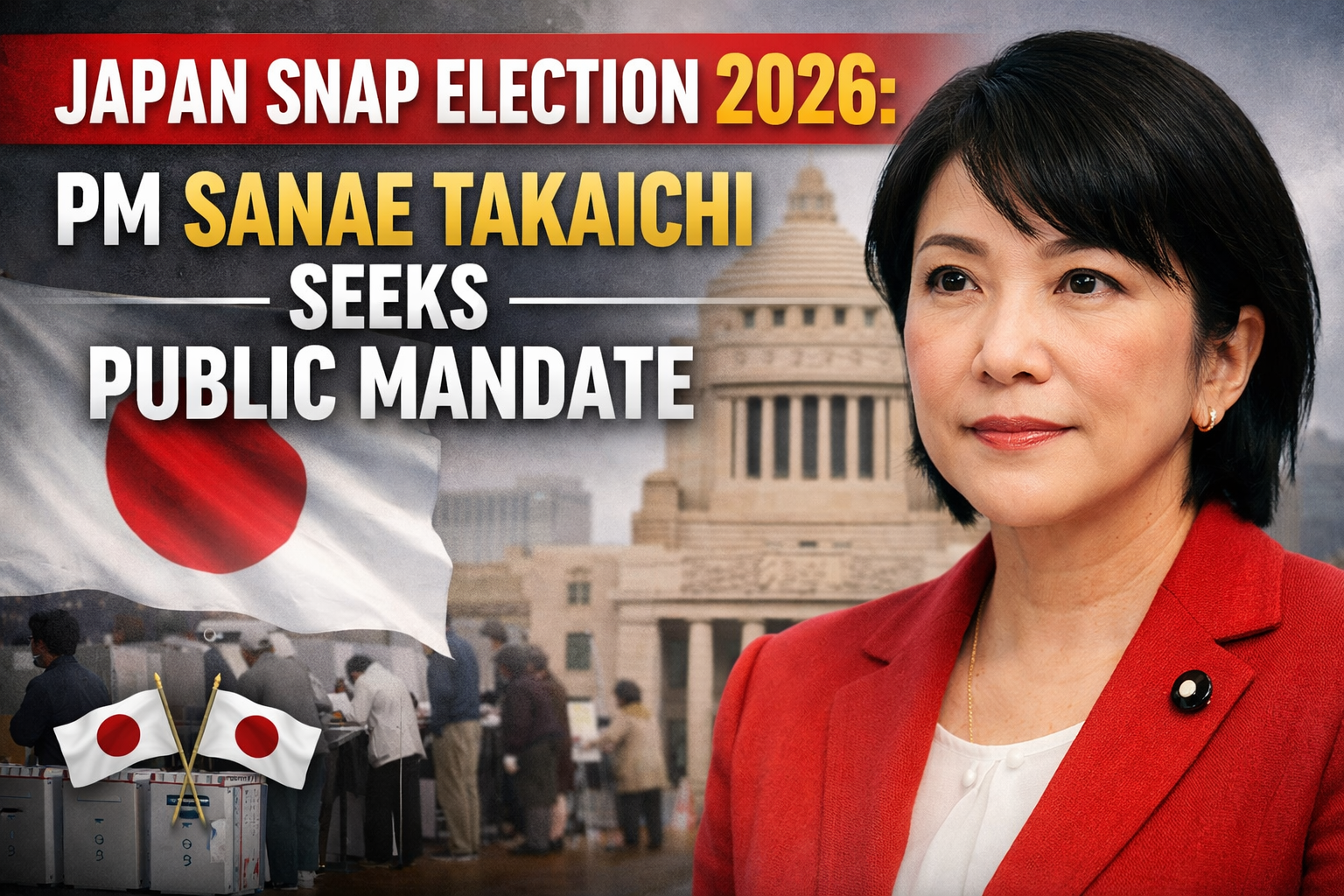
- Japanese voters are casting ballots today in a snap parliamentary election called by Prime Minister Sanae Takaichi, who is seeking a direct public mandate just months after being elected by lawmakers.
- Takaichi’s decision to dissolve the lower house and go to the polls has raised the political stakes.
- Her coalition led by the Liberal Democratic Party (LDP) in partnership with the Japan Innovation Party, known as Ishin is targeting 310 seats, a threshold that would allow it to override legislation blocked by the opposition-controlled upper chamber.

- The prime minister has vowed to step down if the coalition loses its majority, turning the election into a crucial test of her leadership.
- Early voting figures indicate a slight decline in participation. Nearly 4.6 million people had cast early ballots as of a week ago, 2.5% lower than the previous election in 2024.
- Officials attribute the drop mainly to heavy snowfall in northern and western regions of the country.
- Under Japan’s mixed electoral system, voters will elect 289 lawmakers from single-seat constituencies, while the remaining seats will be filled through proportional representation based on party votes.
- The outcome is expected to shape Japan’s political direction and determine the future of Takaichi’s government.
Japan: Geography, Location and Surrounding Seas Explained
- Japan is an island country in East Asia, located in the Pacific Ocean off the northeast coast of the Asian mainland. Japan is bordered to the west by the Sea of Japan and stretches from the Sea of Okhotsk in the north to the East China Sea in the south.
- Japan’s strategic location has shaped its climate, culture, and maritime connections, making it one of the most influential nations in the Asia-Pacific region.
- Capital:Tokyo
- Emperor:Naruhito
- Prime Minister:Sanae Takaichi