

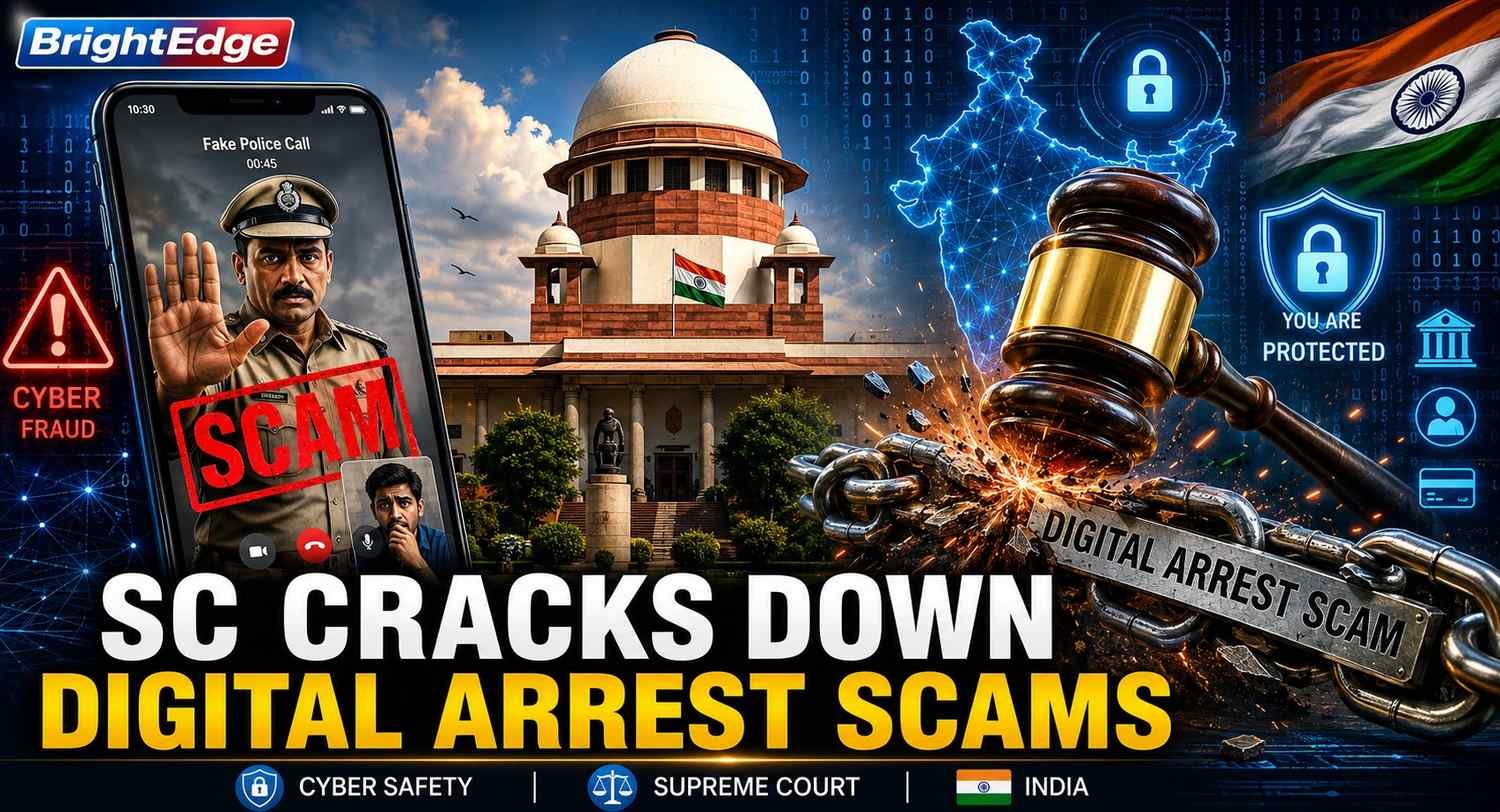
In a major step to protect citizens from the growing menace of cybercrime, the Supreme Court of India has tightened rules to curb digital arrest scams. The move comes amid a sharp rise in cases where fraudsters impersonate police officers, CBI officials, Enforcement Directorate (ED) personnel, customs officers, or other government authorities to extort money from unsuspecting victims.
These scams, commonly known as digital arrest scams, rely on fear, intimidation, and fake legal threats to manipulate victims into transferring money or revealing sensitive financial information. The Supreme Court’s intervention aims to strengthen legal safeguards, improve accountability, and enhance public awareness to combat this evolving form of cyber fraud.
What Is a Digital Arrest Scam?
A digital arrest scam is a cyber fraud in which criminals pretend to be law enforcement or government officials and falsely claim that the victim is involved in a criminal investigation.
Typically, scammers contact victims through phone calls, video calls, or messaging apps and use forged documents, fake identity cards, or fabricated arrest warrants to create panic. Victims are often pressured to remain isolated, avoid contacting family members, and transfer money under the pretext of “verification,” “security deposits,” or “case settlement.”
It is important to note that Indian law enforcement agencies do not conduct arrests or investigations through video calls or demand money to avoid legal action.
Why Did the Supreme Court Intervene?
The Supreme Court acted in response to the increasing number of digital arrest frauds causing significant financial losses and emotional distress across the country.
The Court’s objective is to:
- Protect citizens from cyber-enabled financial fraud.
- Strengthen safeguards against impersonation scams.
- Improve coordination among law enforcement agencies.
- Encourage timely reporting and investigation.
- Promote public awareness of digital safety.
Key Directions and Measures
The Supreme Court’s focus includes:
Strengthening Cybercrime Response
Authorities are expected to improve coordination for faster action against cyber fraud networks.
Enhanced Public Awareness
Greater emphasis is placed on educating citizens about fake police calls, forged legal notices, and online intimidation tactics.
Better Investigation Mechanisms
Agencies are encouraged to strengthen cyber investigation capabilities and improve the handling of digital evidence.
Protection of Victims
Victims of digital arrest scams should have easier access to complaint mechanisms and support systems.
Accountability
The Court has highlighted the need for effective enforcement against those operating cyber fraud networks.
Common Tricks Used by Scammers
Fraudsters often use tactics such as:
- Claiming a parcel contains illegal items.
- Pretending to be police, CBI, ED, RBI, customs, or telecom officials.
- Sending fake arrest warrants or court notices.
- Demanding immediate payment through bank transfer, UPI, or cryptocurrency.
- Threatening arrest or account freezing.
- Asking victims to stay on continuous video calls.
These tactics are designed to create fear and prevent victims from verifying the claims.
How to Protect Yourself
Follow these precautions:
- Never transfer money because of threats received over a phone or video call.
- Verify the identity of any official through official government channels.
- Do not share OTPs, PINs, passwords, or banking credentials.
- Disconnect suspicious calls immediately.
- Inform family members if you receive threatening calls.
- Report cyber fraud promptly through the National Cyber Crime Reporting Portal or your local police.
- Keep banking apps and devices updated with the latest security features.
Impact of the Supreme Court’s Action
The Court’s intervention is expected to:
- Strengthen public confidence in digital transactions.
- Improve cybercrime investigations.
- Increase awareness about impersonation fraud.
- Encourage faster reporting of online scams.
- Promote collaboration among banks, telecom companies, and law enforcement agencies.
Why This Matters
India’s rapid digital transformation has increased the use of online banking, digital payments, and mobile communication. While these technologies offer convenience, they also create opportunities for cybercriminals.
Strengthening legal and institutional safeguards against digital arrest scams is crucial to protecting citizens and maintaining trust in the country’s digital ecosystem.
Key Facts at a Glance
| Feature | Details |
|---|---|
| Issue | Digital Arrest Scams |
| Action | Supreme Court tightens safeguards |
| Objective | Protect citizens from cyber fraud |
| Common Fraud Method | Fake police or government impersonation |
| Expected Impact | Stronger cybercrime response and greater public awareness |
Frequently Asked Questions (FAQs)
What is a digital arrest scam?
It is a cyber fraud where criminals impersonate government or law enforcement officials to intimidate victims into transferring money or sharing confidential information.
Can police legally arrest someone through a video call?
No. Arrests and legal procedures follow established legal processes. A demand for money or threats made solely through phone or video calls should be treated as suspicious.
What should I do if I receive such a call?
End the call, avoid making payments or sharing personal information, verify any claims through official channels, and report the incident to the appropriate cybercrime authorities.
Who is most vulnerable?
Anyone can become a target, but elderly individuals, students, professionals, and first-time internet users are often specifically targeted.
Conclusion
The Supreme Court’s decision to tighten measures against digital arrest scams marks an important step in India’s fight against cybercrime. As fraudsters adopt increasingly sophisticated methods, public awareness, prompt reporting, and coordinated enforcement remain essential. Citizens should stay alert, verify suspicious claims through official channels, and remember that genuine law enforcement agencies do not demand money or conduct arrests through video calls. Together, stronger legal safeguards and informed digital practices can help create a safer online environment for everyone.