

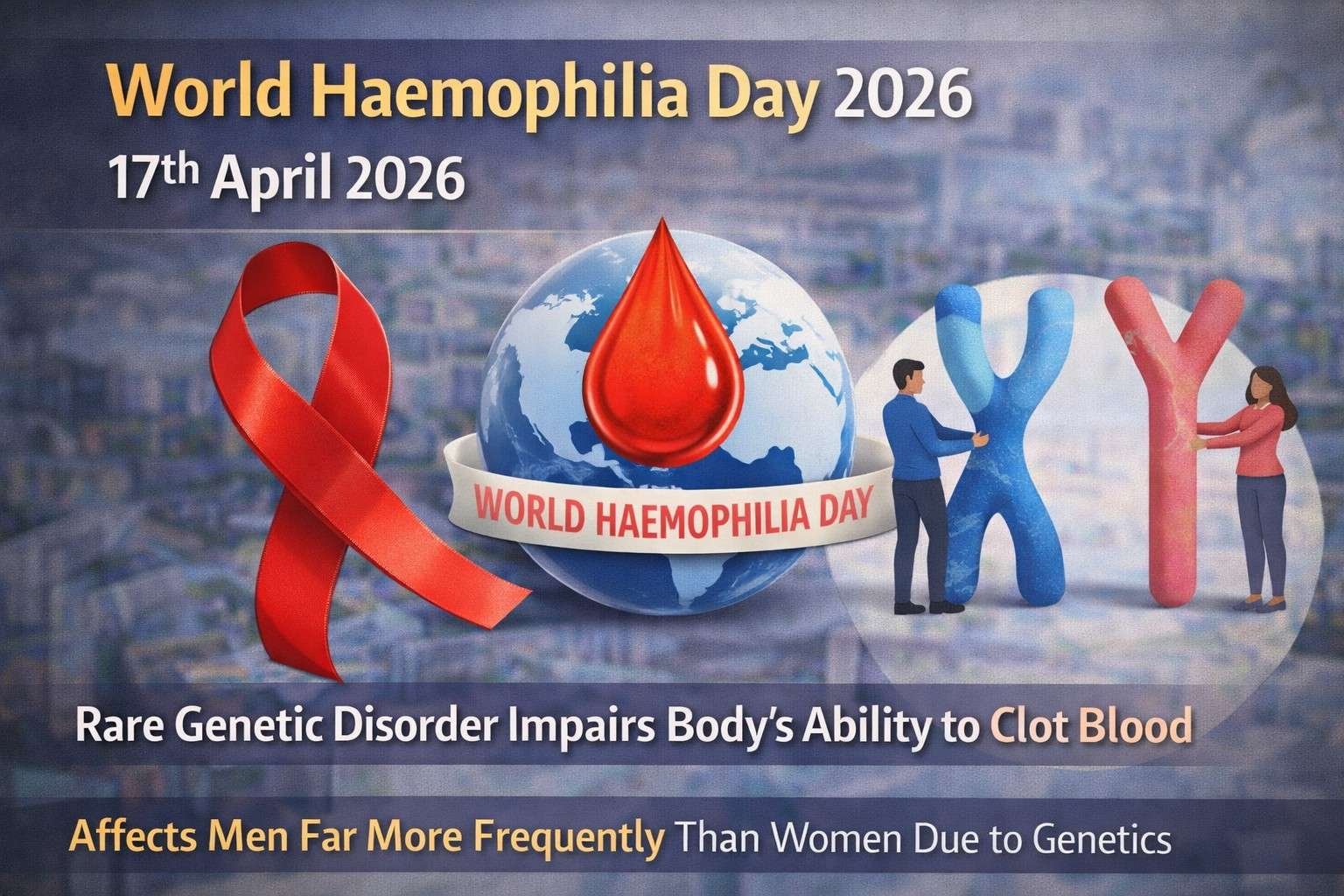
World Haemophilia Day, observed on April 17, aims to raise awareness about haemophilia, a rare but serious genetic disorder that affects the body’s ability to clot blood properly.
One striking fact about this condition is that it affects men far more frequently than women, and the reason lies in genetics.
What Is Haemophilia?
Haemophilia is a genetic bleeding disorder in which the blood does not clot normally due to the deficiency of certain clotting factors, mainly:
- Factor VIII (Haemophilia A)
- Factor IX (Haemophilia B)
Common symptoms include:
- Prolonged bleeding
- Easy bruising
- Joint bleeding
Globally, over 210,000 people are diagnosed, but the actual number may exceed 400,000, with many cases still undetected
Why Does Haemophilia Affect Men More?
The answer lies in how the disease is inherited.
Haemophilia is an X-linked recessive disorder
- Females: XX chromosomes
- Males: XY chromosomes
In Males:
- They have only one X chromosome
- If that X carries the defective gene → they will develop haemophilia
- No backup gene to compensate
In Females:
- They have two X chromosomes
- If one gene is defective → the other healthy gene can compensate
- Hence, most women become carriers, not patients
This is why nearly 99% of identified haemophilia patients are male
When Can Women Be Affected?
Though rare, women can develop haemophilia in special cases:
- If they inherit the defective gene from both parents
- Due to skewed X-inactivation (rare genetic condition)
Such cases are uncommon, which explains the gender disparity.
Inheritance Pattern
- If mother is a carrier:
- 50% chance son will have haemophilia
- 50% chance daughter will be a carrier
- If father has haemophilia:
- All daughters → carriers
- Sons → not affected
Situation in India
India has one of the largest haemophilia populations, with around 29,000–30,000 diagnosed cases. However, a significant number of cases remain undiagnosed due to:
- Low awareness
- Limited access to testing
- Unequal healthcare infrastructure
Why Awareness Matters
World Haemophilia Day highlights the need for:
- Early diagnosis
- Genetic counselling
- Better access to treatment
Increasing awareness can help reduce complications and improve quality of life for patients.
Conclusion
Haemophilia affects men more than women primarily due to its X-linked genetic nature. While men lack a second X chromosome to counter a defective gene, women often remain protected due to genetic redundancy. Understanding this pattern is crucial for early detection, prevention, and better management of the disorder.