

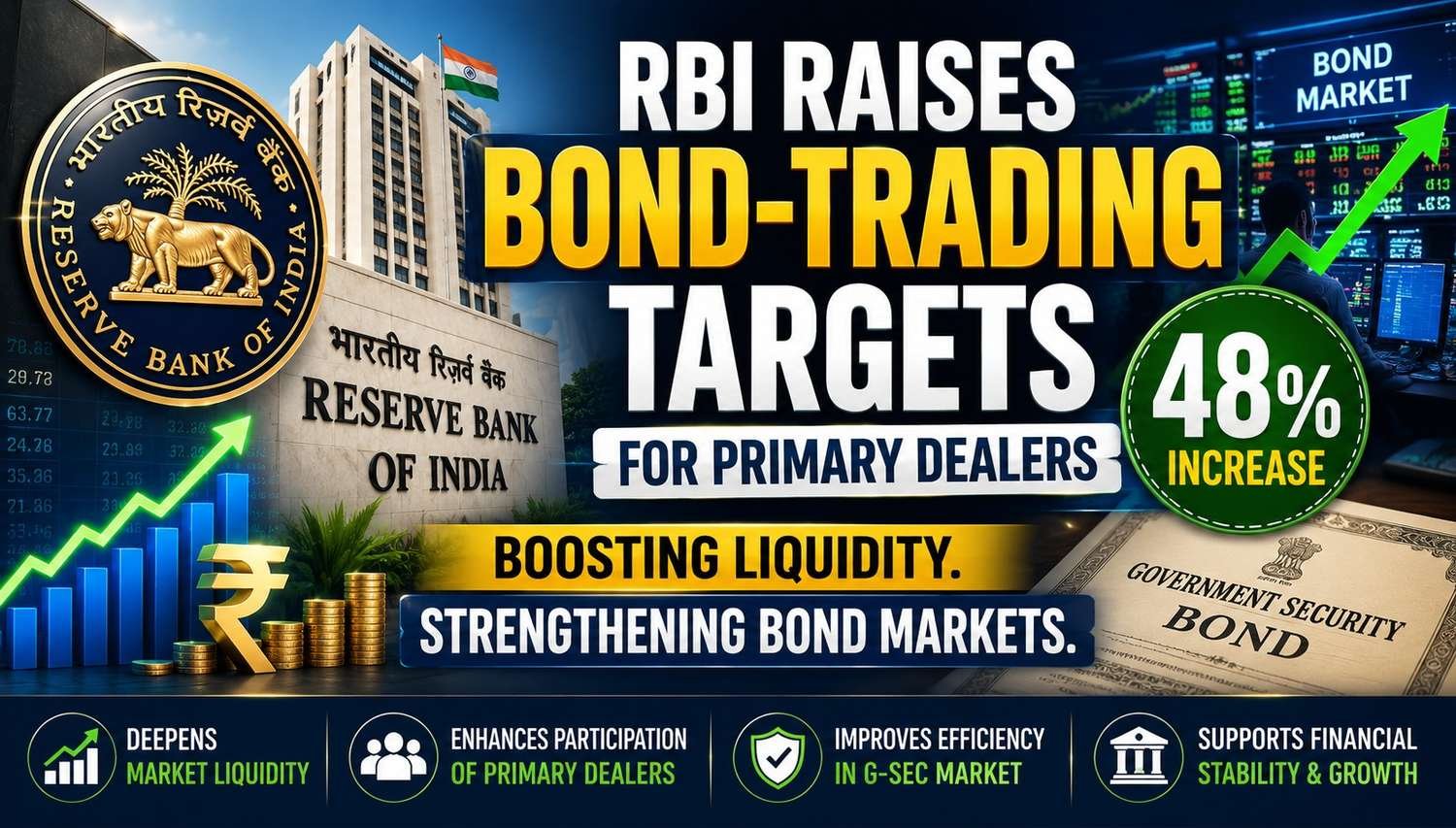
- Reserve Bank of India (RBI) has significantly increased bond-trading targets for the country’s primary dealers in a move aimed at improving liquidity in the government securities market.
- Under the revised guidelines, each of the 21 primary dealers will now be required to trade at least ₹4 lakh crore worth of bonds during the financial year beginning April 2026.
- This represents a sharp 48% increase compared to the previous year’s target.
Push to Improve Bond Market Liquidity
- The decision reflects RBI’s broader strategy to deepen liquidity in India’s sovereign debt market. RBI Governor Sanjay Malhotra had recently highlighted the importance of strengthening liquidity and trading activity in government securities.
- Primary dealers play a crucial role in:
- Underwriting government bond issuances
- Providing liquidity in the bond market
- Facilitating smooth trading of government securities
- The RBI sets annual trading targets for these dealers as part of its operational framework.
Trading Volumes Witness Sharp Rise
The higher trading targets have already started impacting market activity positively.
According to Bloomberg data:
- Daily trading volumes in the benchmark 10-year government bond have increased by nearly 40% since April compared to March.
- Overall bond market trading activity has risen by around 15% during the same period.
The 10-year government bond is considered India’s most actively traded and liquid sovereign debt instrument.
Why RBI Took This Step
Market liquidity had weakened toward the end of the previous financial year due to several factors, including:
- Tight banking system liquidity
- Rising global oil prices
- Weakness in the Indian rupee
- Foreign investor outflows
- Volatility caused by geopolitical tensions, including the Iran conflict
These conditions widened the gap between buying and selling prices of government securities, reducing market efficiency.
By increasing trading obligations, RBI aims to:
- Ensure continuous liquidity in the bond market
- Improve price discovery
- Support smooth government borrowing
- Reduce volatility in sovereign debt trading
Non-Compliance May Invite Penalties
- The RBI determines trading targets based on average market volumes over the previous three years. Failure by primary dealers to meet these targets is considered a violation of RBI operational guidelines and may attract penal action.
- The move is expected to keep bond market activity elevated throughout FY 2026-27 and strengthen the resilience of India’s sovereign debt market amid global financial uncertainty.