

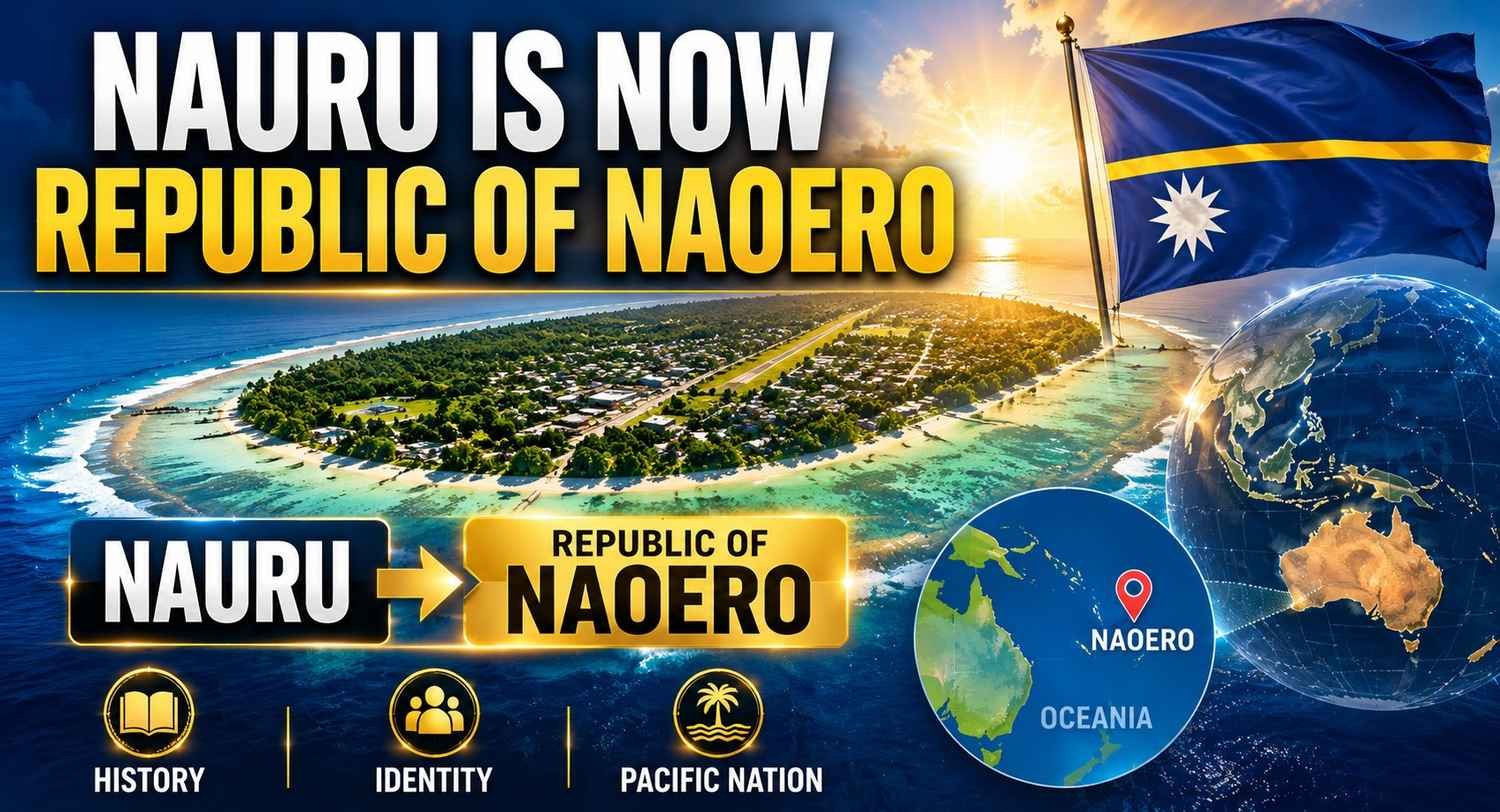
Nauru Renamed as Republic of Naoero. The Pacific island nation formerly known internationally as Nauru has officially adopted the name Republic of Naoero, marking a historic moment in its national identity. The move reflects the country’s effort to embrace its indigenous heritage and strengthen its cultural identity on the global stage.
Although the change does not alter the country’s sovereignty, international borders, or diplomatic relationships, it represents a symbolic and cultural milestone for one of the world’s smallest independent nations.
Why Has Nauru Become the Republic of Naoero?
The word Naoero is the traditional indigenous name used by the native Nauruan people for their island.
By officially adopting Republic of Naoero, the government seeks to:
- Strengthen national identity.
- Promote indigenous language and culture.
- Restore historical heritage.
- Increase awareness of Nauruan traditions.
- Present the country internationally using its native name.
The change aligns with a broader global trend in which countries adopt indigenous or historically significant names to reflect their cultural roots.
History of Nauru
Nauru is one of the world’s smallest island nations.
Early History
- Originally inhabited by Micronesian and Polynesian communities.
- Rich oral traditions and unique indigenous culture.
Colonial Period
- Annexed by Germany in 1888.
- Administered by Australia, New Zealand, and the United Kingdom after World War I.
- Occupied by Japan during World War II.
Independence
Nauru gained independence on 31 January 1968, becoming one of the world’s smallest sovereign republics.
For decades, phosphate mining fueled the nation’s economy before reserves declined.
Where Is the Republic of Naoero Located?
The Republic of Naoero lies in the central Pacific Ocean, northeast of Australia and south of the Equator.
Quick Facts
| Feature | Details |
|---|---|
| Region | Oceania |
| Ocean | Pacific Ocean |
| Capital | Yaren District (de facto administrative center) |
| Area | About 21 sq km |
| Population | Around 12,000–13,000 |
| Currency | Australian Dollar |
| Official Language | Nauruan and English |
| Government | Parliamentary Republic |
Demographics
The Republic of Naoero has a small but culturally rich population.
Population Composition
- Indigenous Nauruans
- Pacific Islanders
- Small expatriate communities
Languages
- Nauruan
- English
Religion
- Christianity is the predominant religion.
Economy
Historically, phosphate mining made Nauru one of the wealthiest countries per capita.
Today, the economy relies on:
- Government services
- Fishing
- International partnerships
- Maritime resources
- Limited tourism
- Regional cooperation initiatives
The country continues to diversify its economy while addressing environmental challenges caused by decades of phosphate extraction.
Why the Name Change Matters
Changing the official name to the Republic of Naoero is significant because it:
- Reinforces indigenous identity.
- Promotes cultural preservation.
- Enhances international recognition of the country’s heritage.
- Strengthens national unity.
- Reflects post-colonial identity.
Global Examples of Country Name Changes
Several countries have adopted new official names to reflect cultural or political changes:
| Old Name | New Name |
|---|---|
| Ceylon | Sri Lanka |
| Burma | Myanmar |
| Swaziland | Eswatini |
| Macedonia | North Macedonia |
| Holland (common usage) | Netherlands (official country name) |
| Upper Volta | Burkina Faso |
The Republic of Naoero joins this broader trend of reaffirming national identity.
International Recognition
The name change is expected to be reflected gradually in:
- United Nations documentation
- International organizations
- Diplomatic correspondence
- Global maps and atlases
- Educational resources
- Government publications
Countries and international institutions typically update official references after receiving formal notifications and completing administrative processes.
What Does Not Change?
Despite the new official name:
- Borders remain unchanged.
- The government structure remains the same.
- Existing international treaties continue.
- Citizenship remains unaffected.
- Currency remains the Australian Dollar.
- Membership in international organizations continues.
Key Facts at a Glance
| Feature | Information |
|---|---|
| New Official Name | Republic of Naoero |
| President | David Adeang |
| Region | Oceania |
| Capital | Yaren District |
| Independence | 31 January 1968 |
| Area | ~21 sq km |
| Population | ~12,000–13,000 |
| Currency | Australian Dollar |
Frequently Asked Questions (FAQs)
Why did Nauru change its name?
The country adopted Republic of Naoero to reflect its indigenous heritage and strengthen its national identity.
What does “Naoero” mean?
Naoero is the traditional indigenous name for the island used by the native Nauruan people.
Has the country’s location changed?
No. Only the official name has changed.
Will passports and currency change?
Administrative updates may occur over time according to government decisions, but the name change itself does not automatically alter passports, currency, or citizenship.
Is the Republic of Naoero still a member of the United Nations?
Yes. The country’s international obligations and memberships continue; official references are updated through established diplomatic procedures.
Conclusion
The adoption of Republic of Naoero marks a significant chapter in the history of the Pacific island nation. While the change does not affect its sovereignty or international standing, it represents a meaningful affirmation of indigenous heritage and national identity. As the new name gains recognition worldwide, the Republic of Naoero joins a growing number of countries that have embraced names rooted in their own history and culture.