

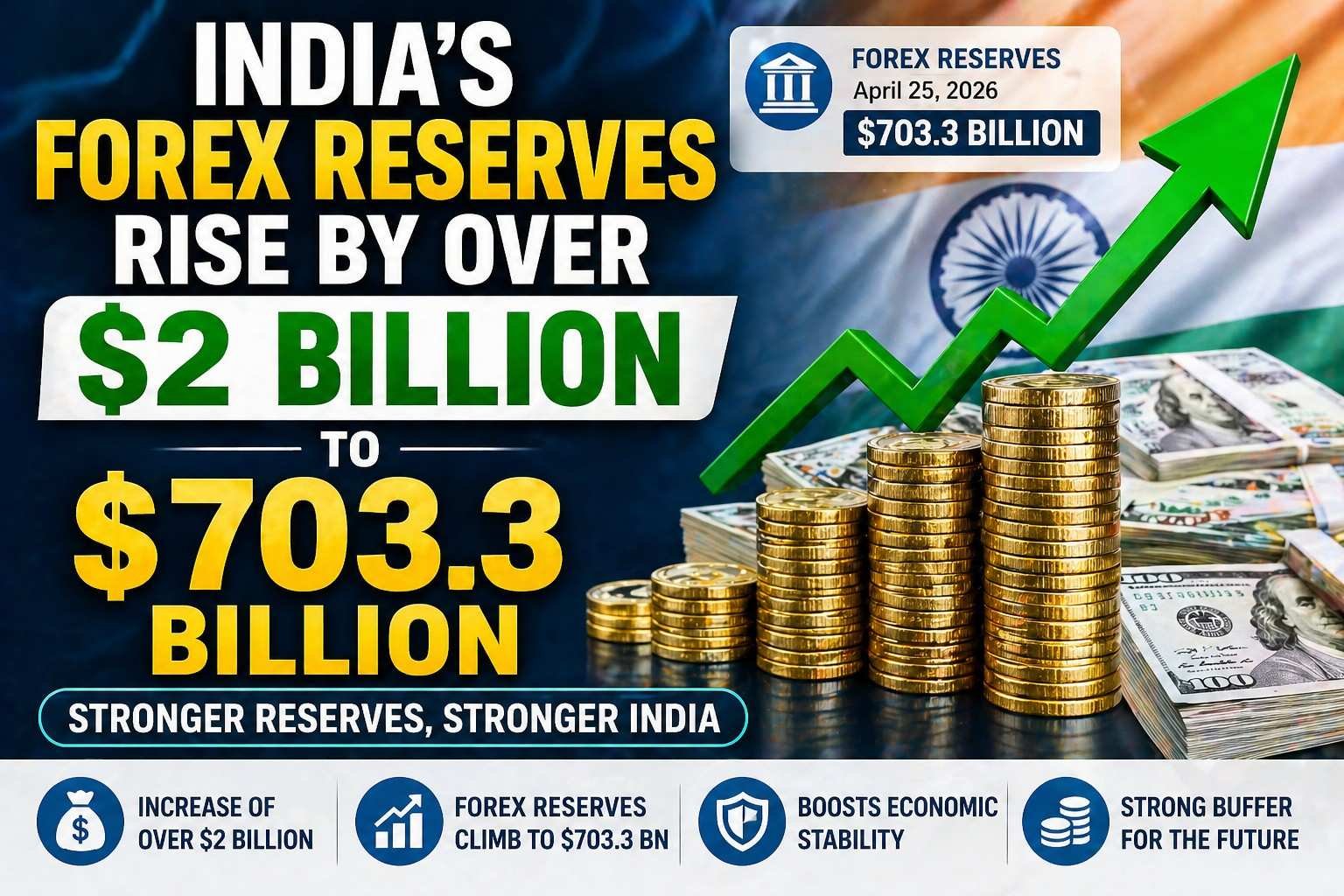
India’s foreign exchange (forex) reserves have once again shown resilience, rising by USD 2.362 billion to reach USD 703.308 billion for the week ended April 17, 2026, according to the latest data released by the Reserve Bank of India (RBI).
This marks the third consecutive weekly increase in the country’s forex reserves, reflecting India’s strong external sector position despite rising geopolitical tensions and volatility in global financial markets.
In the previous reporting week, India’s forex reserves had increased by USD 3.825 billion, taking the total to USD 700.946 billion. Notably, India had touched an all-time high of USD 728.494 billion in the week ended February 27, 2026, before reserves dipped due to global uncertainties and RBI intervention to stabilize the rupee.
With the Indian rupee facing pressure amid rising oil prices and tensions in West Asia, the RBI has been actively managing volatility in the forex market through dollar sales and other measures.
Why Are Forex Reserves Important?
Foreign exchange reserves are assets held by a country’s central bank in foreign currencies. These reserves usually include:
- Foreign Currency Assets (FCA)
- Gold Reserves
- Special Drawing Rights (SDRs)
- Reserve Position in the IMF
Forex reserves are crucial because they:
1. Help Stabilize the Currency
The RBI uses forex reserves to manage sharp fluctuations in the value of the rupee.
2. Ensure Import Cover
India imports crude oil, electronics, and many essential goods. Strong reserves provide enough funds to pay for imports during crises.
3. Boost Investor Confidence
Higher reserves indicate economic stability and improve India’s credibility among global investors.
4. Support External Debt Obligations
Forex reserves help India meet international debt and payment obligations.
Breakdown of India’s Forex Reserves
Here is the latest composition of India’s forex reserves:
Foreign Currency Assets (FCA)
The largest component of the reserves, FCA, increased by USD 1.481 billion to USD 557.463 billion.
This component includes the effect of appreciation or depreciation of non-US currencies such as:
- Euro
- Pound Sterling
- Japanese Yen
Gold Reserves
India’s gold reserves rose by USD 790 million to USD 122.133 billion.
Gold acts as a safe-haven asset during uncertain times.
Special Drawing Rights (SDRs)
SDRs increased by USD 78 million to USD 18.841 billion.
Reserve Position in IMF
India’s reserve position with the International Monetary Fund (IMF) increased by USD 14 million to USD 4.87 billion.
Significance for India’s Economy
The rise in India’s forex reserves is a positive sign because:
- It strengthens India’s external sector.
- It provides a cushion against global oil price shocks.
- It helps manage the rupee amid geopolitical tensions.
- It improves India’s sovereign financial credibility.
At a time when the rupee recently slipped against the US dollar, rising reserves indicate that the RBI still has sufficient ammunition to control excessive volatility.
This also comes amid recent RBI actions to partially roll back certain restrictions on rupee trades after volatility eased.