

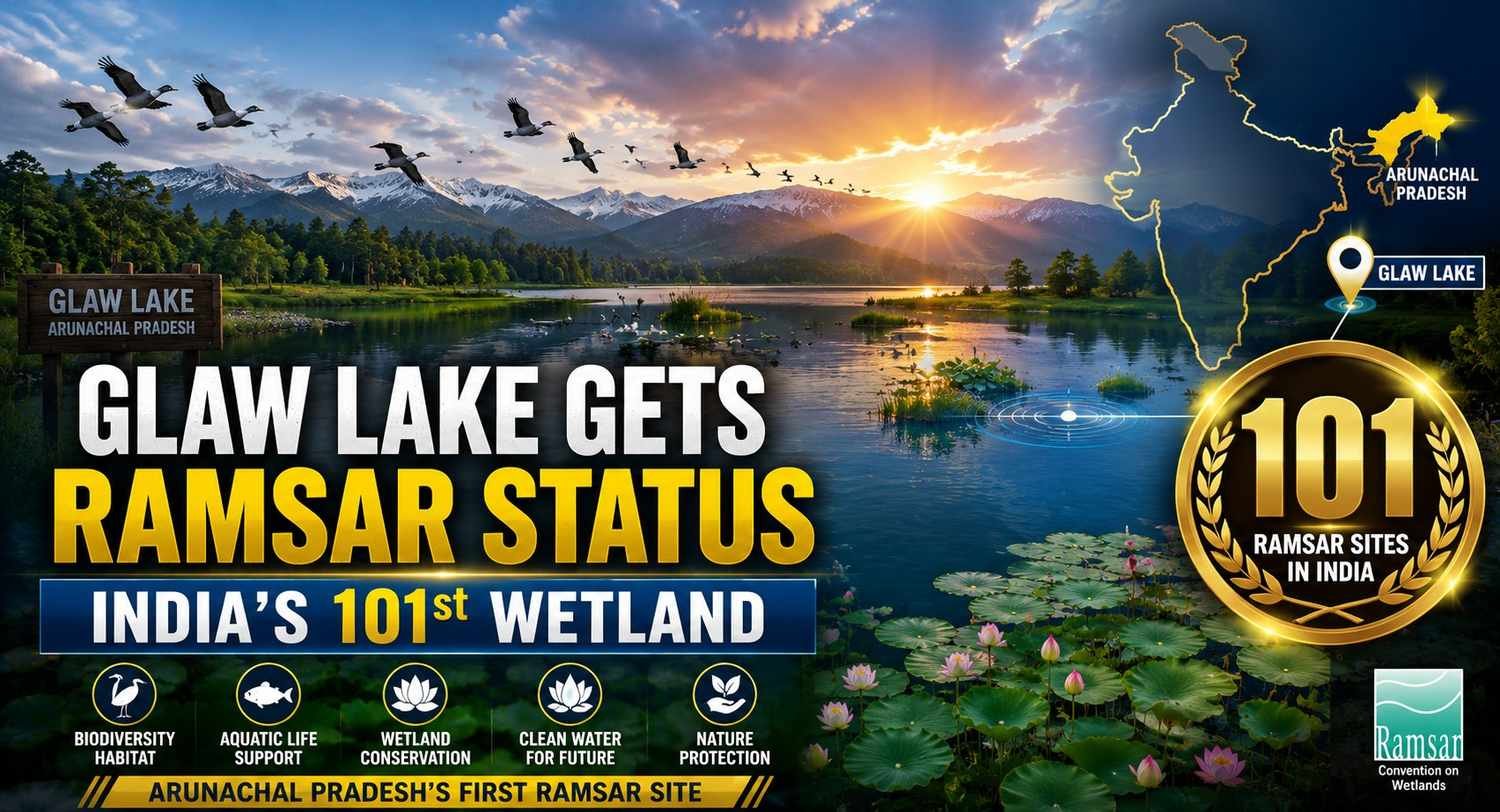
India has strengthened its commitment to environmental conservation with Glaw Lake in Arunachal Pradesh being designated as the state’s first Ramsar Site, raising the country’s total number of Wetlands of International Importance to 101.
The recognition under the Ramsar Convention on Wetlands marks a significant achievement for Arunachal Pradesh and highlights the ecological importance of the Eastern Himalayan region. It also reinforces India’s leadership in global biodiversity conservation and sustainable ecosystem management.
What Is a Ramsar Site?
A Ramsar Site is a wetland recognized under the Ramsar Convention, an international treaty adopted in 1971 in the Iranian city of Ramsar. The convention promotes the conservation and sustainable use of wetlands because of their ecological, economic, cultural, scientific, and recreational value.
Countries designate wetlands that meet internationally accepted criteria based on biodiversity, ecosystem services, and habitat significance.
Why Glaw Lake Is Special
Located amid the scenic landscapes of Arunachal Pradesh, Glaw Lake is known for its pristine freshwater ecosystem, rich biodiversity, and vital role in supporting local wildlife.
The lake serves as:
- A habitat for numerous aquatic species
- A breeding ground for resident and migratory birds
- A freshwater source supporting surrounding ecosystems
- An important ecological asset for the Eastern Himalayas
- A natural carbon sink helping mitigate climate change
Its Ramsar designation recognizes both its environmental significance and the need for long-term conservation.
Significance for Arunachal Pradesh
The inclusion of Glaw Lake in the Ramsar List marks the first internationally recognized wetland from Arunachal Pradesh.
The recognition is expected to:
- Boost biodiversity conservation
- Encourage eco-tourism
- Strengthen scientific research
- Improve wetland management
- Increase community participation in conservation
- Enhance global visibility for the state’s natural heritage
India’s Growing Ramsar Network
With Glaw Lake’s inclusion, India now has 101 Ramsar Sites, reflecting the country’s continued efforts to protect wetlands that support biodiversity, water security, and climate resilience.
Wetlands perform several critical ecological functions, including:
- Recharging groundwater
- Preventing floods
- Purifying water
- Supporting fisheries
- Conserving biodiversity
- Regulating local climate
- Storing carbon
India’s Ramsar network spans diverse ecosystems, from high-altitude lakes and mangroves to floodplains, marshes, estuaries, and coastal lagoons.
Ecological Importance of Wetlands
Wetlands are among the world’s most productive ecosystems.
They provide habitat for thousands of plant and animal species while supporting millions of people through water resources, agriculture, fisheries, and tourism.
Healthy wetlands also act as natural barriers against floods and droughts, making them increasingly important in the fight against climate change.
Benefits of Ramsar Recognition
International recognition offers several long-term advantages:
- Better conservation planning
- Increased global collaboration
- Improved research opportunities
- Sustainable tourism development
- Greater awareness of biodiversity
- Enhanced funding opportunities for conservation
- Stronger community-based wetland management
The Ramsar designation does not change ownership of the wetland but encourages its wise and sustainable use.
Key Facts About Glaw Lake
| Feature | Details |
|---|---|
| State | Arunachal Pradesh |
| Status | First Ramsar Site of the state |
| Recognition | Wetland of International Importance |
| India’s Total Ramsar Sites | 101 |
| Ecological Value | Freshwater wetland with rich biodiversity |
| Importance | Wildlife habitat, water conservation, ecosystem protection |
Frequently Asked Questions
What is Glaw Lake?
Glaw Lake is a freshwater wetland in Arunachal Pradesh that has been designated as the state’s first Ramsar Site.
What is a Ramsar Site?
A Ramsar Site is a wetland recognized internationally for its ecological importance under the Ramsar Convention.
How many Ramsar Sites does India have now?
With the inclusion of Glaw Lake, India has 101 Ramsar Sites.
Why are wetlands important?
Wetlands conserve biodiversity, recharge groundwater, reduce flooding, improve water quality, support livelihoods, and help combat climate change.
Conclusion
The recognition of Glaw Lake as Arunachal Pradesh’s first Ramsar Site is a landmark achievement for both the state and the country. By taking India’s total number of Ramsar Sites to 101, the designation underscores the nation’s growing commitment to conserving ecologically significant wetlands. Beyond international recognition, this milestone is expected to strengthen biodiversity protection, encourage sustainable tourism, support local communities, and reinforce India’s role in global environmental conservation.