

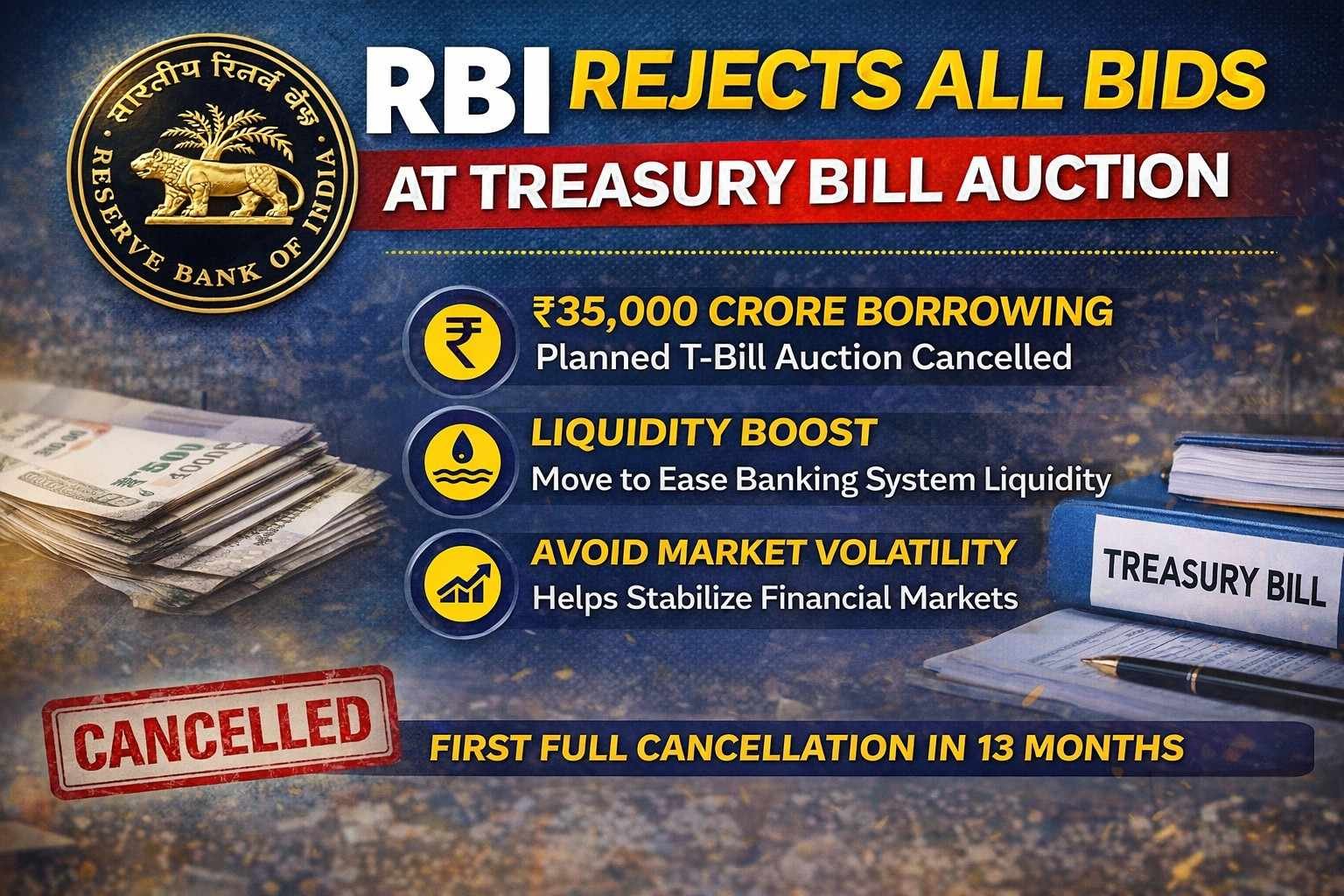
In an unusual move aimed at easing liquidity conditions, the Reserve Bank of India (RBI) has rejected all bids at a recent treasury bill (T-bill) auction. This marks the first such instance in 13 months and comes just days before the financial year-end on March 31.
Planned Borrowing Put on Hold
The government had planned to raise around ₹35,000 crore through the sale of 91-day, 182-day, and 364-day treasury bills. However, the RBI chose not to accept any bids, effectively cancelling the entire auction.
This decision is expected to support liquidity in the banking system, especially at a time when financial institutions typically face tighter conditions at the end of the fiscal year.
Why Did RBI Take This Step?
Market experts believe the move was driven by multiple factors:
- Improving Government Cash Position: With recent tax inflows, the government currently does not require immediate additional funds.
- Liquidity Concerns: Banking system liquidity had been slightly tight, and this step helps ease pressure.
- Avoiding Market Volatility: Higher-than-expected yields in bids may have influenced RBI’s decision to avoid unsettling the market near year-end.
Earlier, in February 2025, the RBI had partially cancelled T-bill auctions by rejecting bids for shorter-duration papers. This time, however, the central bank has taken a more decisive step by rejecting all bids.
Impact on Liquidity
The cancellation is expected to boost liquidity by around ₹35,000 crore, as:
- No funds will flow out of the banking system for T-bill purchases
- Maturing treasury bills will inject additional funds into the system
This is likely to provide short-term relief to banks and improve overall market sentiment.
Market Reaction
The move has been positively received by market participants. Experts noted that the decision reflects RBI’s proactive approach to maintaining stability in the financial system.
What Lies Ahead?
The focus now shifts to the upcoming borrowing calendar for April–June, which is expected to be released soon. Market participants anticipate:
- A potential increase in T-bill borrowings in the next quarter
- Continued monitoring of liquidity conditions by the RBI
Conclusion
The RBI’s decision to reject all bids at the T-bill auction highlights its commitment to ensuring adequate liquidity and maintaining market stability. As the financial year draws to a close, such proactive measures play a crucial role in keeping the banking system balanced and resilient.