

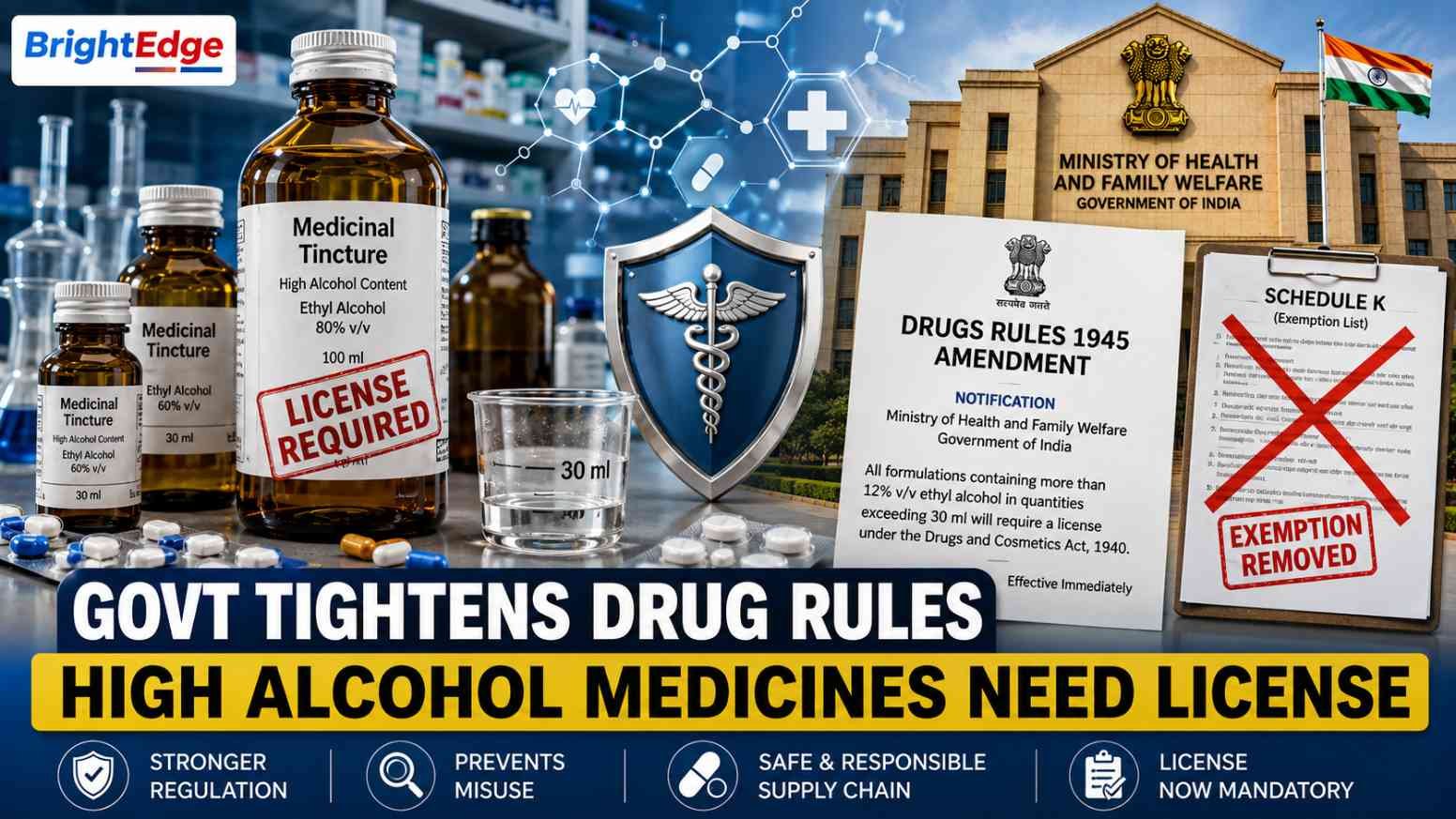
The Central Government has amended the Drugs Rules, 1945, introducing stricter regulations for high alcohol-containing drug formulations to prevent their misuse and strengthen oversight of pharmaceutical products.
The amendment, notified by the Ministry of Health and Family Welfare, removes the existing exemption available under Schedule K for medicinal formulations containing more than 12% v/v ethyl alcohol in quantities exceeding 30 millilitres.
These products will now require mandatory licensing under the Drugs and Cosmetics Act, 1940.
What Has Changed?
Earlier, certain medicinal preparations such as tinctures of cardamom, ginger, and other aromatic formulations were exempt from licensing requirements under Schedule K.
However, some of these formulations contained very high concentrations of ethyl alcohol, in some cases reaching 80–90% v/v, making them vulnerable to misuse for intoxication.
Under the new amendment:
- Medicines containing more than 12% v/v ethyl alcohol
- Pack sizes exceeding 30 ml
- Must obtain a valid manufacturing and sale license.
- Schedule K exemption will no longer apply to these products.
Why Has the Government Taken This Step?
The decision aims to:
- Prevent diversion of medicinal products for non-medical consumption.
- Reduce misuse of high alcohol-containing formulations.
- Strengthen pharmaceutical regulation.
- Ensure medicines remain available for genuine therapeutic purposes.
- Improve monitoring across the pharmaceutical supply chain.
Key Highlights:
- Ministry: Ministry of Health and Family Welfare
- Law: Drugs Rules, 1945
- Act: Drugs and Cosmetics Act, 1940
- Schedule Affected: Schedule K
- Ethyl Alcohol Limit: More than 12% v/v
- Pack Size: Above 30 ml
- Objective: Prevent misuse and strengthen regulatory oversight
Impact of the Amendment:
The amendment is expected to improve public health by ensuring alcohol-containing medicinal products are supplied only through licensed pharmaceutical channels. It also reduces the possibility of misuse while maintaining access for legitimate medical treatment.
Conclusion:
The Government’s latest amendment marks a significant step toward ensuring responsible distribution of alcohol-containing medicinal products. By ending the Schedule K exemption for certain formulations, authorities aim to strengthen drug regulation, prevent misuse, and safeguard public health without affecting legitimate therapeutic use.