

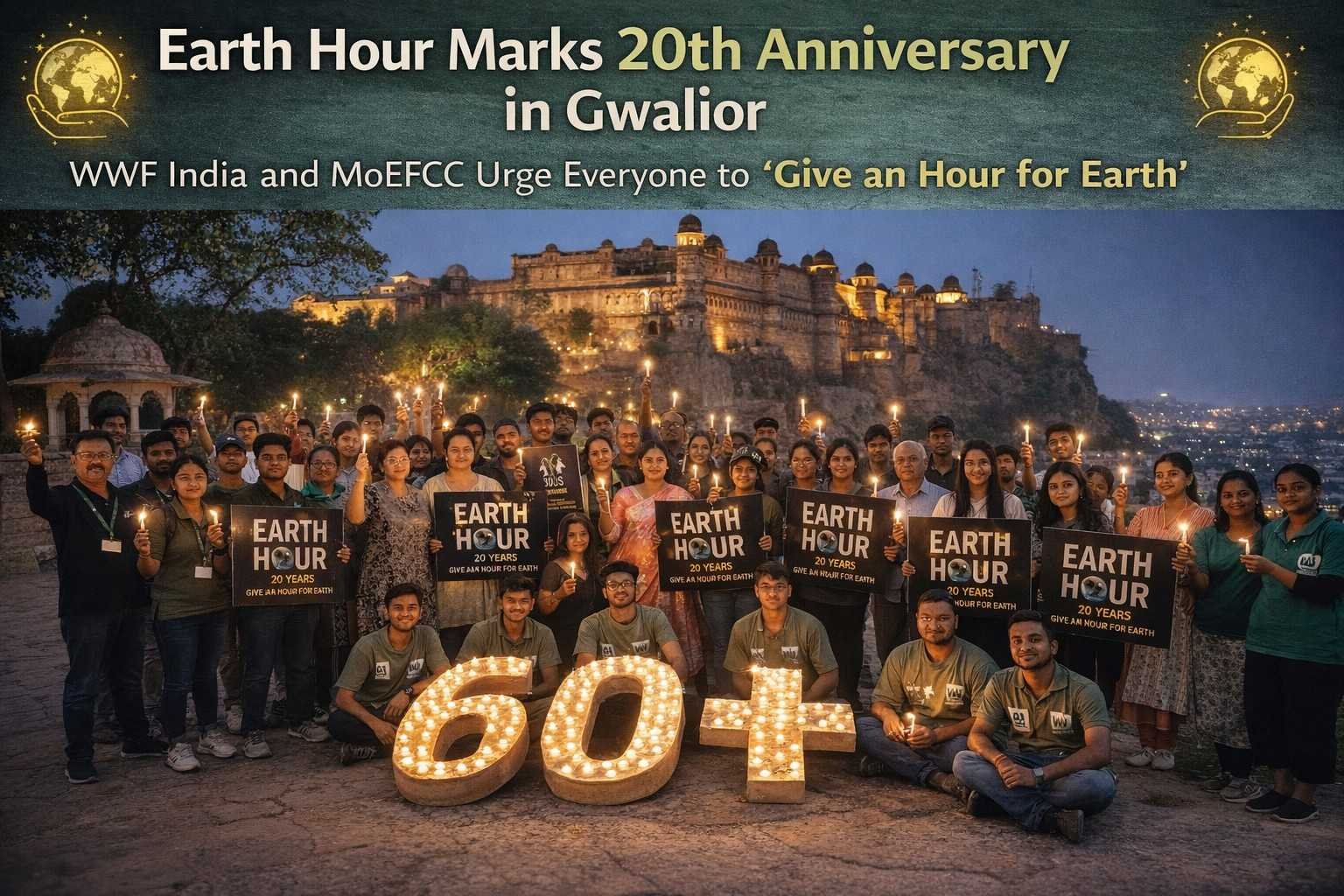
To mark the 20th anniversary of Earth Hour, WWF India, in collaboration with the Ministry of Environment, Forest and Climate Change (MoEFCC), organised a series of awareness and outreach activities in Gwalior, calling on citizens to “Give an Hour for Earth.”
Awareness Campaigns and Public Participation
The activities were conducted under WWF-India’s Environmental Information, Awareness, Capacity Building & Livelihood Programme (EIACP) as part of the nationwide Earth Hour observance.
The event was attended by:
- Nameeta Prasad
- Lipika Roy
Along with trainees from the Green Skill Development Programme (GSDP), particularly those training as Nature Conservator cum Eco-Tourism Guides.
Engaging Students and Institutions
An awareness campaign and exhibition were organised at The Scindia School, where students actively participated in promoting sustainable lifestyles and environmental responsibility.
The initiative was also extended to the Indian Institute of Tourism and Travel Management, encouraging wider youth engagement.
Symbolic Switch-Off for Climate Action
As part of the observance, participants carried out a symbolic switch-off of lights from 8:30 PM to 9:30 PM, reinforcing the importance of:
- Energy conservation
- Climate action
- Responsible consumption
This initiative was replicated nationwide, with participation from iconic monuments, heritage sites, and government buildings.
Focus on Youth and Capacity Building
G. Areendran emphasised the importance of involving youth in environmental conservation and building long-term capacity.
Students from over 15 States and Union Territories actively spread awareness and pledged to adopt sustainable practices.
Promoting Mission LiFE
The initiative aligned with Mission LiFE, encouraging individuals to:
- Reduce energy consumption
- Adopt eco-friendly habits
- Contribute to environmental sustainability
Participants took part in a nationwide switch-off, reinforcing their commitment to the “Save Energy” theme.
About Earth Hour
Earth Hour, launched in 2007, has grown into the world’s largest grassroots environmental movement, now observed in over 190 countries.
In India, it has evolved beyond a symbolic act to include:
- Clean-up drives
- Tree plantation campaigns
- Biodiversity walks
- Cycling initiatives
- Sustainability workshops
Don’t Miss Daily GK Updates!
Get the latest current affairs directly in your inbox
No spam. Only important updates.