

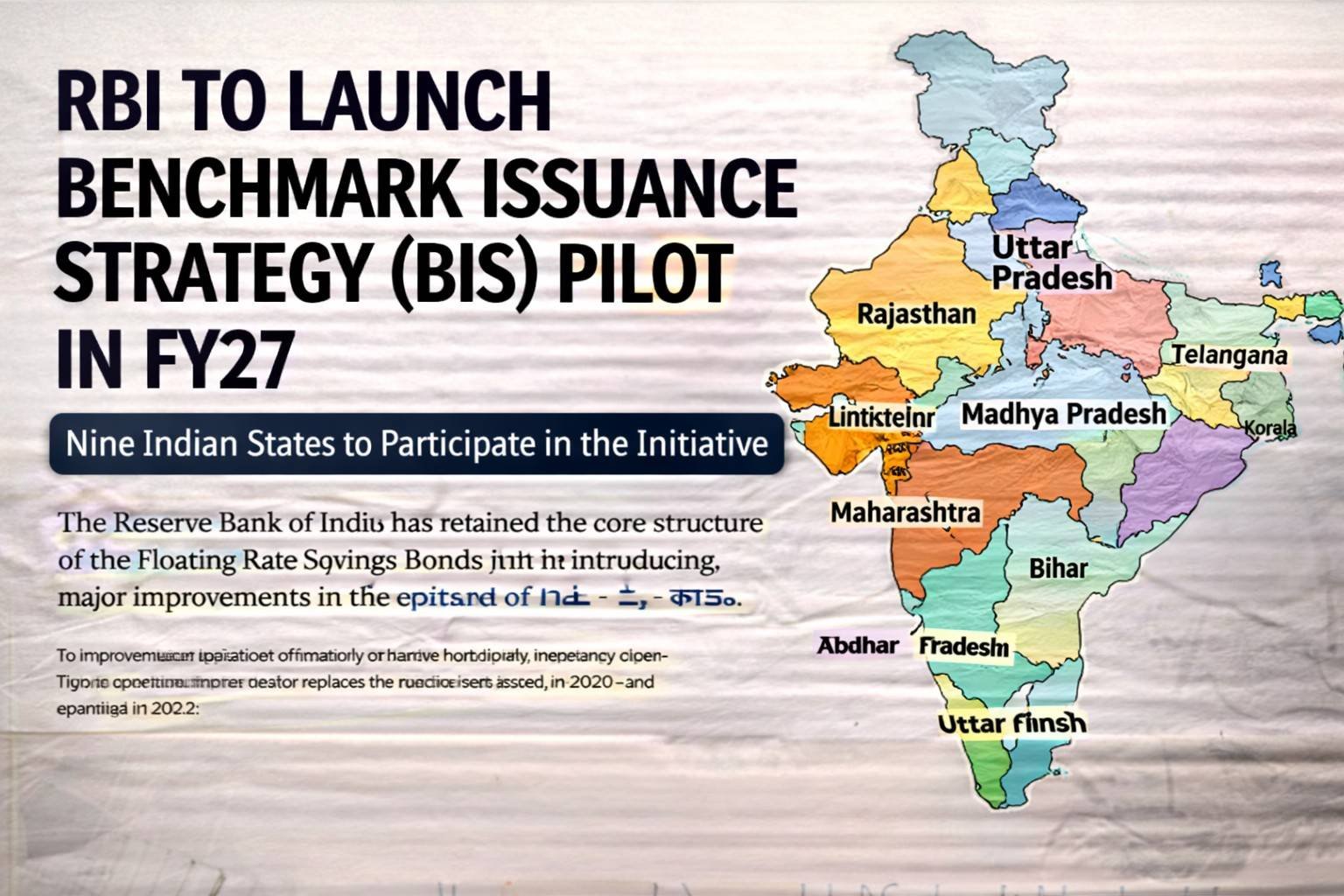
In a move aimed at improving transparency and efficiency in state borrowings, the Reserve Bank of India has decided to introduce a Benchmark Issuance Strategy (BIS) on a pilot basis starting FY27.
The initiative will initially be implemented with the consent of nine Indian states.
States Participating in the Pilot
The nine states included in the BIS pilot are:
- Andhra Pradesh
- Bihar
- Chhattisgarh
- Kerala
- Madhya Pradesh
- Maharashtra
- Rajasthan
- Telangana
- Uttar Pradesh
What is Benchmark Issuance Strategy (BIS)?
Under BIS:
- States will issue securities in pre-defined benchmark tenors
- Borrowings will follow a pre-announced issuance calendar
- It aligns state borrowing practices more closely with central government securities
This approach helps create standardised and liquid bond issuances, making them more attractive to investors.
Key Objectives of BIS
The RBI highlighted that the strategy aims to:
- Enhance transparency in state borrowings
- Provide greater clarity and predictability to investors
- Improve liquidity in the State Development Loans (SDLs) market
- Strengthen overall debt management practices
The central bank also expects that more states and Union Territories will adopt BIS in the future.
Borrowing Estimates for Q1 FY27
For the April–June quarter of FY27:
- Total state borrowings: ₹2,54,509 crore
- BIS states borrowing: ₹1,53,900 crore
- Other states borrowing: ₹1,00,609 crore
Notably, this is lower than last year’s Q1 borrowing of ₹2,73,255 crore, indicating a more calibrated borrowing approach.
Why This Move Matters
As the debt manager for states, RBI’s introduction of BIS marks an important reform because:
- It promotes better price discovery in bond markets
- Reduces fragmentation in state bond issuances
- Builds investor confidence in state securities
- Supports the development of a robust domestic bond market
Conclusion
The introduction of the Benchmark Issuance Strategy is a forward-looking reform that will modernise how Indian states raise funds from the market. By enhancing transparency and standardisation, the RBI is taking a crucial step toward strengthening India’s financial markets and public debt management framework.