

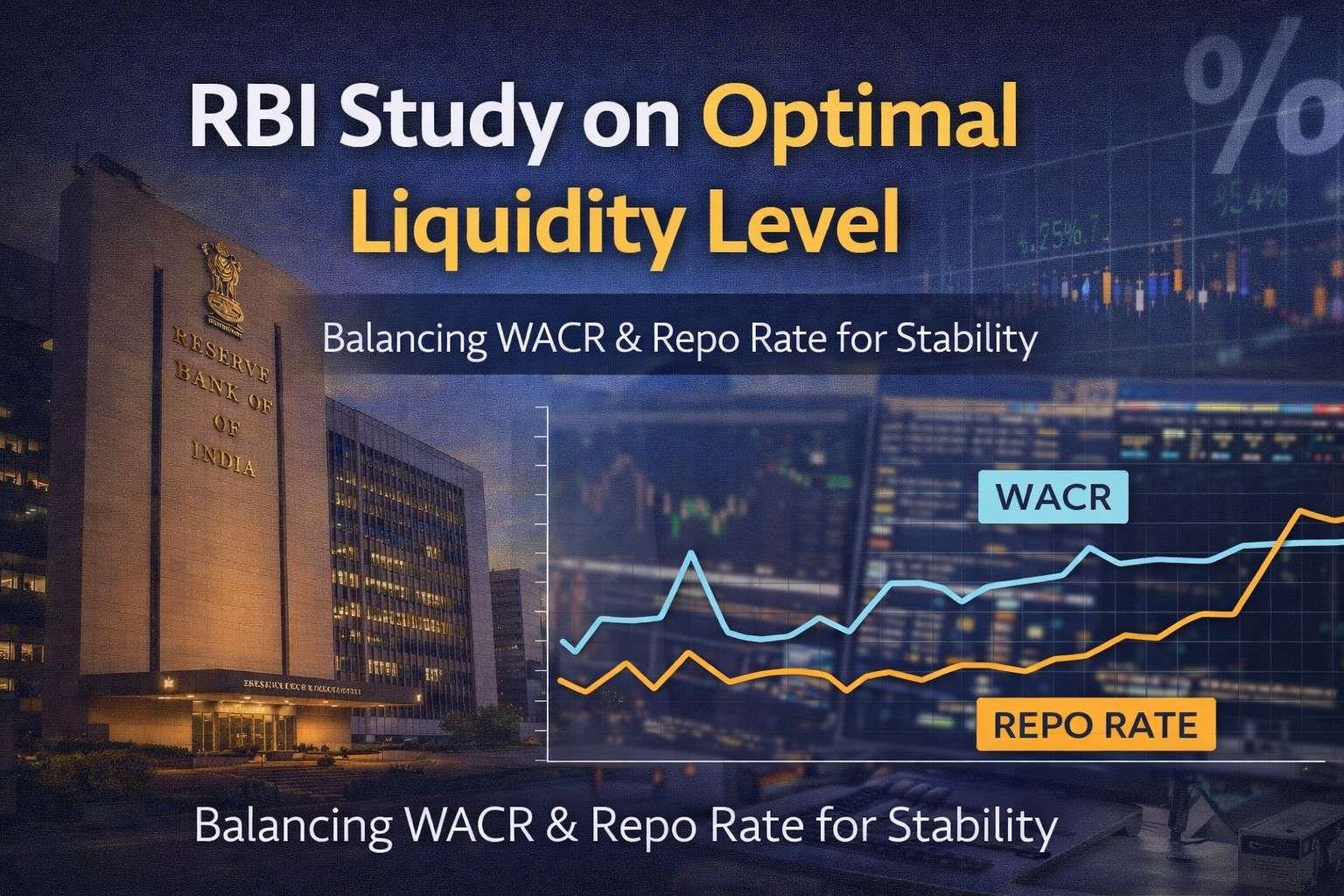
Reserve Bank of India has released a study on the “Optimal Level of Liquidity”, highlighting how maintaining the right balance of liquidity in the banking system is crucial for aligning the Weighted Average Call Rate (WACR) with the policy repo rate.
The study underlines that both excess surplus and excessive deficit liquidity can disrupt monetary policy transmission and financial stability.
Understanding the Core Concepts
What is Repo Rate?
- The repo rate is the interest rate at which banks borrow short-term funds from RBI.
- Currently, it stands at 5.25%.
What is WACR?
- WACR (Weighted Average Call Rate) is the operating target of monetary policy.
- It reflects the average interest rate in the call money market.
Call Money Market
- A market for uncollateralised overnight borrowing and lending
- Participants include:
- Scheduled commercial banks
- Primary dealers
Key Findings of the RBI Study
1. Liquidity Surplus Scenario
- Ideal surplus range: 0.6% to 1.1% of NDTL (Net Demand and Time Liabilities)
- In absolute terms: ₹1.53 lakh crore to ₹2.81 lakh crore
Impact:
- WACR remains 5–10 basis points below repo rate
- WACR range: 5.15% – 5.20%
2. Liquidity Deficit Scenario
- Ideal deficit range: 0.4% to 0.7% of NDTL
- In absolute terms: ₹1.02 lakh crore to ₹1.79 lakh crore
Impact:
- WACR remains 5–10 basis points above repo rate
- WACR range: 5.30% – 5.35%
Why Liquidity Alignment Matters
The RBI’s liquidity management framework aims to:
- Keep WACR closely aligned with the repo rate
- Ensure effective monetary policy transmission
- Maintain stability within the interest rate corridor
Any mismatch in liquidity can:
- Distort short-term interest rates
- Reduce effectiveness of policy decisions
Risks of Excess Liquidity
1. Prolonged Surplus Liquidity
- Pushes interest rates to very low levels
- Distorts risk perception
- May lead to asset price bubbles
- Creates market complacency
2. Persistent Liquidity Deficit
- Increases borrowing costs for banks
- Reduces lending capacity
- Weakens credit growth
- Can threaten financial stability
RBI’s Policy Approach
The study emphasizes that central banks, including RBI:
- Actively manage liquidity conditions
- Ensure rates remain within the policy corridor
- Adjust liquidity based on:
- Monetary policy stance
- Market conditions
Conclusion
The RBI study highlights that maintaining an optimal level of liquidity is essential for a well-functioning financial system. By carefully balancing surplus and deficit liquidity, the central bank ensures that short-term interest rates remain aligned with policy objectives, thereby strengthening monetary transmission and economic stability.