

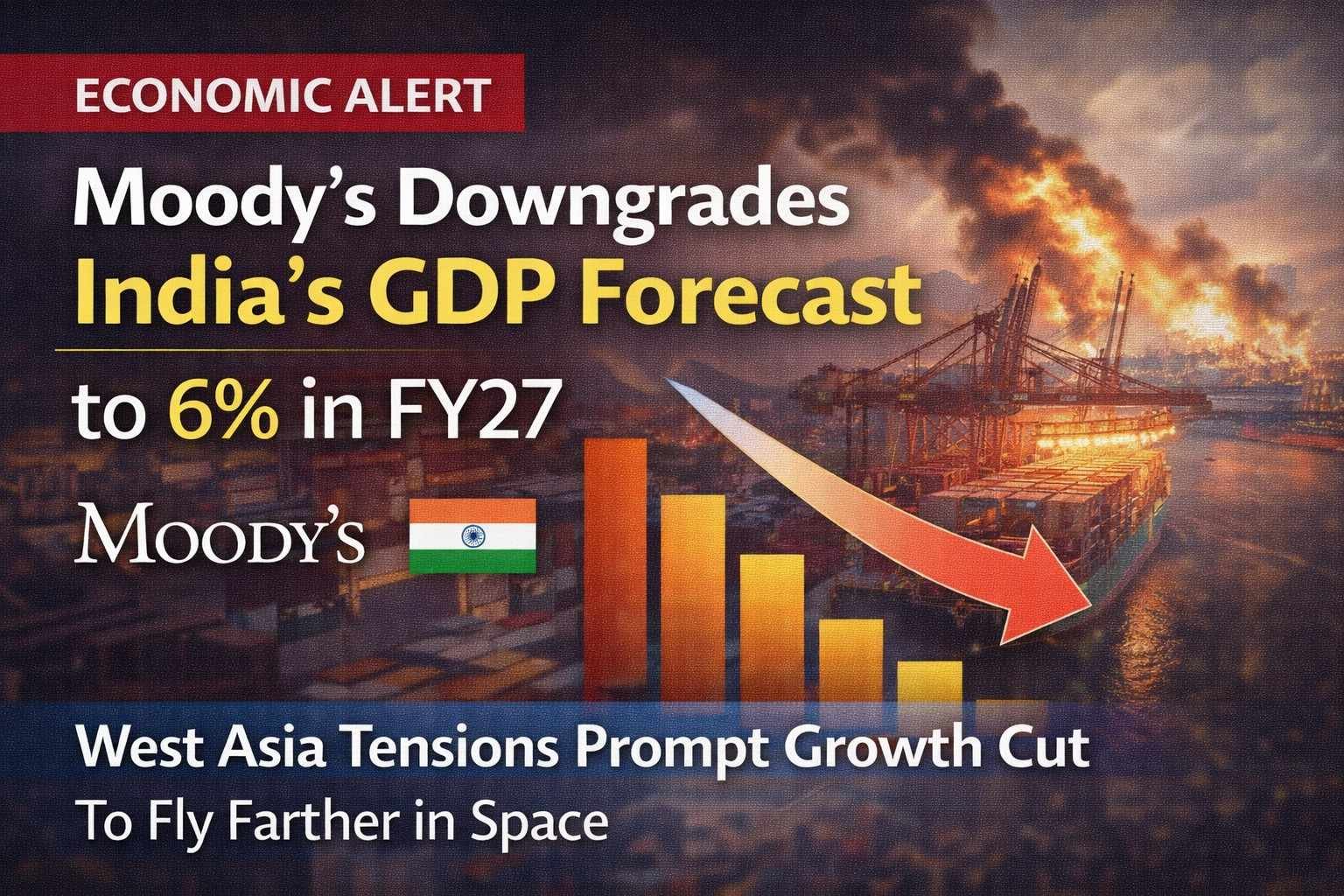
Moody’s Ratings has lowered India’s GDP growth forecast for FY27 to 6%, down from its earlier estimate of 6.8%, citing rising risks from the ongoing conflict in West Asia.
The agency warned that geopolitical tensions could slow economic momentum and push inflation upward, impacting both households and businesses.
Key Reasons for Growth Cut
Moody’s highlighted multiple factors behind the downgrade:
- Disruptions in energy supplies, especially LPG shipments
- Rising fuel and transportation costs
- Spillover impact on food inflation due to costly fertiliser imports
- Weakening private consumption and industrial activity
India is particularly vulnerable because:
- Around 55% of crude oil imports come from West Asia
- Over 90% of LPG supplies are sourced from the region
Inflation Outlook Turns Risky
- Inflation is projected at 4.8% in FY27, up from 2.4% in FY26
- Rising oil, gas, and fertiliser prices may increase household expenses
- Higher costs could affect food prices and overall consumption
Moody’s noted that while inflation is currently under control, risks are tilted upward due to global uncertainties.
Impact on Policy and Interest Rates
With inflation risks re-emerging:
- Interest rates may be held steady or gradually increased
- Future decisions will depend on duration of geopolitical tensions
- Monetary policy may shift toward containing inflation rather than supporting growth
Fiscal Pressure on Government
The report also flagged concerns about government finances:
- Higher subsidy burden due to rising fuel and fertiliser costs
- Lower tax revenues from excise duty cuts and weaker consumption
- Pressure on GST and corporate tax collections
This could:
- Limit fiscal space
- Slow down fiscal consolidation efforts
External Sector Challenges
- Current Account Deficit (CAD) expected at 1–1.5% of GDP in coming years
- Higher import bills due to expensive energy and raw materials
- Possible decline in exports due to disruptions in West Asia markets
Additionally:
- Around 40% of India’s remittances come from the Gulf region
- Any instability there could impact foreign income inflows
Comparison with Other Estimates
Other agencies have also projected slower growth:
- OECD: 6.1% growth forecast
- EY: Growth may drop by ~1 percentage point if conflict persists
- ICRA: Estimated growth at 6.5%
Long-Term Outlook
Despite short-term risks, Moody’s remains cautiously optimistic:
- India’s growth supported by infrastructure spending
- Government aims to reduce debt to ~50% of GDP by 2030-31
- Economy remains one of the fastest-growing among G20 nations
Conclusion
Moody’s downgrade reflects how global geopolitical tensions can directly impact domestic economic stability. While India’s fundamentals remain strong, rising energy costs, inflation pressures, and external vulnerabilities could moderate growth in the near term.