



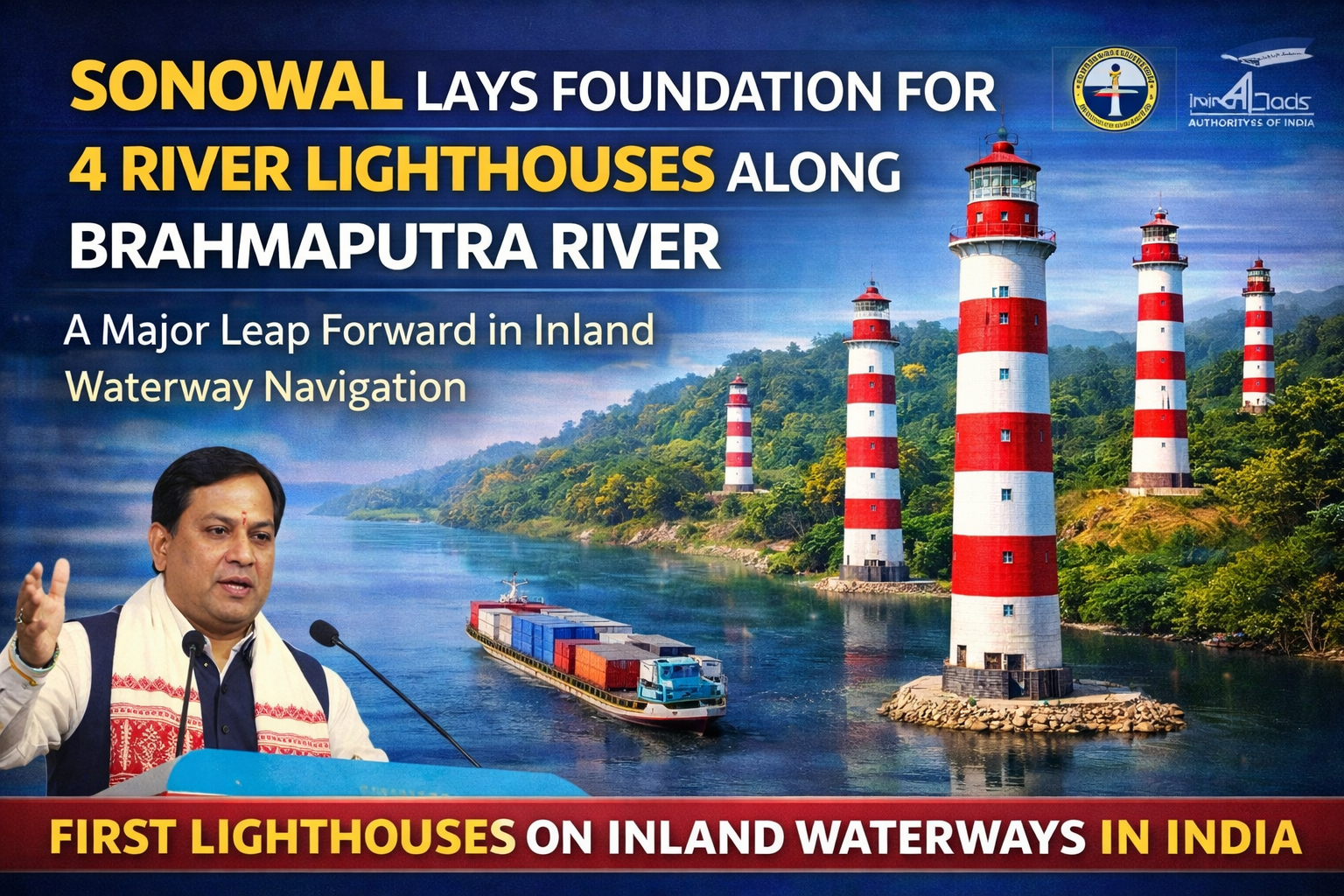
India has taken a major step in improving inland waterway navigation as Union Minister of Ports, Shipping and Waterways Sarbananda Sonowal laid the foundation stone for four river lighthouses along the Brahmaputra River.
This marks the first time lighthouse infrastructure will be established on an inland waterway in India, aimed at strengthening safe navigation and boosting river-based trade.
The ceremony took place at Lachit Ghat in Guwahati and was organised jointly by the Directorate General of Lighthouses and Lightships (DGLL) and the Inland Waterways Authority of India under the Ministry of Ports Shipping and Waterways.
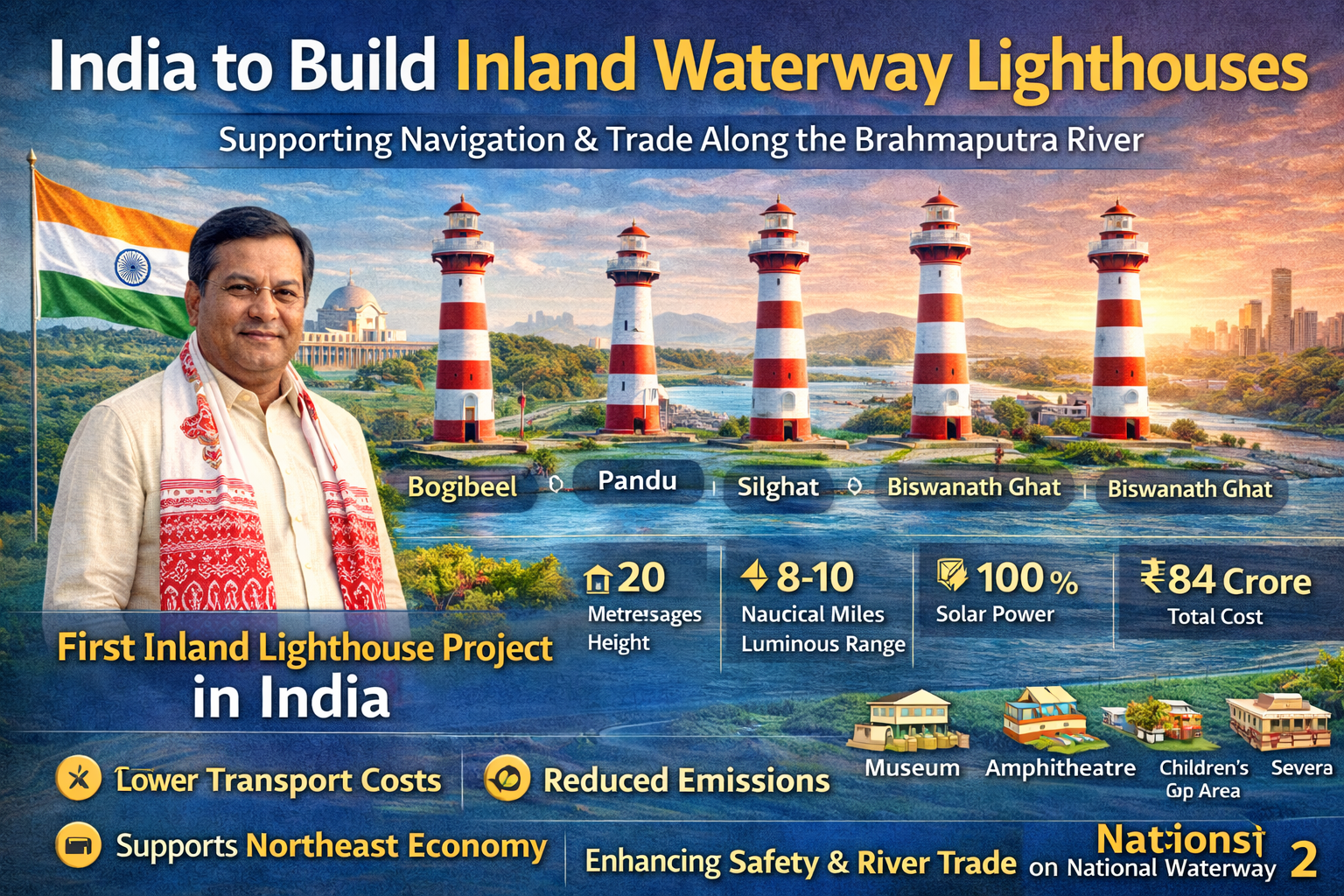
Locations of the Four River Lighthouses
The lighthouses will be constructed at four strategic locations along the Brahmaputra River, which forms National Waterway 2 (NW-2).
The locations include:
- Bogibeel – Dibrugarh district
- Pandu – Kamrup (Metro) district
- Silghat – Nagaon district
- Biswanath Ghat – Biswanath district
Among these, Biswanath Ghat will be the only lighthouse located on the north bank of the river.
Project Cost and Key Features
The combined project cost for the four lighthouses is approximately ₹84 crore.
Key features of the lighthouses include:
- Height: 20 metres
- Geographical range: 14 nautical miles
- Luminous range: 8–10 nautical miles
- Energy source: 100% solar power
Apart from navigation support, each lighthouse complex will include:
- Museum
- Amphitheatre
- Cafeteria
- Children’s play area
- Souvenir shop
- Landscaped public spaces
These facilities aim to develop the sites as tourism attractions along the river.
Boosting Inland Waterway Transport
The initiative comes after a 53% increase in cargo movement on National Waterway-2 during FY 2024-25, according to the Inland Waterways Authority of India.
The Brahmaputra waterway corridor plays a crucial role in transporting goods such as:
- Tea
- Coal
- Fertiliser
It also supports passenger movement and river tourism in the Northeast.
The new lighthouses will enable 24×7 safe navigation, improve monitoring through weather sensors, and support increased freight and passenger traffic.
Importance for Northeast India
According to Sarbananda Sonowal, inland waterways offer major economic advantages:
- Transport by waterways costs about one-third of road transport
- It costs about half of rail transport
- Generates lower carbon emissions
- Reduces pressure on highways
For the Northeast region, where terrain makes road expansion difficult, the Brahmaputra River is emerging as a key logistics corridor.
Development Timeline
The project was initiated following a feasibility study conducted by the Ministry of Ports, Shipping and Waterways.
Important milestones include:
- April 8, 2025: MoU signed between Inland Waterways Authority of India and Directorate General of Lighthouses and Lightships
- June 2025: Land transferred to DGLL through Right of Use agreements
- Construction timeline: Each lighthouse expected to be completed within 24 months after the contract award
About National Waterway-2
National Waterway 2 stretches 891 km from Dhubri to Sadiya in Assam, making it the longest navigable waterway in India.
It passes through the heart of Northeast India and serves as a major route for cargo and passenger transportation.
The construction of river lighthouses along the Brahmaputra River marks a historic milestone in India’s inland waterway development.
By enhancing navigation safety and enabling round-the-clock river transport, the project will strengthen logistics in the Northeast while promoting tourism and sustainable transportation. It also signals India’s broader effort to modernize its inland waterways with the same navigational infrastructure used along its coastline.