

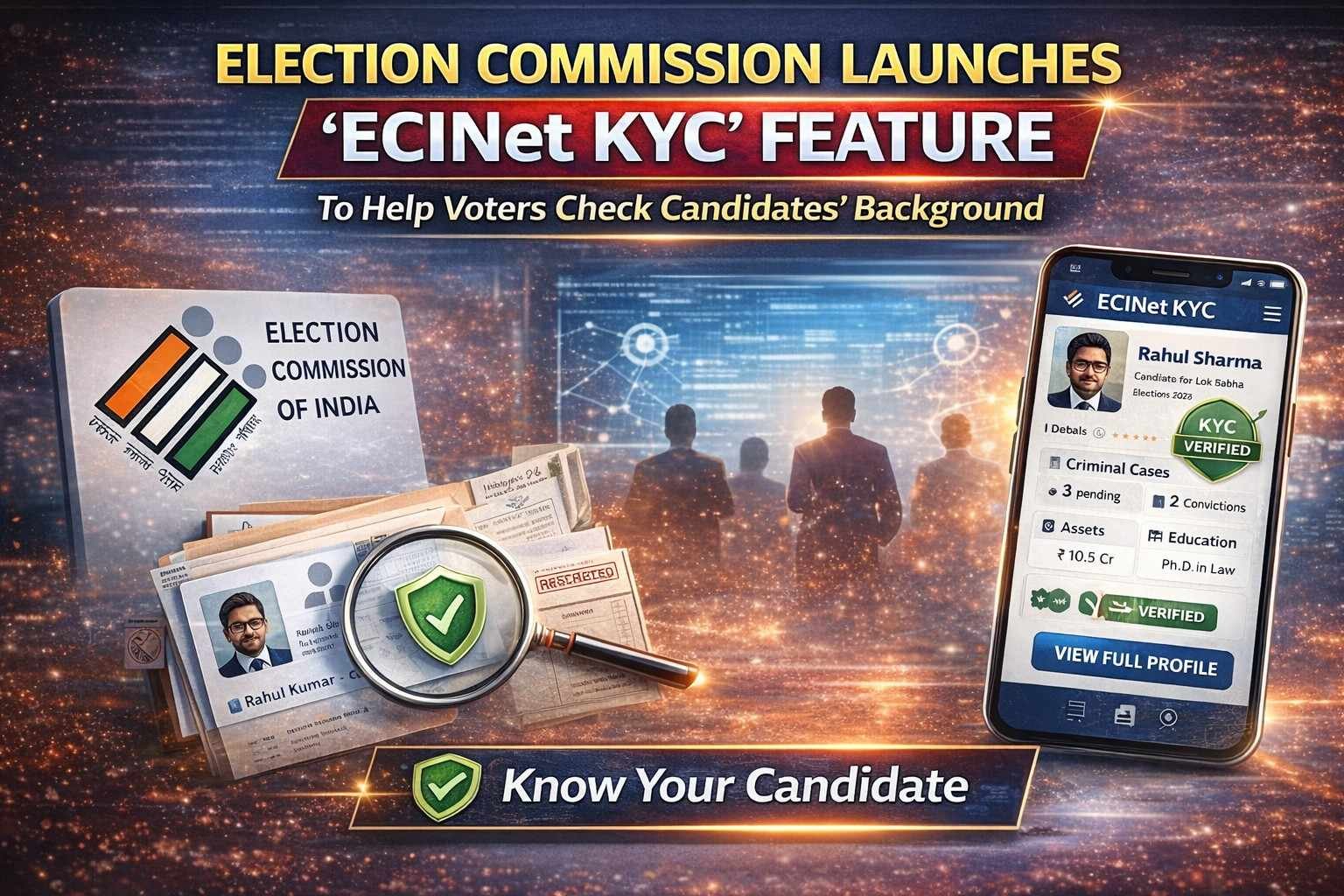
The Election Commission of India has introduced a new ECINet KYC feature that allows voters to easily verify the background of election candidates. This initiative aims to empower citizens with quick access to crucial information such as criminal records, financial details, and educational qualifications of candidates.
The move is part of India’s broader push toward digital governance and electoral reforms, ensuring that voters can make informed choices. With elections becoming increasingly competitive, access to verified candidate data is more important than ever.
Significance of ECINet KYC Feature
- Enhancing Transparency: The feature promotes transparency by making candidate information readily accessible to the public, reducing information asymmetry.
- Empowering Voters: Voters can now make informed decisions based on verified data rather than relying solely on campaign narratives.
- Strengthening Democracy: By increasing accountability, the initiative strengthens democratic values and encourages ethical political participation.
- Digital Governance Push: This feature aligns with India’s vision of leveraging technology to improve governance and citizen services.
Key Features of ECINet KYC
1. Candidate Background Verification
Users can check:
- Criminal records
- Financial assets and liabilities
- Educational qualifications
2. Easy Digital Access
The ECINet platform provides user-friendly access via mobile and web, ensuring inclusivity.
3. Real-Time Updates
Information is regularly updated, ensuring accuracy and reliability.
4. Integration with Election Systems
The feature is integrated with existing electoral databases for seamless access.
Key Facts for Exams
- Launched by: Election Commission of India
- Feature Name: ECINet KYC
- Purpose: Provide verified candidate information to voters
- Information Available: Criminal records, assets, education
- Platform: ECINet (digital electoral platform)
- Objective: Transparency, accountability, informed voting
Election Commission of India:
The Election Commission of India (ECI) is an autonomous constitutional authority responsible for administering elections to the Parliament of India, state legislatures, and the offices of the President and Vice President. Established on January 25, 1950, it safeguards India’s democratic framework by ensuring free, fair, and impartial elections across the country.
Key facts
- Constitutional basis: Article 324, Constitution of India
- Established: January 25, 1950
- Headquarters: Nirvachan Sadan, New Delhi
- Composition: Chief Election Commissioner + two Election Commissioners
- Current Chief Election Commissioner (2025): Gyanesh Kumar
Conclusion: Future Outlook
The launch of the ECINet KYC feature marks a significant milestone in India’s electoral reforms. By providing transparent and accessible information about candidates, the Election Commission is fostering a more informed and responsible voting culture.
In the future, such digital initiatives are expected to expand further, possibly integrating AI-based insights, multilingual access, and deeper analytics. This will not only improve voter awareness but also enhance the overall quality of democracy in India.