

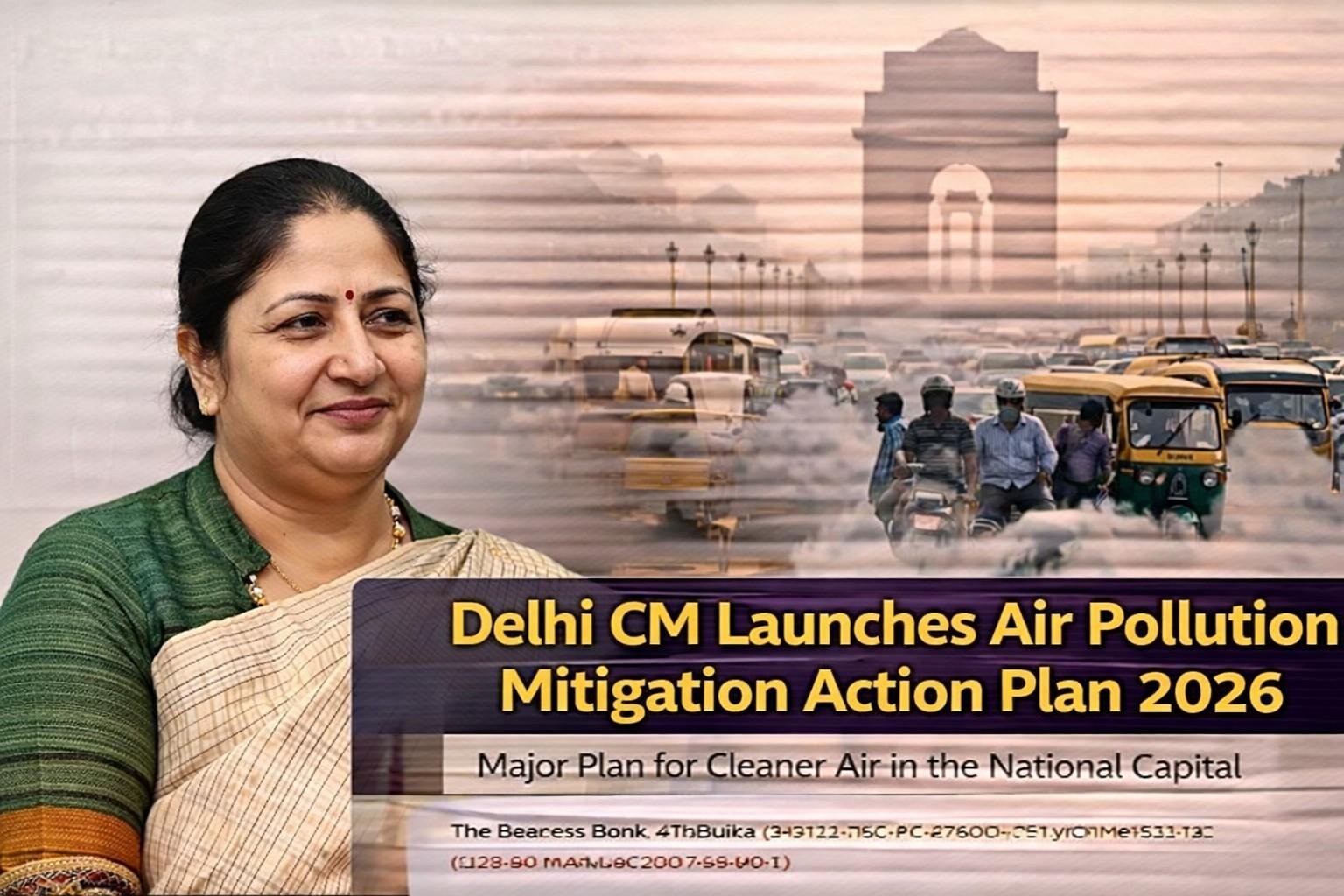
In a major step to tackle air pollution, Delhi Chief Minister Rekha Gupta has launched the Air Pollution Mitigation Action Plan 2026, outlining a comprehensive strategy to improve air quality in the national capital.
The plan focuses on strict enforcement, technology-driven monitoring, and sustainable urban practices to address the city’s persistent pollution challenges.
Focus on Key Pollution Sources
The action plan targets major contributors to air pollution, including:
- Vehicular emissions
- Road dust
- Construction activities
- Industrial pollution
- Biomass burning
The initiative aims to convert policy intent into measurable and time-bound outcomes.
Strict Measures on Vehicular Pollution
One of the most important measures is the strict enforcement of:
“No PUC, No Fuel” Rule
- Vehicles without valid Pollution Under Control (PUC) certificates will not be allowed fuel
- Enforcement will be supported by Automatic Number Plate Recognition (ANPR) cameras and digital tracking
Additional steps include:
- Entry of goods vehicles restricted to BS-VI, CNG, or electric vehicles from November 1
- Possible measures during severe pollution:
- Work-from-home policies
- Staggered office timings
- Restrictions on non-essential traffic
Push for Clean and Public Transport
To reduce emissions, the government plans to:
- Expand bus fleet to 13,760 by 2028–29
- Prioritise electric buses
- Improve last-mile connectivity via:
- Metro integration
- Regional Rapid Transit System (RRTS)
- Feeder buses, e-autos, and shared mobility
Boost to Electric Vehicles
The plan includes a strong push for EV adoption:
- Installation of 32,000 EV charging stations in the next four years
- Introduction of EV Policy 2026
- Focus on:
- Two-wheelers
- Commercial vehicles
- Transition of government fleets
Tackling Road Dust and Construction Pollution
To control dust pollution:
- Deployment of:
- Mechanical road sweepers
- Water sprinklers
- Anti-smog guns
- Monitoring through GPS tracking and central dashboards
Infrastructure upgrades include:
- Redevelopment of 3,500 km of roads
- Use of AI-enabled C&D Portal 2.0 for construction monitoring
Waste Management and Industrial Control
The government has set clear deadlines for landfill clearance:
- Okhla – by July 2026
- Bhalswa – by December 2026
- Ghazipur – by December 2027
Strict action will also be taken against:
- Biomass burning
- Polluting industrial units
Strengthening Monitoring and Governance
Key institutional measures include:
- Expansion of air quality monitoring network
- Establishment of a Green War Room
- Creation of an Integrated Command and Control Centre
Additionally:
- Deployment of ward-level “Vayu Rakshak” teams
- Upgradation of the 311 citizen platform for better public participation
Green Initiatives
The government has also announced ambitious plantation targets:
- 70 lakh trees, shrubs, and bamboo in 2026–27
- Long-term goal of over 1 crore plantations
Conclusion
The Air Pollution Mitigation Action Plan 2026 represents a comprehensive and enforcement-driven approach to address Delhi’s air quality crisis. By combining technology, infrastructure development, policy enforcement, and public participation, the government aims to ensure cleaner air and a healthier environment for its citizens.