

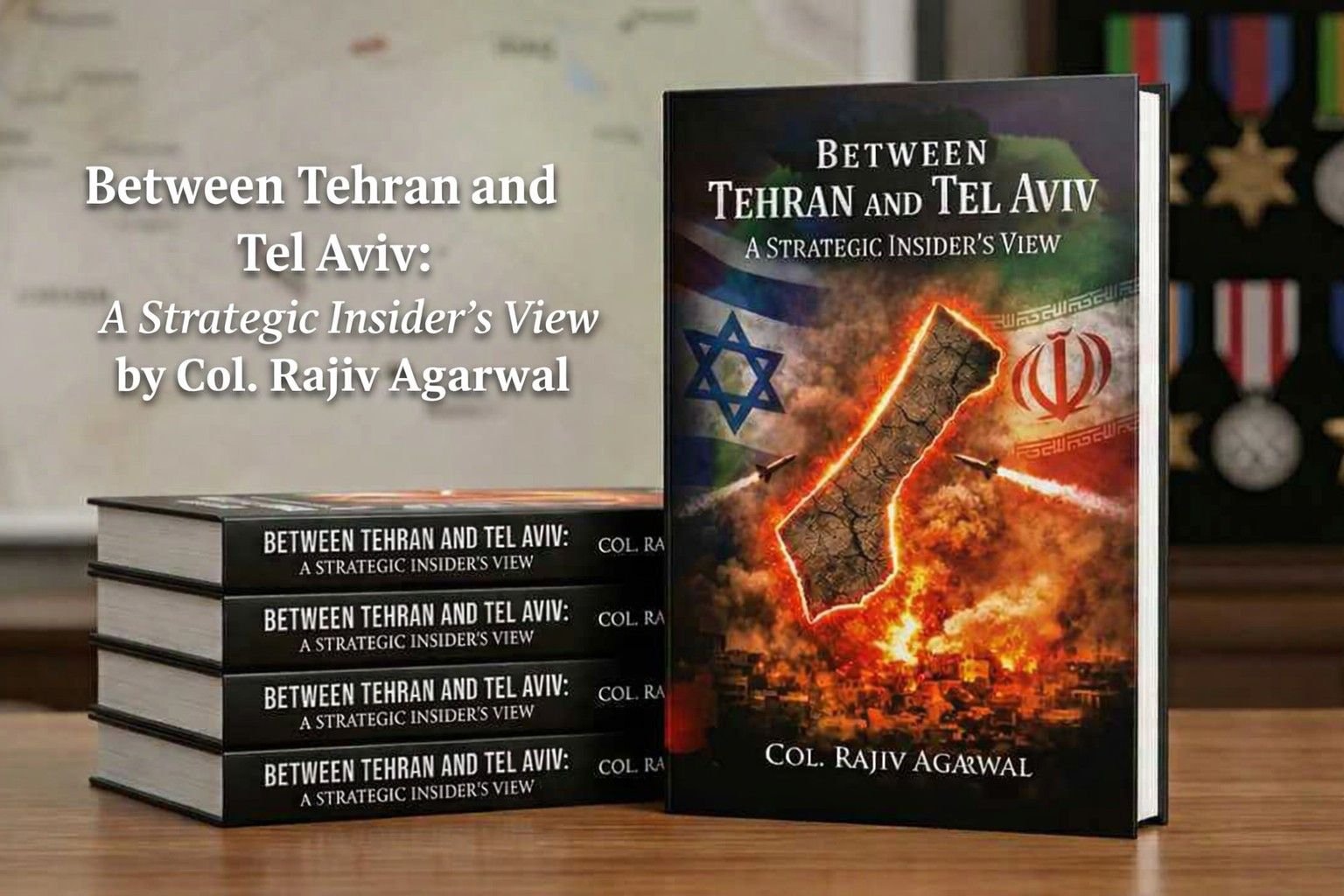
The book “Between Tehran and Tel Aviv” by Col. Rajiv Agarwal offers deep strategic insight into one of the most complex geopolitical rivalries of the modern world between Iran (Tehran) and Israel (Tel Aviv).
Released amid rising tensions in West Asia, this work explains the military strategies, intelligence dynamics, and geopolitical interests shaping the region.
Significance of the Book:
This book is not just a narrative, it is an analytical framework for understanding modern warfare and diplomacy.
Why it matters:
- Explains the ongoing proxy conflicts in West Asia
- Highlights the role of nuclear ambitions and deterrence
- Provides insights into intelligence warfare and cyber conflicts
- Connects regional tensions with global powers like the US, Russia, and China
Col. Rajiv Agarwal, with his military background, brings authenticity and clarity to complex geopolitical issues, making it easier for readers to grasp real-world implications.
Key Themes Covered:
1. Iran-Israel Rivalry
The book explains how ideological differences, security concerns, and regional dominance have shaped the conflict between Iran and Israel.
2. Proxy Warfare
Instead of direct war, both nations engage through proxy groups in regions like Syria, Lebanon, and Yemen.
3. Nuclear Tensions
Iran’s nuclear program remains a major concern for Israel and global powers, making this a central issue in the book.
4. Intelligence & Cyber Warfare
The book highlights covert operations, espionage, and cyber-attacks as modern tools of conflict.
Conclusion:
- The rivalry between Tehran and Tel Aviv is unlikely to end soon. Instead, it is expected to evolve into more sophisticated forms of conflict, including cyber warfare and economic pressure.
- Books like “Between Tehran and Tel Aviv” are crucial for understanding modern geopolitics, especially for students and professionals preparing for competitive exams.