

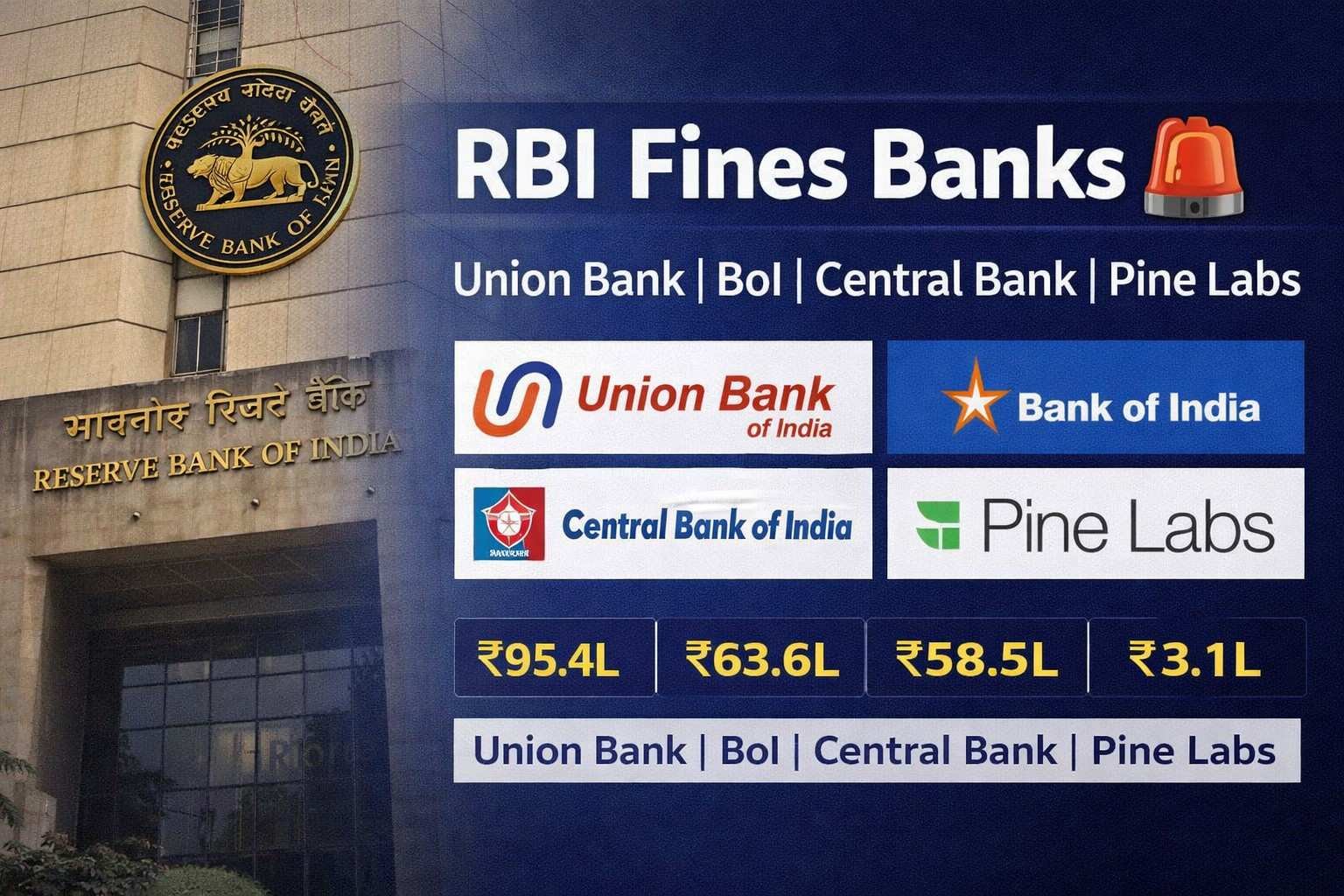
The Reserve Bank of India (RBI) has imposed monetary penalties on several financial institutions, including Union Bank of India, Bank of India, Central Bank of India, and Pine Labs, for non-compliance with regulatory guidelines.
Penalty Details
According to the RBI’s official release, the penalties imposed are as follows:
- Union Bank of India – ₹95.40 lakh
- Central Bank of India – ₹63.60 lakh
- Bank of India – ₹58.50 lakh
- Pine Labs – ₹3.10 lakh
Reasons for Penalties
1. Union Bank of India
The RBI found multiple compliance lapses, including:
- Failure to credit funds from unauthorized electronic transactions within 10 working days
- Not providing 24×7 reporting facility for such transactions
- Manual intervention in system-based asset classification in certain Kisan Credit Card (KCC) accounts
2. Central Bank of India
The penalty was imposed due to:
- Delay in uploading KYC records to the Central KYC Records Registry
- Opening multiple Basic Savings Bank Deposit (BSBD) accounts for customers who already held such accounts
3. Bank of India
The bank was penalized for:
- Charging ad-hoc service and processing fees in some priority sector loan accounts
- Not paying interest on Term Deposit Receipts (TDRs) from maturity until repayment
4. Pine Labs
The fintech company faced penalties for:
- Issuing Full-KYC Prepaid Payment Instruments (PPIs)
- Without completing proper Know Your Customer (KYC) verification
RBI’s Regulatory Focus
The RBI emphasized that these penalties were imposed due to deficiencies in regulatory compliance, not to question the validity of any transactions or agreements.
This action highlights the central bank’s continued focus on:
- Strengthening customer protection
- Ensuring strict KYC compliance
- Promoting transparency and accountability in financial services
The penalties serve as a reminder to financial institutions and fintech firms to strictly adhere to RBI guidelines. As digital transactions grow rapidly, maintaining compliance and safeguarding customer interests remains a top priority for the regulator.