

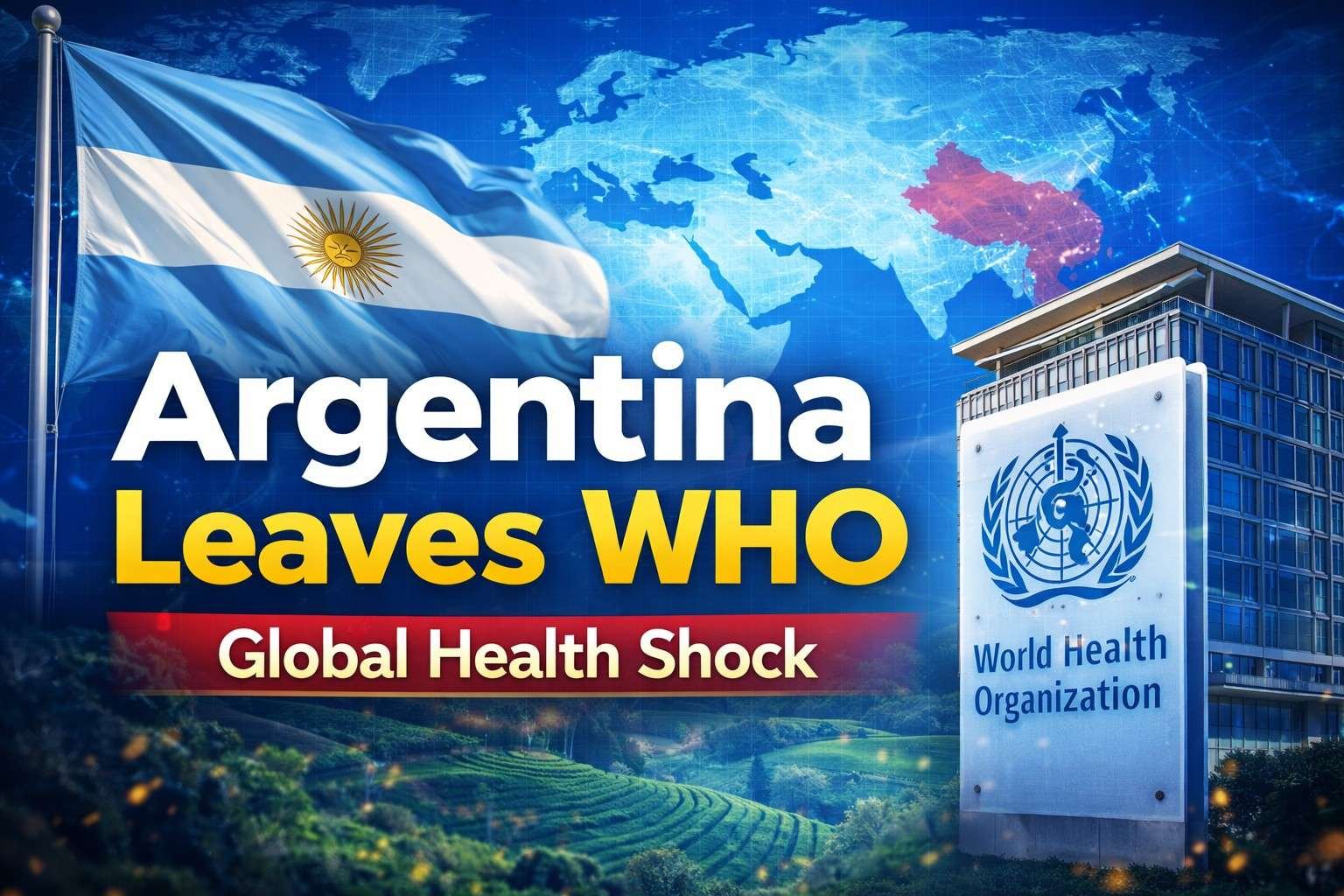
Argentina has officially withdrawn from the World Health Organization (WHO), marking a significant development in global health governance. The decision has sparked widespread debate over its impact on international health cooperation and policy coordination.
- The move was first announced in February of last year.
- The United States formalized its withdrawal in January
Why Argentina Withdrew:
The move reflects Argentina’s changing stance on global health frameworks. Officials have raised concerns about policy autonomy, funding priorities, and the effectiveness of international health institutions.
Global Reactions and Concerns:
The withdrawal has drawn attention from global leaders, health experts, and policymakers. Key concerns include:
- Impact on global health collaboration
- Reduced coordination during health emergencies
- Challenges to international disease control efforts
Impact on Global Health Policy:
Argentina’s exit could influence other nations to reconsider their role in global health organizations. It may also affect:
- WHO’s global outreach and programs
- Regional health partnerships in Latin America
- Funding and policy coordination mechanisms
Why the WHO matters:
- The WHO has historically played a central role in major global public health campaigns, including the eradication of smallpox and responses to threats such as polio, HIV, Ebola and tuberculosis, according to AFP.
- WHO director-general Tedros Adhanom Ghebreyesus had earlier expressed concern over the US withdrawal.
- In January, Tedros said he “deeply regretted” Washington’s exit and warned it would make both the United States and the rest of the world less safe.
What is the WHO?
The World Health Organization is a specialized agency of the United Nations (UN) responsible for international public health.It plays a key role in disease prevention, health research, and emergency response worldwide.
- Founded: 7 April 1948
- Headquarters: Geneva, Switzerland
- Parent Body: United Nations
- Members: 194 countries
Conclusion:
Argentina’s withdrawal from WHO represents a major shift in global health policy. Its long-term impact will depend on how other nations respond and how global health systems adapt to this change.