

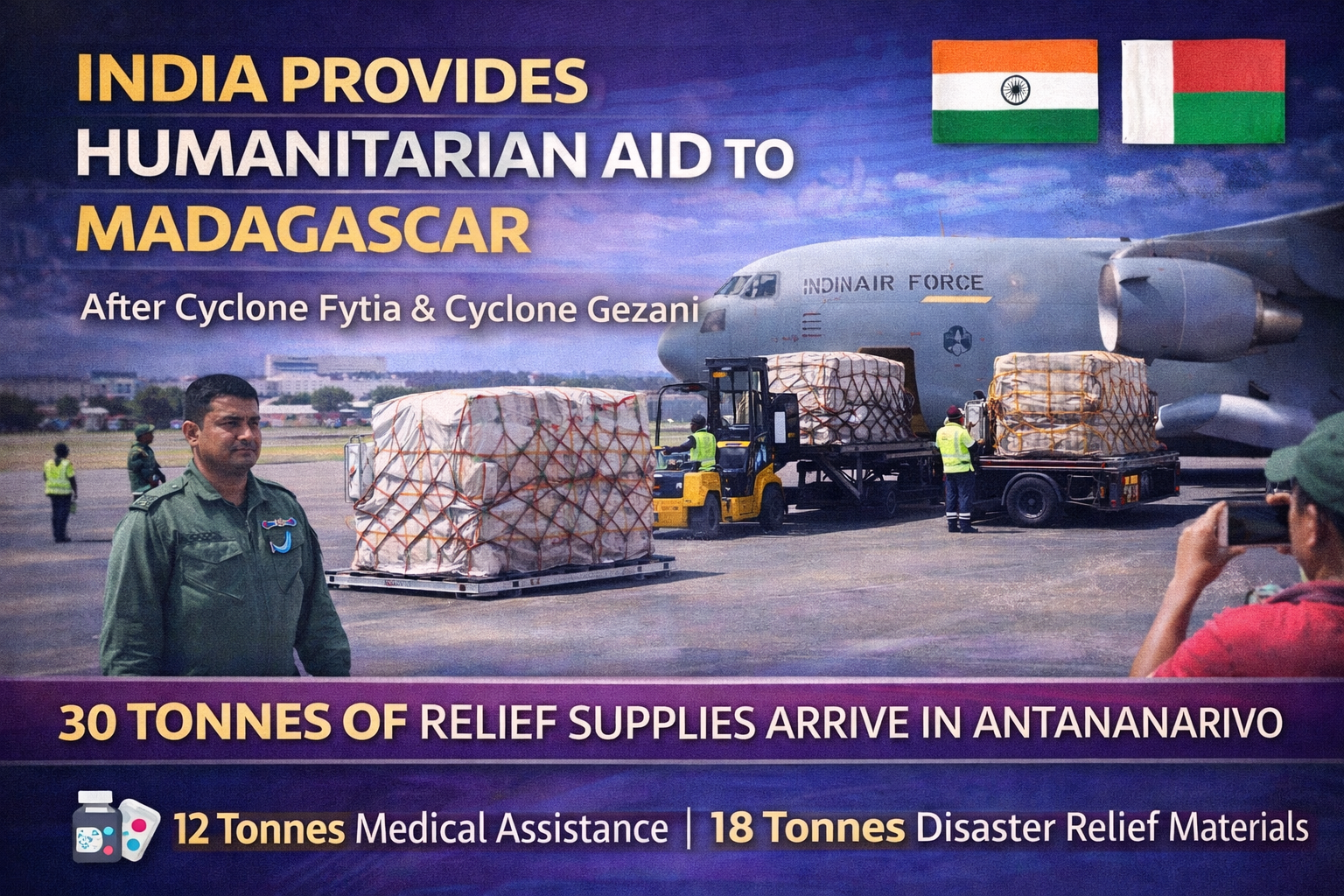
India has extended humanitarian assistance to Madagascar after the island nation suffered widespread damage from Cyclone Fytia and Cyclone Gezani earlier this year. The move highlights India’s continued support to partner countries during natural disasters.

An aircraft of the Indian Air Force carrying 30 tonnes of relief supplies landed in Antananarivo, the capital of Madagascar. The aid shipment included 12 tonnes of medical assistance and 18 tonnes of disaster relief materials aimed at helping communities affected by the cyclones.
Relief Materials Sent by India
The humanitarian package includes a range of essential supplies needed for emergency response and recovery efforts, such as:
Life-saving medicines
Surgical supplies
Emergency tents
Water storage tanks
Dignity kits
Ready-to-eat food items
These materials are intended to support both local authorities and humanitarian agencies working to assist people affected by the disasters.
India Expresses Solidarity with Madagascar
Commenting on the relief mission, Randhir Jaiswal, spokesperson of the Ministry of External Affairs, said that the assistance reflects India’s commitment to standing with Madagascar during challenging times.
He stated that India stands in solidarity with the people of Madagascar and remains ready to provide support to populations affected by natural disasters.
Cyclones Caused Widespread Damage
The tropical cyclones that struck Madagascar earlier this year caused significant destruction across several regions. Homes, infrastructure, and livelihoods were severely affected, leaving thousands of people in need of emergency assistance.
Natural disasters such as cyclones, floods, and storms frequently impact the island nation, making international humanitarian support crucial during relief and recovery operations.
India’s Humanitarian Assistance Policy
India’s relief mission to Madagascar is part of its broader Humanitarian Assistance and Disaster Relief (HADR) efforts. Through this initiative, India regularly provides assistance to countries affected by natural disasters including cyclones, earthquakes, floods, and other emergencies.
Such missions demonstrate India’s commitment to supporting friendly nations and strengthening international cooperation during crises.