

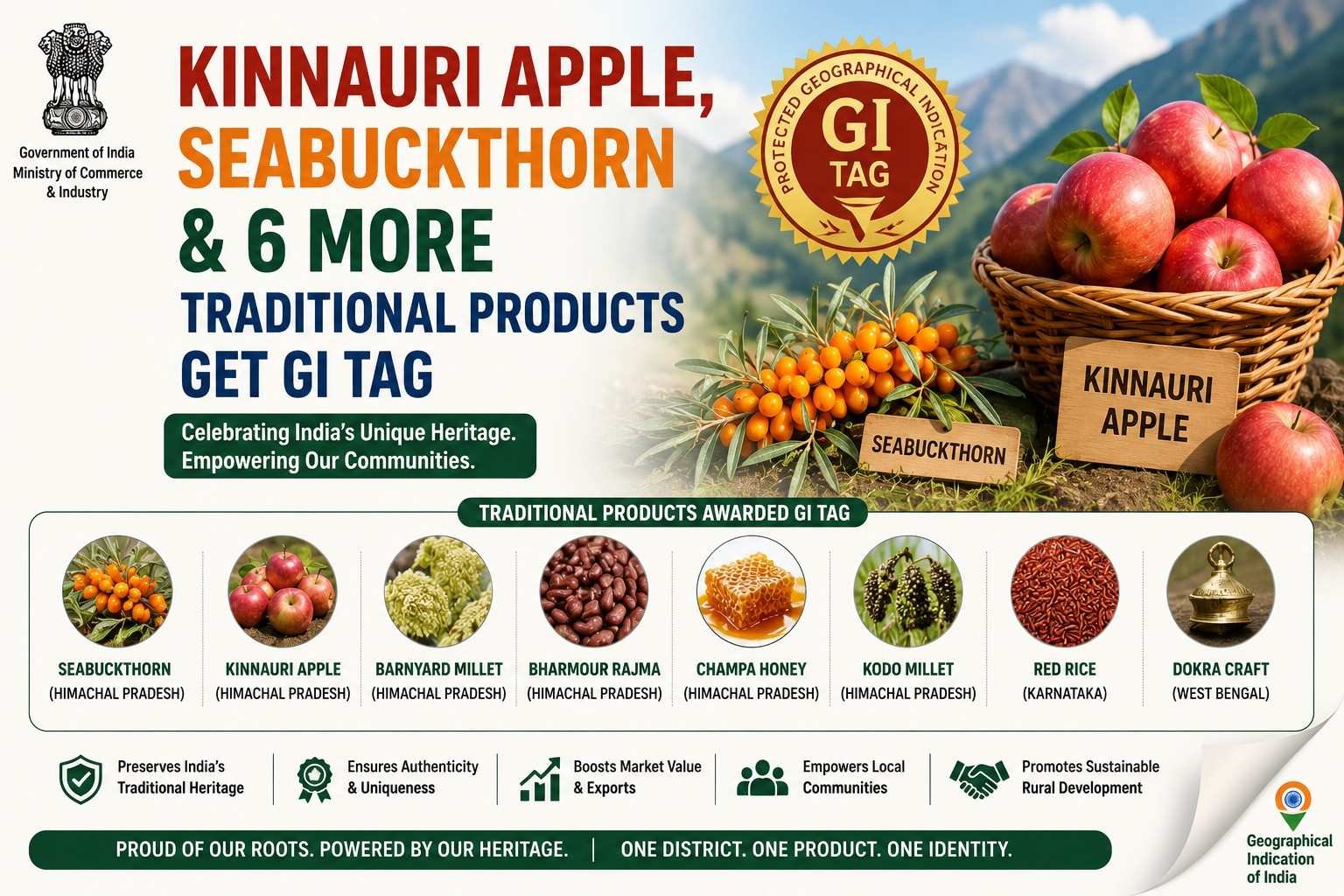
- In a major recognition of Himachal Pradesh’s rich cultural, agricultural and artisanal heritage, eight traditional products from the state have been granted the prestigious Geographical Indication (GI) tag.
- The latest registrations increase the total number of GI-tagged products from Himachal Pradesh to 17, strengthening the state’s identity in national and international markets.
- The registrations were secured through the Himachal Pradesh Council for Science, Technology & Environment (HIMCOSTE) and are expected to boost branding, exports, rural livelihoods and heritage conservation.
Eight Products Receive GI Tag
The newly GI-certified products represent diverse traditions of farming, handicrafts, textiles and cuisine across Himachal Pradesh.
The eight newly registered products are:
- Spiti Seabuckthorn (Chharma)
- Salooni Safed Makka
- Chamba Metal Art
- Sirmauri Loiya
- Kinnauri Topi
- Sepuvadi of Mandi
- Kinnauri Apple
- Kinnauri Jewellery
These products are deeply connected with the culture, craftsmanship and agricultural practices of their respective regions.
Total GI Products Rise to 17
With the latest additions, Himachal Pradesh now has 17 GI-tagged products.
Earlier GI-recognised products from the state include:
- Kullu Shawl
- Kangra Tea
- Chamba Rumal
- Kinnauri Shawl
- Kangra Painting
- Himachali Kalazeera
- Himachali Chulli Oil
- Chamba Chappal
- Lahauli Knitted Socks and Gloves
The growing list reflects Himachal Pradesh’s diverse cultural and natural heritage.
Why the GI Tag Matters
A Geographical Indication (GI) tag is an intellectual property right that identifies products originating from a particular geographical region whose quality, reputation or characteristics are closely linked to that location.
The GI status provides several benefits:
- Protects products against imitation and misuse.
- Enhances market value and brand recognition.
- Promotes exports.
- Preserves traditional knowledge and craftsmanship.
- Generates better income opportunities for farmers, artisans and weavers.
- Encourages rural entrepreneurship.
The recognition also helps consumers identify authentic regional products.
Chief Minister Welcomes the Recognition
Chief Minister Sukhvinder Singh Sukhu described the achievement as an important milestone in preserving and promoting Himachal Pradesh’s traditional heritage.
He stated that the recognition reflects the government’s sustained efforts over the last three and a half years to protect indigenous products and strengthen local livelihoods.
According to the Chief Minister, the GI tags will create new opportunities for:
- Farmers
- Artisans
- Weavers
- Indigenous communities
- Rural entrepreneurs
The initiative is expected to support sustainable economic development while safeguarding cultural heritage.
More Products Await GI Recognition
The state government is also pursuing GI registration for four additional indigenous products:
- Bhot Jau (Pangi Barley)
- Chamba Chukh
- Plectranthus Honey
- Sirmaur Ginger
If approved, these products will further strengthen Himachal Pradesh’s portfolio of protected traditional products.
What is a Geographical Indication (GI)?
According to the World Intellectual Property Organization (WIPO), a Geographical Indication is a sign used on products that have a specific geographical origin and possess qualities or a reputation linked to that place.
In India, GI protection is governed by the Geographical Indications of Goods (Registration and Protection) Act, 1999.
Once a product receives GI status:
- Only authorised producers can use the GI logo.
- Producers must obtain a unique GI registration number.
- Unauthorised commercial use can attract legal action.
The system protects consumers while preserving the authenticity of traditional products.
Conclusion
The recognition of eight new GI-tagged products marks another milestone for Himachal Pradesh’s cultural and agricultural heritage. By protecting traditional knowledge, promoting authentic branding and creating better market opportunities, the GI tags are expected to strengthen rural livelihoods and enhance the global identity of Himachal’s unique products.
As more indigenous products move towards GI recognition, the state continues to build a stronger foundation for sustainable rural development and heritage conservation.