

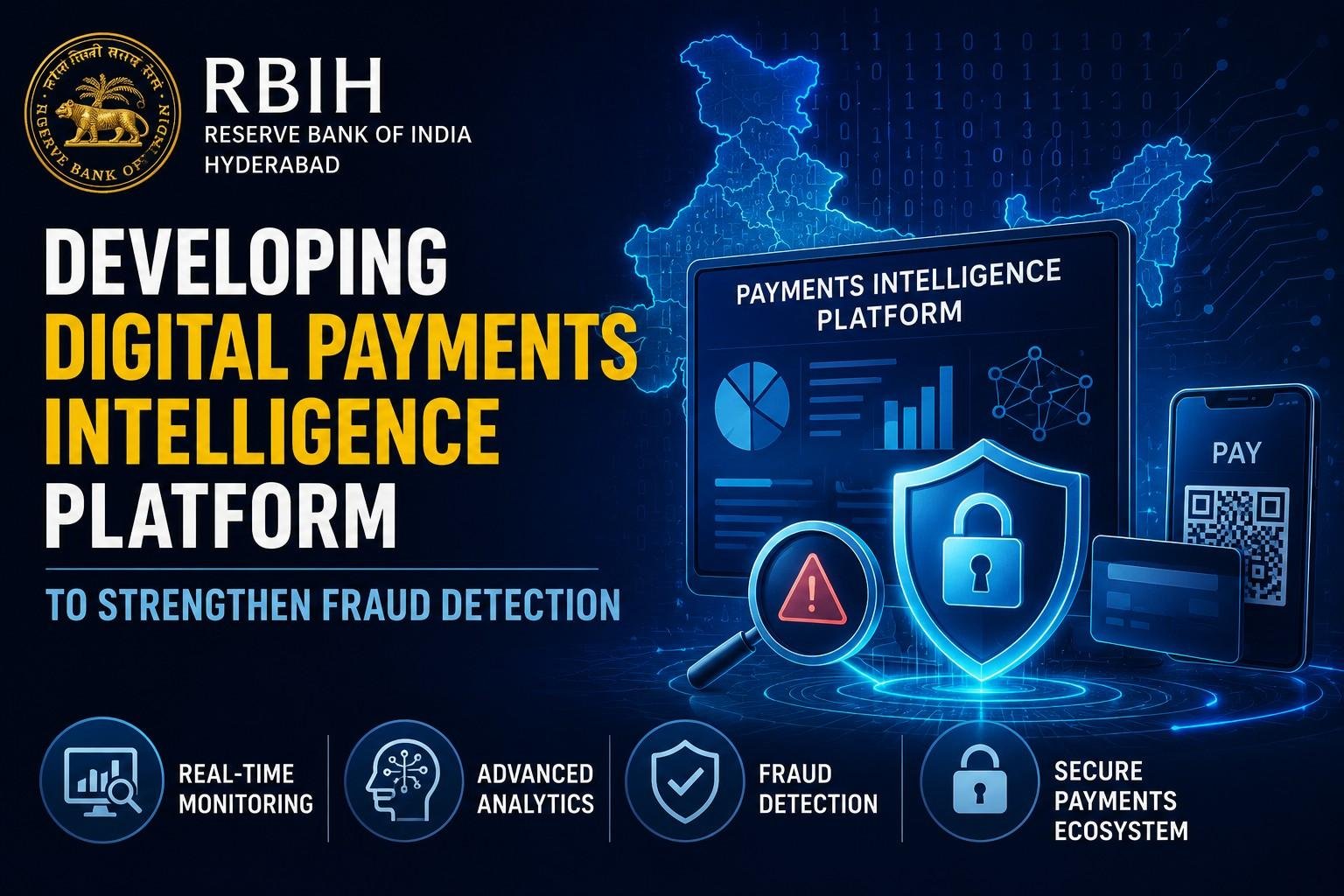
- The Reserve Bank Innovation Hub (RBIH) is developing a Digital Payments Intelligence Platform (DPIP) aimed at strengthening fraud detection and intelligence sharing across India’s rapidly expanding digital payments ecosystem.
- RBIH Chief Executive Officer Sahil Kini said that the prototype of the platform will be handed over to the newly established Indian Digital Payments Intelligence Corporation (IDPIC).
- The initiative is one of RBIH’s key priorities alongside the expansion of the Unified Lending Interface (ULI) and the AI-based fraud detection platform MuleHunter.ai.
What is DPIP?
The Digital Payments Intelligence Platform (DPIP) is being designed to improve coordination among financial institutions and strengthen fraud intelligence systems.
The platform will facilitate:
- Fraud information sharing.
- Real-time intelligence exchange.
- Early detection of suspicious transactions.
- Cyber fraud prevention.
- Better risk monitoring.
The initiative comes at a time when digital payment frauds and cybercrime incidents are increasing rapidly.
IDPIC to Manage the Platform
- The Indian Digital Payments Intelligence Corporation (IDPIC) has been created to take over and operate the platform after the prototype stage.
- RBIH is currently building the initial system and will transfer it to IDPIC for large-scale implementation.
MuleHunter.ai Expands to 26 Banks
- One of RBIH’s major achievements has been the expansion of MuleHunter.ai.
- The AI-powered solution is now deployed across more than 26 banks.
- According to RBIH CEO Sahil Kini, banks have reported significantly better performance in identifying mule accounts compared to traditional fraud detection systems.
What are Mule Accounts?
Mule accounts are bank accounts used by fraudsters to transfer illegally obtained money.
Such accounts are often used for:
- Online scams.
- Cyber fraud.
- Money laundering.
- Unauthorized transactions.
Detecting mule accounts quickly can significantly reduce digital payment fraud.
RBIH-I4C Partnership
RBIH recently signed a Memorandum of Understanding with the Indian Cyber Crime Coordination Centre (I4C).
The collaboration will allow:
- Sharing of cybercrime data.
- Access to fraud intelligence.
- Better AI training datasets.
- Improved fraud detection accuracy.
The additional data is expected to enhance the effectiveness of MuleHunter.ai.
Unified Lending Interface (ULI)
RBIH is also focusing on expanding the Unified Lending Interface.
Sahil Kini said the ambition is to make ULI for lending what UPI became for payments.
ULI aims to:
- Enable consent-based data sharing.
- Reduce loan processing time.
- Improve credit access.
- Support MSME financing.
- Simplify lending processes.
The platform seeks to create frictionless digital credit delivery.
ULI for MSMEs and Individuals
The lending platform will particularly benefit:
- Small businesses.
- MSMEs.
- Individuals.
- Rural borrowers.
- First-time borrowers.
Government databases and digital infrastructure will help lenders make faster credit decisions.
RBIH and FinTech Innovation
- The innovation hub is actively working with fintech companies to build new financial products.
- Through the Bank-FinTech Showcase initiative, startups can present their solutions to regulated financial institutions.
- The objective is to encourage innovation in financial services.
Role of Artificial Intelligence
RBIH is also exploring artificial intelligence applications in banking and financial services.
Several AI-based prototypes are under development.
These technologies may support:
- Fraud prevention.
- Risk management.
- Customer service.
- Credit assessment.
- Regulatory compliance.
Why DPIP Matters
India is one of the world’s largest digital payment markets.
As transaction volumes increase, stronger fraud detection mechanisms become essential.
DPIP can help:
- Reduce financial fraud.
- Improve customer confidence.
- Strengthen digital security.
- Enhance payment ecosystem resilience.
Conclusion
The Digital Payments Intelligence Platform represents an important step in strengthening India’s digital payment infrastructure. Along with MuleHunter.ai and ULI, the initiative demonstrates RBIH’s focus on innovation, cybersecurity, and financial inclusion.